








The week-long highland ceremony where mourning becomes festival. What to wear, what to bring, when to look, and the one mistake foreign visitors make.
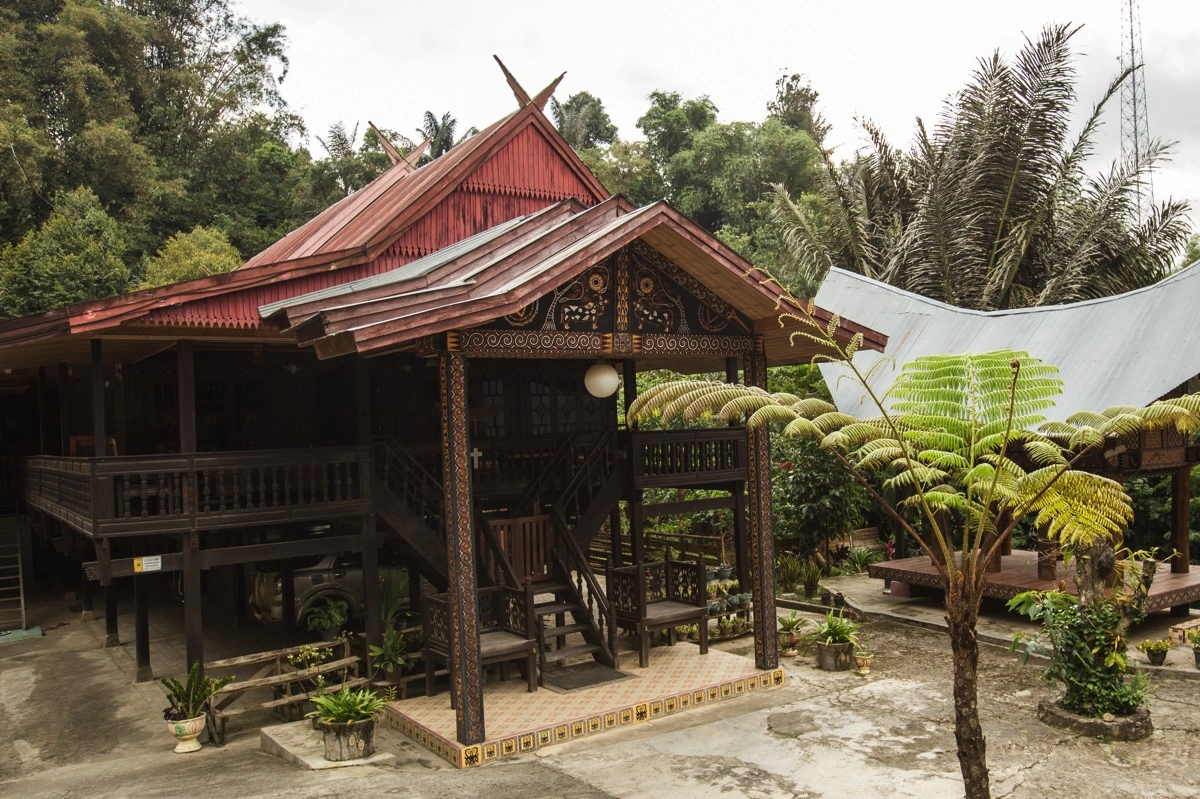
A Toraja funeral does not look like a funeral to an outside observer. The dead person was processed months or years ago and lies in a wrapped bundle inside the tongkonan house, treated as a sick relative — to makula', "the one with fever" — until the family can afford the ceremony. When the date is set, hundreds of guests descend on the village. Buffalo are killed. Songs run all night. Children climb the bamboo viewing towers. By the second day, a foreign visitor unsure of the etiquette begins to feel that the family has been hospitable past the point of imposition. This is a short, practical guide to attending a Rambu Solo' the way an introduced guest should.
What Rambu Solo' is
The ceremony is the formal funeral of a Torajan of standing — a clan elder, a successful farmer, anyone whose family can muster the buffalo, the rice, and the relatives. Smaller families send their dead off in a single day. Larger families build platforms, host hundreds of visitors, and run the ceremony across four to seven days. Each day has a role: receiving guests, presenting the buffalo, the ma'pasilaga tedong (buffalo-fighting), the slaughter, the procession to the cliff tomb.
The slaughter is the hardest part for non-Toraja visitors. The buffalo are killed with a single throat cut by a designated village butcher; the meat is then distributed among the guests according to a strict family hierarchy. Refusing to watch is fine. Walking away from the ceremony grounds during the slaughter is also fine. Talking during it is not.
Getting an invitation
You don't need a written invitation. You need an introduction. The structure works like this: every guide in Rantepao is from a clan, and most clans are hosting or attending Rambu Solo' ceremonies at any given moment in the high season. Tell your guesthouse the day you arrive that you'd like to attend a funeral; they will know what's running and who can take you.
The going contribution is a carton of kretek cigarettes (around €19 in 2026) or a bottle of palm wine. The host family does not expect cash. The guide who brought you takes the gift to the family on arrival; you do not handle it directly. Your name will be entered in a guest book if the family is keeping one.
What to wear, what to bring
Dark clothing. Black is best; navy or dark brown is fine. No white. No bright print. Long sleeves and long trousers regardless of weather. Women: a wrap skirt over trousers is welcome and considered respectful. Cover the shoulders. A scarf for the head is appreciated during the procession to the tomb but not required.
Bring: water, a small notebook, a hat. Leave behind: cologne, large bags, anything that beeps or vibrates audibly.
A camera is fine but mute the shutter and stay seated when using it. Do not stand in the inner ring during the buffalo presentation. Do not photograph the corpse, even wrapped. Do not photograph the family during the slaughter.
What to expect, hour by hour
The morning opens with guest reception. You will be seated on the side guest platforms — lantang — built specifically for the ceremony and dismantled afterward. Coffee and palm wine appear. The host family circulates; you stand briefly when they pass.
Late morning is the buffalo presentation. The animals are paraded through the ceremony grounds, valued, and tied. There may be a buffalo fight between two animals — a formal contest ending when one buffalo turns and retreats. Late afternoon is the slaughter. Evening is the meat distribution and a long meal. Some funerals run songs and ma'badong circle chanting through the night; visitors are welcome to stay but most leave by dusk.
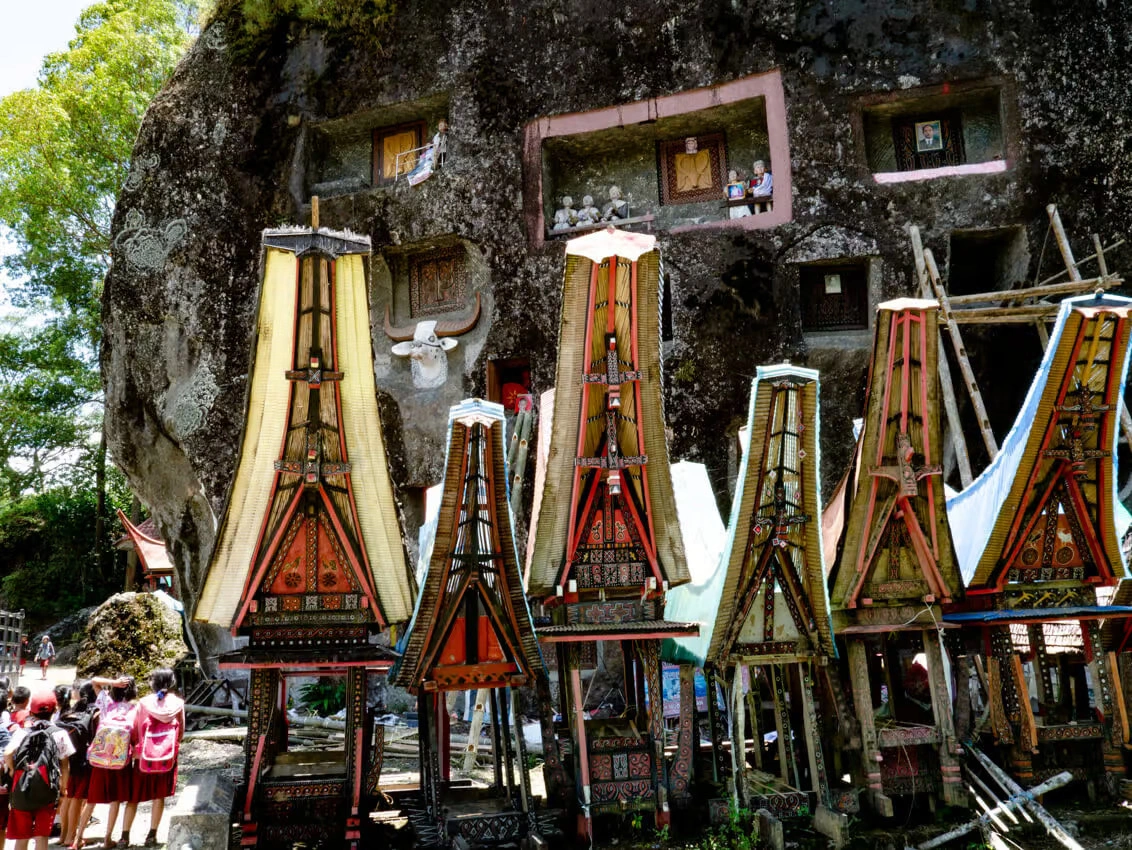
The procession to the cliff tomb usually happens on the final day. The wrapped body is carried up a steep bamboo scaffold, sometimes for an hour. The villagers do the carrying; the foreign visitor watches from below.
Can foreign visitors attend a Toraja Rambu Solo' funeral? Yes — Rambu Solo' funerals are open to introduced foreign visitors with conditions. Bring a small gift (a carton of kretek or palm wine) presented through your guide, wear dark clothing, do not stand in the inner ceremony ring during the buffalo presentation or slaughter, and sit on the visitor platforms when offered. Photography is allowed away from the body and the family during slaughter.
The mistake foreign visitors make
The mistake is leaving early without a goodbye. The ceremony has a rhythm and the foreign visitor often slips out quietly in the afternoon to avoid imposing. Don't. Find your guide; the guide finds the family member who received you; you offer a brief thanks and a slight bow. The host expects this. The wordless exit reads as rude.
The second mistake, smaller but common: declining the palm wine. Ballo is offered as a gesture of welcome. Even a small sip, returned with a thank-you, is the right response. It's mildly alcoholic; refusing it cleanly is fine, but make eye contact and shake your head once. Don't wave it away.
When the funerals run
The Toraja funeral season clusters from June through September, when the rice harvest is in and the extended family is free to gather. December is the second peak. Outside these windows, ceremonies are smaller and rarer; you may attend one in April or May, but a Rantepao guide can't promise it the way they can in July.