
#wildlife
Five Lembeh critters worth the early dive
Por D. Manangkasi07 Jan7 min de lectura
Hairy frogfish, wonderpus, blue-ringed octopus, mandarin fish, flamboyant cuttlefish. What they do, where to find them, and what your guide is actually watching for.
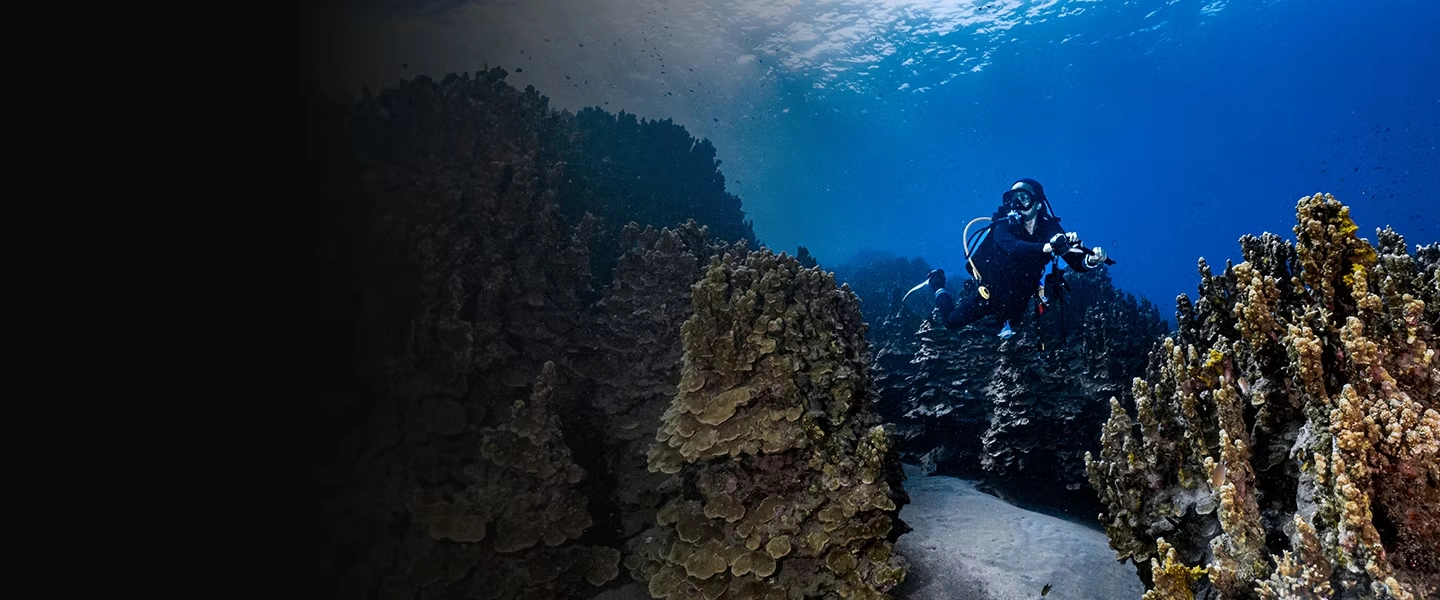
The hardest part of muck diving is admitting that the silt-bottom site you're hovering over actually holds the animal in the guidebook. The second-hardest part is being awake enough at 06:30 to recognise it when your guide finds one. Lembeh Strait holds something like four hundred recorded fish species and over two hundred invertebrates, and a five-day trip will surface fewer than thirty of them in any meaningful way. These are five animals worth the early start: what they do, where they live in the strait, and what your guide is actually watching for when their probe stops moving over a patch of bottom that looks like every other patch of bottom.
1. Hairy frogfish (Antennarius striatus)
The signature Lembeh animal. A fist-sized frogfish covered in what looks like wet wool — actually elongated dermal spines that mimic algae and broken hydroid stems. The hairy frogfish uses a modified dorsal-fin ray, the illicium, as a fishing rod, with a worm-shaped lure on the end. It sits absolutely still and waits.
Best sites: Hairball II and Aer Bajo, north and central strait. The animal favours black silt with scattered organic debris — old palm fronds, sunken coconut husks. Morning dives are better; the animal is more responsive to lure use before the bottom warms.
Spotting cue: your guide will scan a one-metre square of bottom for thirty seconds, then stop. The frogfish is almost never visible from above. Get low, look across the bottom at lure height.
2. Wonderpus (Wunderpus photogenicus)
Often confused with the mimic octopus and frequently misidentified in the briefing photos. The wonderpus is smaller — body the size of a tangerine, arms about thirty centimetres — with a tight, contrasted brown-and-white banding pattern. It walks the bottom on its arm tips during the day and tucks into a buried hole at night.
Best sites: Tanjung Kubur, Aer Bajo, Goby Crack. Sandy bottom rather than silt; the wonderpus needs to dig.
Spotting cue: small puffs of disturbed sand moving in a straight line, with no obvious cause above. The animal is moving in the burrow just below the surface. Your guide will pace alongside the puff line and wait for the eye to surface.
3. Blue-ringed octopus (Hapalochlaena lunulata)
The famous one, and dangerous: the venom is genuinely lethal and there is no antivenom. The blue-ringed octopus at Lembeh is the larger northern species, palm-sized, normally tan and brown until alarmed, at which point the iridescent blue rings flash on for the warning display.
Best sites: any of the central-strait sandy sites. The species is more common in Lembeh than divers expect; the spotting rate is low because the animal hides under shells, rubble, and discarded glass bottles.
Spotting cue: a single small shell or piece of rubble that does not match the surrounding bottom. The animal collects shells around its den. Do not touch anything, ever, on a Lembeh dive — the blue-ring is the strongest single reason for that rule.
4. Mandarin fish (Synchiropus splendidus)
The dragonet that everyone has seen in photos: electric green, blue, and orange in a pattern that looks airbrushed. Mandarin fish live in shallow rubble at the base of the staghorn coral on the south Lembeh sites, and the diving for them is the famous dusk dive.
Best sites: the south-strait rubble fields off Pulau Sarena Besar. Late afternoon, between 17:30 and 18:15 in 2026, the males emerge from the rubble to begin the mating display.
Spotting cue: this one your guide doesn't need to find for you. The males appear and the courtship is visible at three to five metres' range. Stay still, dim your torch, watch from above. A pair will spiral up off the bottom together in the actual mating ascent — this lasts about three seconds, and you get one or two chances per dive.
What are the most famous critters in Lembeh Strait? The five most-sought Lembeh species are the hairy frogfish (Hairball II, morning), the wonderpus octopus (Aer Bajo, sandy bottom), the blue-ringed octopus (central-strait shell rubble), the mandarin fish (south-strait dusk dive at Pulau Sarena), and the flamboyant cuttlefish (Police Pier, daytime). Sighting reliability varies — the mandarin dive is the most predictable; the hairy frogfish takes patience.
5. Flamboyant cuttlefish (Metasepia pfefferi)
A small cuttlefish, hand-sized, that walks the bottom on modified fins rather than swimming. The famous part is the colour display: when the animal is hunting or threatened, it pulses through a rotating wave of yellow, magenta, and white across its mantle, a metabolic signal that the flesh is toxic to predators.
Best sites: Police Pier, Tanjung Kubur, Pantai Parigi. Sand with scattered shell rubble, mid-depth around twelve metres.
Spotting cue: the walking gait is unmistakable. Once your guide finds one, you'll spot the next one yourself.
A note on the search
Lembeh dives are not built around the critter list. The list is the side effect of your guide's working knowledge of fifty sites and what's been seen at each in the last week. The strait has a tight WhatsApp network among the guides, and a rare sighting reported in the morning will be on every operator's afternoon dive plan. If there's a specific animal you want to see, tell your guide on the first day. The search has time to find it.
A practical note: don't bring a strobe rig for the first dive of the trip. Get the buoyancy and the slow-pace breathing right first. Lembeh has the highest stress-failure rate of any Indonesian muck site for visiting underwater photographers, and the culprit is almost always overshooting buoyancy on the silt.