

A guide to the Maleo — the endangered Sulawesi-endemic megapode that buries grapefruit-sized eggs in volcanic sand and walks away, best seen at the Bakiriang nesting site.
The Maleo (Macrocephalon maleo) is one of the strangest birds in the world and exists only on Sulawesi. About the size of a small turkey, it does not incubate its own eggs. Instead, the female lays a single grapefruit-sized egg in warm sand near a volcanic vent or a sun-heated beach, buries it, and walks away. The chick hatches independently, digs its way out of the sand, and is fully ready to fly and forage within hours. The Maleo lays one egg per breeding cycle and may use the same nesting site for generations.
The Maleo is endangered. Habitat loss and historical egg-harvesting have reduced the population to perhaps 8,000–14,000 adults, distributed across a handful of protected nesting sites in North, Central, and Southeast Sulawesi.
What makes the Maleo unusual
Three things:
- External incubation. The Maleo belongs to the family Megapodiidae — the megapodes, or "mound-building" birds. Unlike most birds, megapodes do not incubate eggs with body heat; they use environmental heat instead. The Maleo specifically uses geothermal heat (volcanic vents) and solar heat (sand warmed by tropical sun) — choosing nesting sites where the underground temperature stays at the right range for embryonic development.
- The egg. A Maleo egg is roughly five times the volume of a chicken egg, weighing 240–270 grams. Relative to the adult bird, this is one of the largest egg-to-body-size ratios in the bird world.
- The chick. Newly-hatched Maleo chicks are precocial in the extreme — fully feathered, capable of flight within hours of hatching, and immediately independent. No parental care of any kind is provided.
Where to see Maleo
A handful of protected sites in Sulawesi:
- Bakiriang (Tompotika Peninsula, Central Sulawesi). The most accessible and best-managed nesting site. The Yayasan Sahabat Maleo (Friends of the Maleo) runs a community hatchery program here that has documented significant population recovery over the last 15 years. Visitors are welcome with advance arrangement.
- Saluki (Lore Lindu National Park, Central Sulawesi). A volcanic-vent nesting site inside the national park. Requires a multi-day trek with rangers; rarely visited.
- Tambun (Bogani Nani Wartabone National Park, North Sulawesi). A coastal nesting site. Reachable from Manado with two days; conservation-managed.
Visit any of these with a guide and a community contact. None are casual stops.
The visit
At a managed nesting site like Bakiriang, the visit is structured:
- Morning arrival at the rangers' station.
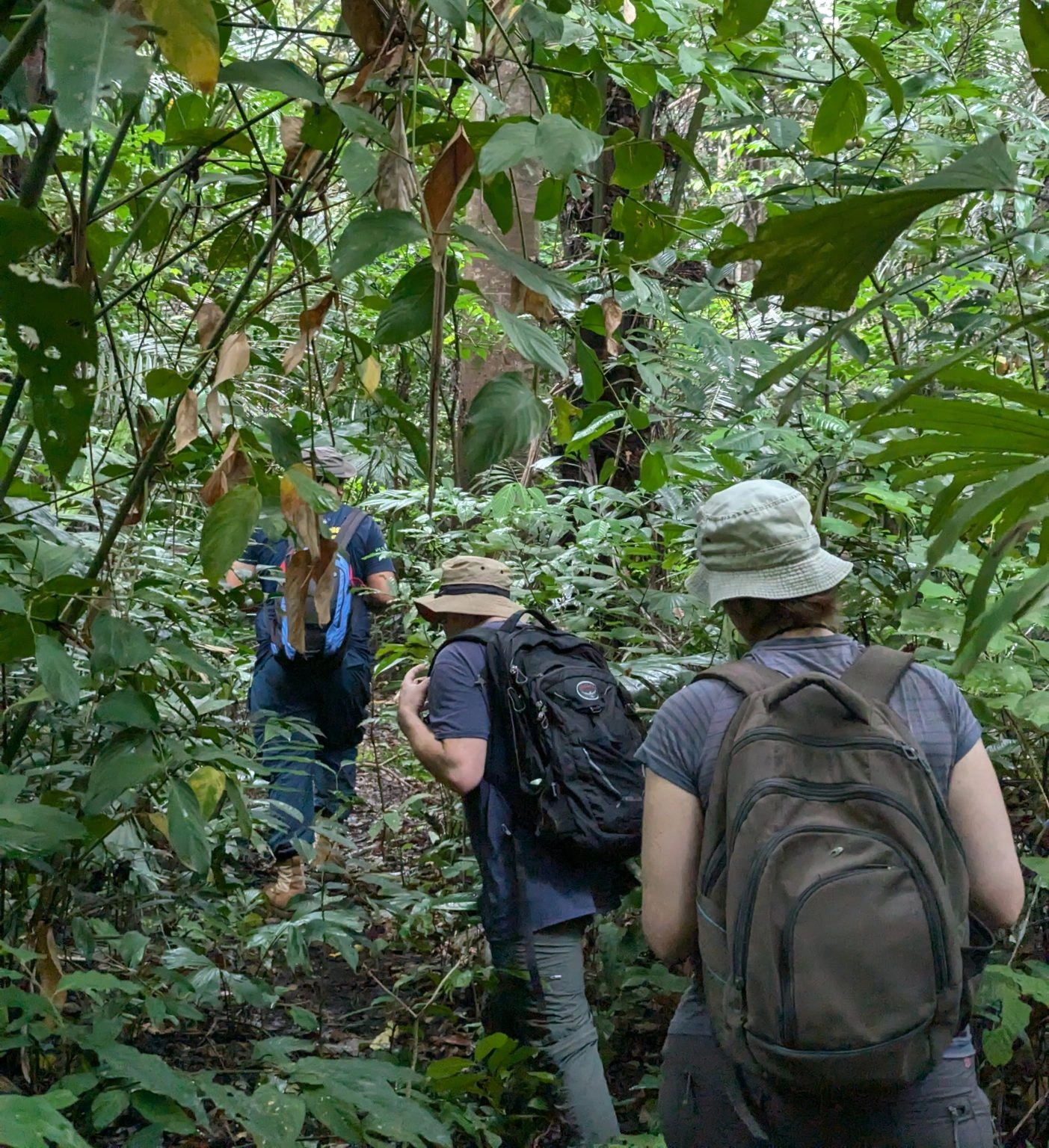
- Guided walk to the nesting field (typically a clearing of warm sand). Maleo arrive at the field through the day to lay; the laying itself takes several hours.
- Observation from a distance. The birds are skittish and will not lay if disturbed.
- A visit to the hatchery, where rescued eggs are incubated under controlled conditions and chicks are released into the surrounding forest.
A typical visit takes a half day. Site fees €5–€10; guide fees €12–€19. The fees fund the conservation work.
Why the Maleo matters for conservation
The Maleo is a flagship species for Sulawesi conservation in the way the orangutan is for Borneo. Its survival depends on the protection of a specific geographic feature (geothermal nesting sites) that is also under pressure from agricultural expansion, mining, and informal egg collection. Successful Maleo conservation has tended to require active community involvement — paying local communities to protect rather than harvest eggs, supporting hatchery work, and integrating nesting-site protection into wider land-use planning.
The Bakiriang project, in particular, is widely cited as one of Indonesia's more successful community-based conservation models, and the hatchery program there has released over 20,000 chicks since its founding.
When to visit
Maleo lay throughout the year but with peaks in the dry season (May–October), when warmer and drier soil conditions favour incubation. Visit in the peak months for the highest chance of seeing active laying.
How to combine with a wider trip
- Bakiriang pairs with a wider Central Sulawesi trip (Palu → Lore Lindu → Bakiriang → Togeans). Add two nights to the wider itinerary.
- Tambun pairs with a North Sulawesi diving trip (Bunaken → Tambun → Tangkoko). Add one night.
The Maleo is not a check-box wildlife sighting in the way a tarsier or a macaque can be. The visit takes effort. For travellers with genuine wildlife interest, particularly birders, it is one of the more meaningful single-species encounters available in eastern Indonesia.
What is the Maleo bird? The Maleo (Macrocephalon maleo) is an endangered Sulawesi-endemic megapode bird that does not incubate its own eggs. The female lays a single 240-gram egg in warm sand near a volcanic vent or sun-heated beach, buries it, and walks away. Chicks hatch independently and are fully able to fly within hours. The Maleo is best seen at Bakiriang on the Tompotika Peninsula in Central Sulawesi.