#wildlife
Lembeh Strait: Why Critters Beat Coral Here
Door D. Manangkasi26 Feb11 min lezen
A guide to muck diving Lembeh Strait — the world capital for macro divers, signature critters (mimic octopus, hairy frogfish, mandarin fish), and how it compares to Bunaken.
Lembeh Strait is the eight-kilometre stretch of water between mainland North Sulawesi and Lembeh Island, used by international cargo ships and lined on the western side by black volcanic sand. The sand is the point. Lembeh is the world capital of muck diving — the practice of looking for small, weird, well-camouflaged animals on featureless black-sand slopes — and the strait has been a pilgrimage site for macro-photography divers for the last twenty-five years.
This is a short guide to diving Lembeh — what muck diving is, the signature species, where to stay, and how it compares to the reef-diving alternative at Bunaken.
What muck diving is
Muck diving is not coral-reef diving. The visual experience is different, the skill set is different, and the population of divers who fall in love with it is genuinely separate from the reef-diving population.
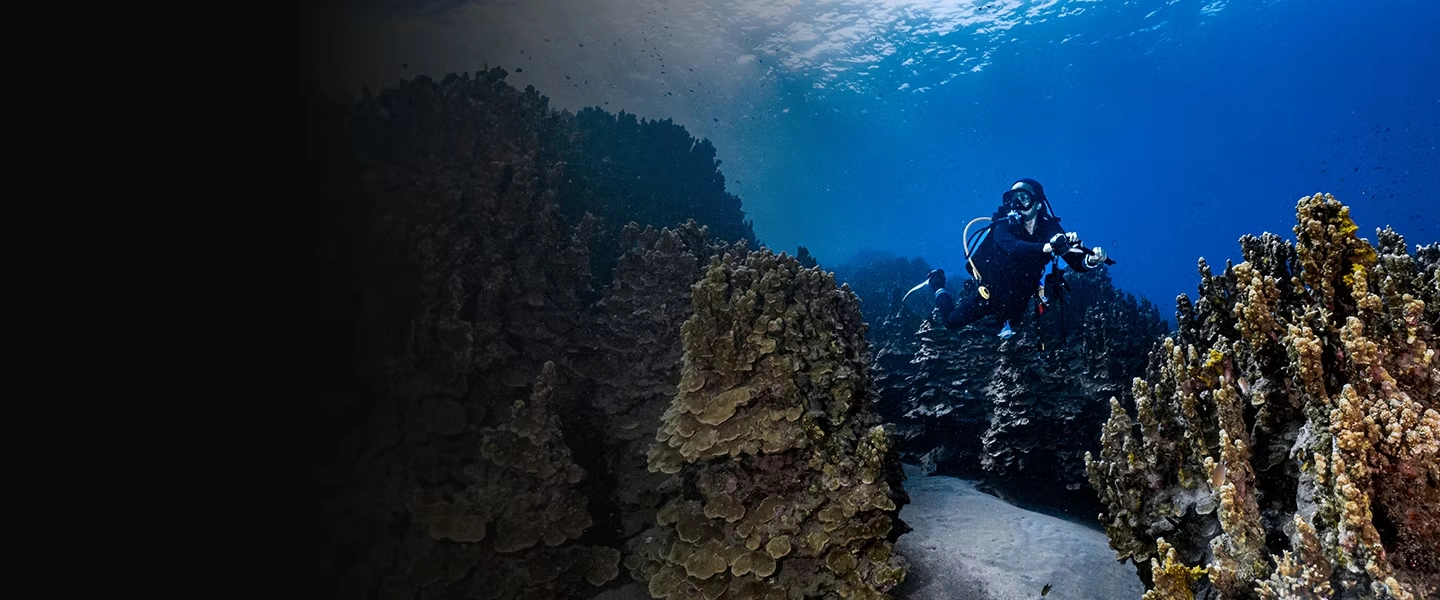
The diving happens on black volcanic sand slopes at 5–25 metres depth. There is no spectacular reef. There is no large pelagic action. What there is, in extraordinary density, is small cryptic invertebrates and fishes — animals that have evolved to disappear into the sand or into the small bits of debris (coconut husks, ropes, single coral fragments) scattered across the slope.
The work of a muck dive is to look. A 60-minute dive may cover 50 metres of bottom; a good guide is the difference between seeing twelve significant species and seeing two.
Signature species
The Lembeh critter list is long. The species that draw divers specifically:
- Mimic octopus (Thaumoctopus mimicus). Shape-shifter that imitates other species (lionfish, flatfish, sea snake) as defence. Rare; multi-trip target.
- Wonderpus (Wunderpus photogenicus). Smaller and more vividly patterned than the mimic. Also rare and high-target.
- Hairy frogfish (Antennarius striatus). Walking, ambush-hunting frogfish in shaggy disguise. The classic Lembeh photo subject.
- Blue-ringed octopus (Hapalochlaena lunulata). Small, venomous, electric blue rings when disturbed. Reasonably reliable on the right sites.
- Mandarin fish (Synchiropus splendidus). Dawn-dusk sightings at specific sites. Famous for the sunset spawning ritual.
- Flamboyant cuttlefish (Metasepia pfefferi). Walking cuttlefish with iridescent display patterns. Common at Lembeh.
- Pygmy seahorses (Hippocampus bargibanti and others). On gorgonian fans, typically deep.
- Algae octopus (Abdopus aculeatus). Surface-walking, intertidal, increasingly seen as climate-adapted behaviour spreads.
- Cardinal fish carrying eggs (multiple species). Photogenic, common.
A serious macro diver's Lembeh trip aims for 30–50 named species over a week.
Where to dive
Lembeh has about 60 named dive sites along the strait. The standouts:
- Hairball II, Hairball III, TK 1, TK 2. The classic critter sites, on the western (mainland) side. Black sand, gentle slope, dense small life.
- Aer Bajo, Goby a Crab. Specific sites known for particular species (gobies on snapping shrimp, frogfish).
- Nudi Falls, California Dreaming. Sites with more topography, including small reef bommies, that show a different kind of diving.
- Mandarin Sunset. The sunset dive specifically for mandarin fish spawning. Almost every Lembeh resort runs this dive at 17:00–18:00 most evenings.
Three to four dives a day across five to seven days produces the proper Lembeh experience.
Where to stay
Most Lembeh accommodation is dive-resort focused. The major resorts:
- Lembeh Resort. The established premium option on Lembeh Island, with strong house reef and high standards.
- NAD Lembeh. Mid-range, well-regarded, oriented toward serious macro photographers.
- Two Fish Divers Lembeh. Mid-range, casual atmosphere.
- Bastianos Lembeh. Long-running, mid-range, dive-focused.
- Eco Divers Lembeh. Premium, modern.
Resort rates run €70–€190 per night including all meals and three or four dives daily. The all-inclusive structure is standard.
For budget travellers: a small number of Lembeh village homestays exist but the diving infrastructure is far weaker. Bunaken is a better budget-dive destination than Lembeh.
When to go
Lembeh is diveable year-round. The conditions are remarkably stable due to the sheltered geography of the strait. The best months for visibility and surface conditions are March–June and September–November; July–August can be choppier with stronger currents in places.
Macro photography conditions are largely independent of season; the species are present year-round.
How long to stay
A minimum 5-night, 12–15-dive trip. Most serious divers stay 7–10 nights. Lembeh is one of the few Indonesian dive destinations where adding a third week genuinely adds new species to the list rather than just more dives.
Lembeh vs Bunaken
Both are North Sulawesi diving destinations. They are entirely different experiences:
- Bunaken — coral reef and wall diving. Visual spectacle. Large fish. Easier diving in terms of buoyancy demands.
- Lembeh — muck diving. Critters. Black sand. Harder diving in terms of buoyancy and observation skill.
The standard 10-day Indonesian-dive itinerary pairs the two — 4 nights Bunaken, 4 nights Lembeh, 2 transit/buffer days. For travellers who can only do one, the choice depends on diving personality: reef-and-pelagic divers should pick Bunaken, macro-and-photography divers should pick Lembeh.
Getting to Lembeh
The Lembeh resorts arrange transfers from Manado's Sam Ratulangi airport. The drive is 90 minutes to Bitung, then a 15-minute boat across the strait. Total transfer time around 2 hours.
Independent travellers can take public mikrolet from Manado to Bitung then a public ferry to Lembeh village; total cost under €5 versus the €29–€38 of a resort transfer. The savings are modest relative to the all-inclusive dive package costs.
What is Lembeh Strait diving? Lembeh Strait is the world capital of muck diving — looking for small, cryptic invertebrates and fishes on black volcanic sand slopes between mainland North Sulawesi and Lembeh Island. Signature species include mimic octopus, hairy frogfish, blue-ringed octopus, mandarin fish, and flamboyant cuttlefish. Most divers stay at dive resorts running 3–4 dives a day; a 5–10 night trip is standard.