
#wildlife
The Coelacanth: Living Fossil of Manado's Deep Waters
Автор D. Manangkasi12 Feb11 мин чтения
A primer on the Indonesian coelacanth — the 'extinct' fish rediscovered alive off Manado Tua in 1997, living at 150-250m depth in volcanic submarine caves.
The coelacanth — a 1.5-metre, prehistoric-looking fish considered extinct for 65 million years until one was caught off South Africa in 1938 — exists, against most expectations, in the deep waters off Manado, North Sulawesi. The Indonesian population (Latimeria menadoensis) was discovered in 1997 and confirmed as a separate species from the South African population (Latimeria chalumnae) in 1999. They live at depths of 150–250 metres in cool volcanic-cave systems, and are seen alive only during occasional research dives using submersibles or technical divers using rebreathers.
The coelacanth is one of the most extraordinary stories in twentieth-century biology, and the Indonesian discovery is genuinely Sulawesi-specific. This is a short primer for travellers and the curious.
The discovery story
The first coelacanth was caught in 1938 in a fishing net off East London, South Africa. Until that moment, coelacanths were known only from fossils dating to the Devonian period, 400 million years ago, with the most recent known fossils about 65 million years old. The fish had been thought extinct for two-thirds the time since the dinosaurs.
The 1938 specimen was identified by Marjorie Courtenay-Latimer (after whom the genus Latimeria is named) at the East London Museum, and confirmed by ichthyologist J. L. B. Smith. The discovery is considered one of the great twentieth-century natural-history finds.
For sixty years afterwards, coelacanths were assumed to be a single species restricted to the western Indian Ocean — the Comoros, Madagascar, and the South African coast.
In September 1997, an American marine biologist named Mark Erdmann was on his honeymoon in Manado with his wife Arnaz. At Pasar Bersehati fish market, Arnaz noticed a strange large fish on a vendor's cart. Mark photographed it and recognised the form immediately. The fish had been caught by a local fisherman in deep water off Manado Tua.
The species — distinct from the South African population by ten million years of divergent evolution — was formally described in 1999 as Latimeria menadoensis. A second specimen was caught and photographed alive in 1998; further specimens have been documented since.
Where they live
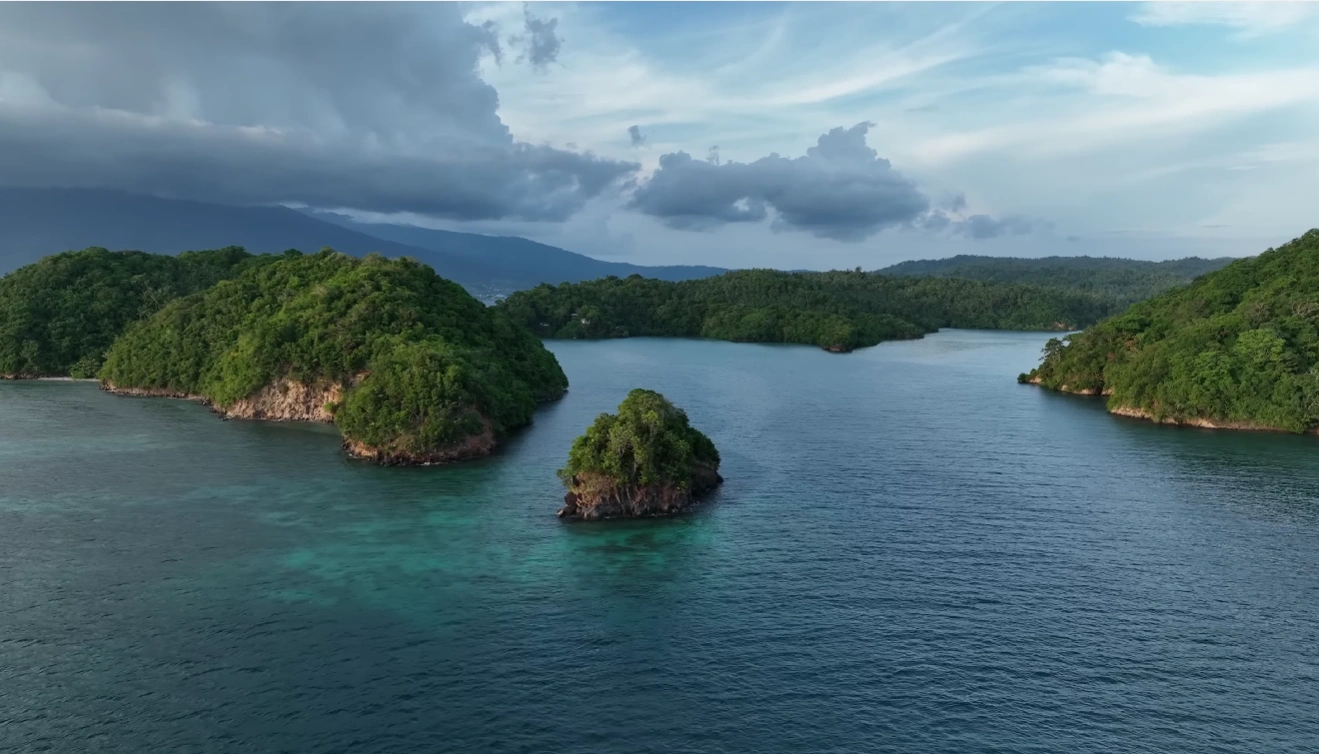
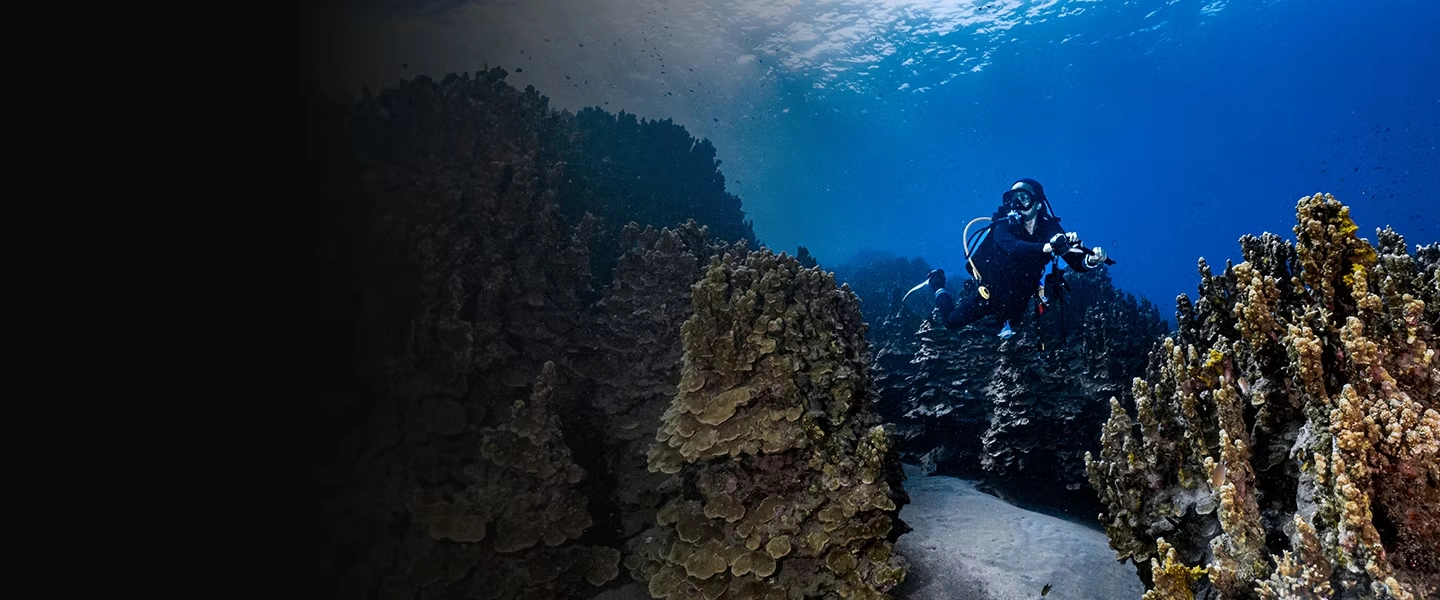
The Indonesian coelacanth lives in volcanic submarine caves at 150–250 metres depth in the waters around Manado Tua, Bunaken, and the deeper sections of the strait toward Lembeh. The fish are nocturnal, sheltering in caves during the day and emerging at night to hunt slow-moving prey in the deep slope.
The coelacanth's preferred habitat is consistent: cool water (16–18°C), volcanic substrate with abundant cave systems, and slope geography that allows easy depth movement. Manado Tua's volcanic origin and the surrounding deep water provide this habitat exactly.
Can you see one?
Almost certainly not.
The coelacanth is not visible to recreational divers. Standard scuba diving (depths under 40m) is more than 100 metres above the coelacanth's habitat. Technical divers using rebreathers can reach 150 metres for short windows, but the diving is specialised, expensive, and the coelacanth sightings even on such dives are rare.
The realistic way to see the Indonesian coelacanth in person is:
- Research submersible dives. Occasionally available to documentary teams and high-end scientific tourism but not commercially routine.
- Preserved specimens. A few preserved coelacanth specimens are held in Indonesian museum collections, including at the Bunaken National Park visitor centre on the Manado mainland. Worth a visit for the genuinely strange specimen.
- Photography and video. The species has been filmed and photographed by several research teams; the footage is the realistic way most travellers will encounter the species.
What makes them remarkable
Two things:
Anatomy. Coelacanths have lobed fins — the muscular limb-like fins that link them anatomically to the lobe-finned fish lineage from which terrestrial vertebrates evolved. The lobed fin is the visible feature that connects coelacanths to the broader story of how fish became tetrapods (which became amphibians, which became reptiles, which became mammals).
Live birth. Unlike most fish, coelacanths give live birth — ovoviviparous development in which the eggs hatch internally and the female releases fully-developed young. Litters are small (5–25 pups). The reproductive biology is closer to that of sharks than to most bony fishes.
These features place the coelacanth in a unique evolutionary position — a living example of an ancient body plan that fossil evidence had suggested was extinct.
Conservation context
Both coelacanth species are listed as Critically Endangered (the South African species) and Vulnerable (the Indonesian species) on the IUCN Red List. Population estimates are imprecise but probably small for both. The principal threat is bycatch from deep-water gillnet fishing, which occasionally catches coelacanths intended for other species.
The Indonesian coelacanth is protected under national law; any specimens caught are required to be reported and (where possible) released. Compliance is uneven.
Where to learn more
For travellers interested in the coelacanth story:
- The Bunaken National Park visitor centre in Manado displays preserved specimens.
- The book "A Fish Caught in Time" by Samantha Weinberg is the standard popular account of the original 1938 discovery and the subsequent Indonesian story.
- The 2012 Channel 5 documentary on the Indonesian coelacanth filmed live specimens at depth.
The coelacanth is one of those species that justifies the trip without anyone ever actually expecting to see one. The Indonesian population is a reminder that even in the most-documented marine areas, the strangest possible biology may still be living in the dark below.
What is the Indonesian coelacanth? Latimeria menadoensis is a Sulawesi-endemic coelacanth — a deep-water fish considered extinct for 65 million years until rediscovered globally in 1938 and confirmed for Indonesia in 1997. The Indonesian population lives in volcanic submarine caves at 150–250 metres depth off Manado Tua and Bunaken. Recreational diving cannot reach them; preserved specimens are displayed at the Bunaken National Park visitor centre in Manado.