A comparison of liveaboard and land-based diving for Sulawesi — why land-based wins for most Sulawesi-focused divers, when liveaboard makes sense, and what each costs.
The Sulawesi dive industry is fundamentally land-based — almost every serious dive site can be reached on a day-boat from a coastal resort or homestay, and the established North Sulawesi (Bunaken, Lembeh, Bangka) and Wakatobi resort circuits run this way. Liveaboards exist in Sulawesi waters but mostly operate routes that include other Indonesian destinations (Komodo, Raja Ampat, the Banda Sea) rather than dedicated Sulawesi-only trips. For most travellers, the question is therefore not "liveaboard or land-based" but "which combination of land-based resorts to string together."
This is a working comparison of the two approaches for Sulawesi specifically.
Land-based diving: how it works
The standard Sulawesi dive trip:
- Stay at a resort or homestay at a specific dive area (Bunaken, Lembeh, Wakatobi, etc.).
- Run two or three dives per day from the resort's day-boats.
- Eat and sleep at the same location each day.
- Move between dive areas by separate transit (flight, ferry, car).
Pros:
- More flexibility. Easy to take a non-diving day for cultural visits or rest.
- Better food. Resort kitchens cook for repeat customers.
- Established infrastructure. The Bunaken, Lembeh, and Wakatobi resorts have decades of operation.
- Non-diving partners are accommodated. The resort works as a beach holiday for non-divers.
- Significantly cheaper than liveaboards for most equivalent durations.
Cons:
- Limited reach. You dive what's within day-boat range, typically a 20-site rotation.
- Repetition. After 5 days you've seen most of the local sites.
- Surface conditions limit dive days. Bad weather cancels day-boats.
Liveaboard diving: how it works
Multi-day live-on-board boat trips with diving operations from the boat:
- Sleep on board the dive boat for the duration of the trip (4–14 nights typical).
- Three or four dives per day, sometimes including night dives.
- Move between distant dive sites between meals; reach areas that day-boats can't.
- All meals and dives included.
Pros:
- Reach. Liveaboards visit sites too remote for day-boats — the Banda Sea, the Sangihe-Talaud archipelago, the deeper Komodo sites.
- More dives per day. Easy 3–4 dives daily without the surface-interval transit time.
- Continuous group. Develop a rhythm with the same divers and instructors.
- Genuinely remote experiences. Nights at anchor in uninhabited waters.
Cons:
- Expensive. Sulawesi-routed liveaboards run €308–€528 per night per person.
- Confining for non-divers. The boat is the only social space.
- Sea-sickness risk for sensitive travellers.
- Inflexible. If you don't like the boat or the group, you're stuck for a week.
- Cabin sizes are small. Privacy is limited.
Sulawesi-specific liveaboard routes
A few operators run Sulawesi-routed liveaboards, but most include other destinations:
Banda Sea routes. Several operators run 10–14 night cruises from Maumere (Flores) through the Banda Sea to Ambon or Sorong, occasionally calling at Wakatobi or eastern Sulawesi waters. The Banda Sea is the major draw, not Sulawesi itself.
Komodo-Sulawesi combos. Some routes pair Komodo (off Flores) with eastern Sulawesi. Less common; check current operator schedules.
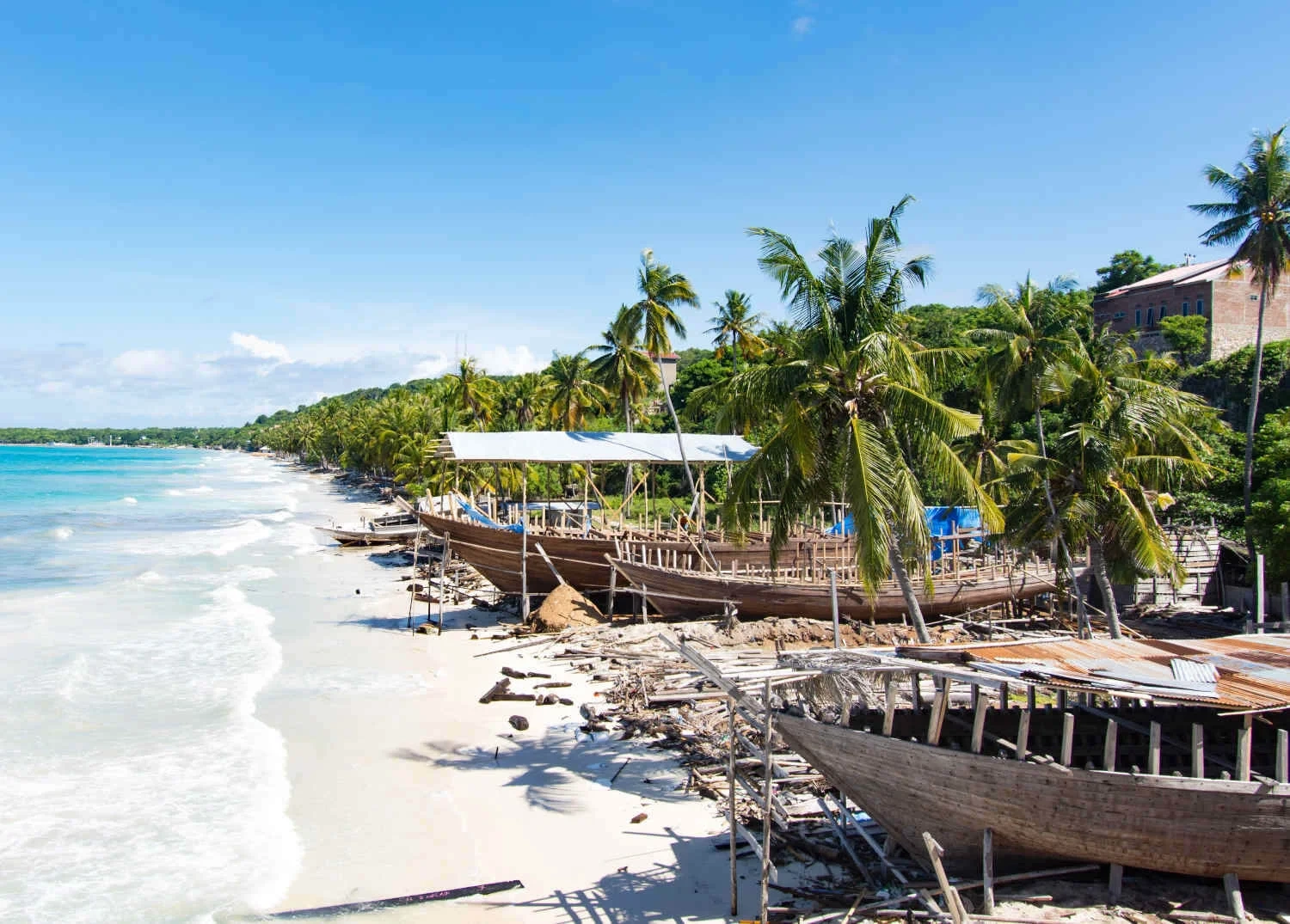
Smaller-vessel Sulawesi-only trips. A handful of smaller boats (often refurbished pinisi schooners) run shorter Sulawesi-only trips from Bira down to Selayar and Takabonerate. Less luxurious; more focused on the South Sulawesi waters. Operators: Sulawesi Cruises, Phinisi Adventures. Trips 5–8 nights, €176–€308 per night.
Bunaken–Lembeh transfers. Some operators offer a 3–4 night liveaboard transition between Bunaken and Lembeh that doubles as a dive trip. Useful for North Sulawesi visitors who want a sample of the liveaboard experience.
For Sulawesi-focused diving, the smaller-vessel southern routes are the only genuine Sulawesi-only liveaboards.
Land-based: which resorts where
For visitors choosing the land-based path, the major options:
Bunaken Island:
- Living Colours, Two Fish — mid-range, well-regarded.
- Cha Cha, Bastianos — slightly cheaper.
- Bunaken village homestays (Lorenzo's, Daniel's) — budget.
Lembeh:
- Lembeh Resort, NAD Lembeh — premium.
- Two Fish Lembeh, Bastianos Lembeh — mid-range.
- Eco Divers Lembeh — premium modern.
Bangka Island:
- Mimpi Indah Resort, Coral Eye — mid-range, quieter.
Wakatobi:
- The Wakatobi Resort — premium, fly-in package.
- Hoga homestays — budget on the dive-camp model.
- Tomia and Wangi-Wangi small operators — mid-range independent.
Gorontalo (Olele):
- Miguel's Diving, Saronde Dive — mid-range, focused on the Salvador Dali sponges.
Bira/Selayar:
- A few small dive operations; less developed than the North Sulawesi cluster.
Costs compared
Rough budgets for a 7-night dive trip:
Land-based (Bunaken resort, mid-range):
- Resort accommodation + meals + 18 dives + transfers: €1,232–€1,760.
Land-based (Bunaken village homestay):
- Homestay accommodation + meals + 12 dives + transfers: €528–€792.
Land-based (Wakatobi independent):
- Hoga homestay + meals + 12 dives + transfers: €792–€1,144.
Land-based (Wakatobi Resort, premium):
- Resort accommodation + meals + 18 dives + charter flight: €3,960–€5,720.
Liveaboard (Banda Sea, premium):
- 7 nights all-inclusive: €3,080–€4,840.
Liveaboard (small Sulawesi-only):
- 5–7 nights all-inclusive: €1,320–€2,200.
The cost spread is large. Budget-conscious divers do best on land-based homestay diving; premium divers can choose between resort luxury and liveaboard reach.
A standard Sulawesi land-based itinerary
For most international divers, the working pattern:
- Days 1–4: Bunaken (4 nights, 8–10 dives).
- Day 5: Transfer to Lembeh.
- Days 5–9: Lembeh (4 nights, 8–10 dives).
- Days 10–11: Tangkoko or Manado culture days.
- Day 12: Fly out.
12 days, 16–20 dives, both reef and muck diving, plus wildlife. Costs roughly €2,200–€3,520 mid-range.
For divers wanting to add Wakatobi:
- The above plus a 4-night Wakatobi extension (fly Manado → Makassar → Wangi-Wangi).
- Adds €1,320–€2,200 and 5 days.
When to choose liveaboard
A liveaboard makes sense for Sulawesi-area diving when:
- You want to dive the Banda Sea specifically (some of the best diving in Indonesia, hard to reach land-based).
- You want a high dive-density schedule (4+ dives per day).
- You're combining Sulawesi with Komodo or Raja Ampat — a multi-region liveaboard route makes the geography simpler.
- You specifically want the boat-only social environment.
For purely Sulawesi diving, land-based wins on flexibility and cost.
A few practical notes
Dive insurance. Mandatory for serious diving. DAN World, World Nomads with the diving add-on, or specialised dive policies. Liveaboards usually require proof of cover.
Decompression chamber. Manado has the regional hyperbaric chamber. Wakatobi and the outer islands do not; emergency cases evacuate to Bali or Manado. Factor this into liveaboard route choices.
Air travel after diving. 24-hour minimum surface interval before flying. Standard advice; relevant for any trip combining dive site and onward flight.
The Sulawesi dive infrastructure is mature. The choice between land-based and liveaboard is mainly about how much money, how much time, and how independent a dive style you want.
Should you do a liveaboard or land-based dive trip in Sulawesi? For most Sulawesi-focused divers, land-based wins — resort or homestay stays at Bunaken, Lembeh, Bangka, or Wakatobi offer more flexibility, better food, lower cost, and accommodate non-diving partners. Sulawesi-only liveaboards are limited; most liveaboards covering Sulawesi waters also include Komodo or the Banda Sea. Land-based 12-day itinerary (Bunaken + Lembeh + Tangkoko) runs €2,200–€3,520.