#guide
Makassar City Guide: South Sulawesi's Coastal Capital
Di H. Sallé05 Nov10 min di lettura
A working Makassar city guide — Fort Rotterdam, the three signature dishes, Pantai Losari sunsets, and what to do with one or two days en route to Toraja.
Makassar is the largest city on Sulawesi and the practical entry point for most international travellers heading anywhere on the island. Around 1.5 million people live in the metropolitan area, the airport handles direct flights from Singapore and Kuala Lumpur, and almost every overland route to Toraja, Bira, and the Bugis coast starts here. Makassar is also genuinely worth a stay in its own right — a working Bugis-Makassar port city with Dutch-fort architecture, a serious food culture, and a coastline that watches the sun set over the Makassar Strait every evening.
This is a one- to two-day guide for travellers passing through Makassar on the way to elsewhere, plus a longer list for visitors who decide to stay.
Orientation
Makassar runs along the western coast of the South Sulawesi peninsula, facing the Makassar Strait. The city is laid out in three loose zones:
- Pantai Losari — the harbour-front esplanade, the iconic sunset spot, and the highest concentration of hotels. Most short-stay visitors base here.
- Somba Opu and the old town — the heritage area around Fort Rotterdam, with the museum, the cultural village, and the more atmospheric eating. The old downtown.
- Panakkukang and the eastern suburbs — modern Makassar, with the malls, the better international restaurants, and the residential neighbourhoods. Less interesting for a short visit.
The airport (UPG) sits 22 km north of the city. Travel between airport and Losari is 40–60 minutes by Grab or Gojek (€4–€6) or by metered Damri bus (€1.50, ends at Mall Makassar Town Square).
What to see
Three sites cover the essentials of Makassar's history and most visitors' first day:
Fort Rotterdam. A seventeenth-century Dutch fort built on the foundations of an earlier Gowanese fortress, restored, and now housing the La Galigo Museum — the only serious museum on Bugis and Makassar history and the manuscripts of the world's longest epic poem. €0.50 entry, allow two hours.
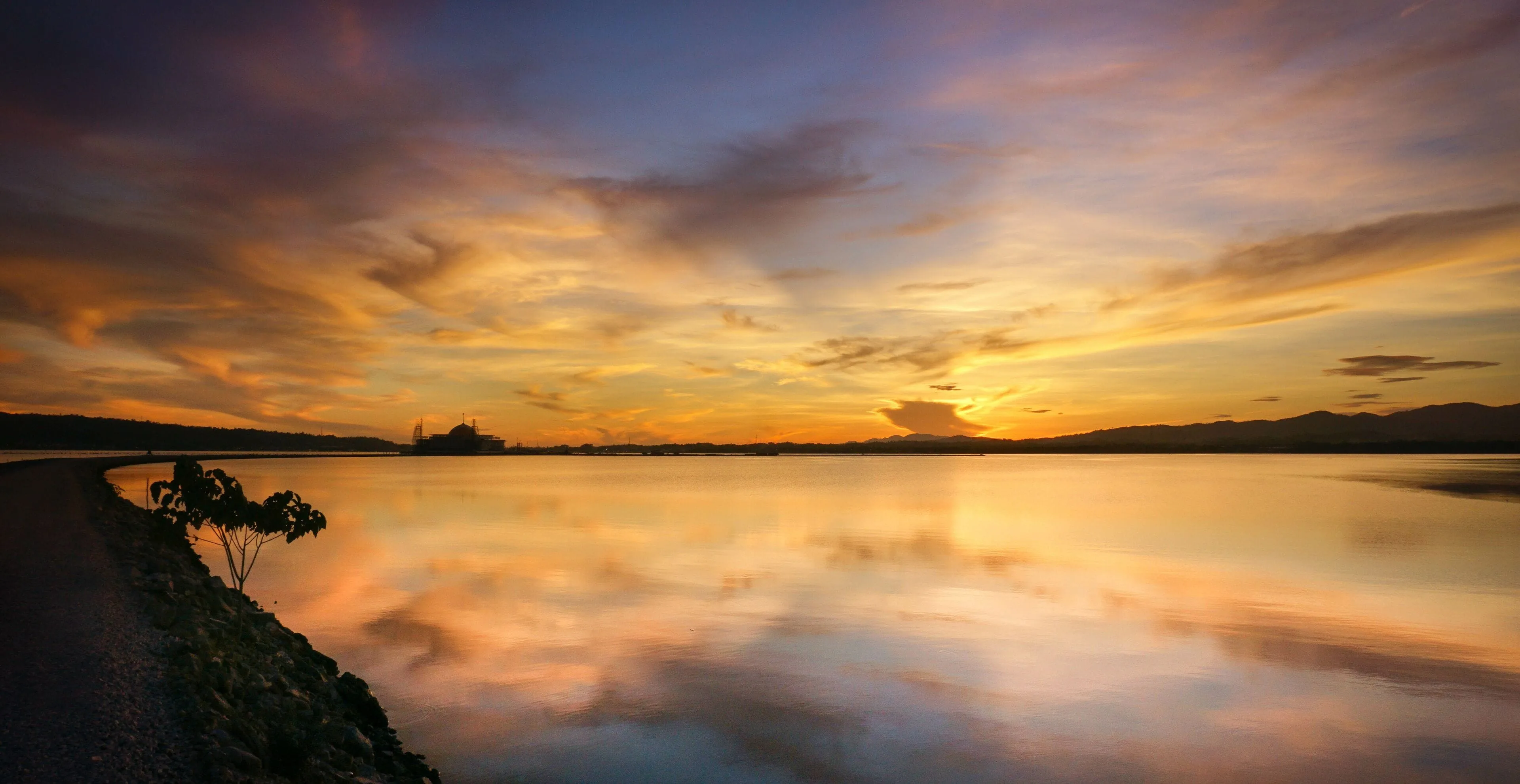
Pantai Losari. The esplanade. The bay-front promenade fills every evening with families, young couples, and tourists watching the sun drop into the Makassar Strait. The seafront is lined with floating warungs serving pisang epe (grilled banana in palm sugar) and jagung bakar (grilled corn). Go between 17:30 and 18:30.
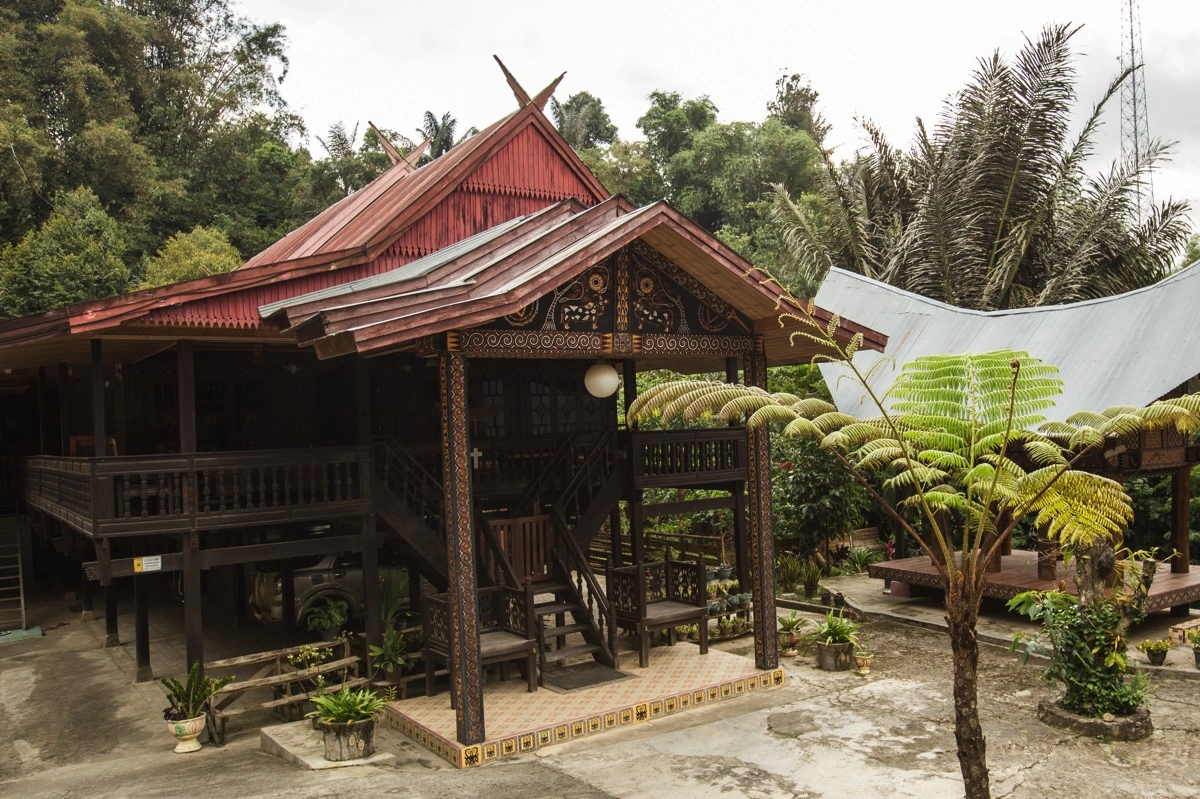
Somba Opu. The original Gowan capital, now a cultural village an hour south of the city, with replica traditional houses from across South Sulawesi (Bugis, Makassarese, Toraja, Mandar). A half-day. €0.75 entry. Worth it for visitors with a cultural interest, skippable for travellers in a hurry.
What to eat
Makassar is one of the strongest eating cities in Indonesia. Three local dishes are worth structuring a day around:
- Coto Makassar — the morning buffalo-offal soup. Coto Nusantara on Jalan Nusantara is the textbook spot; queue from 06:00. €1.50.
- Konro Bakar — grilled buffalo ribs, eaten late at night. Konro Karebosi is the famous brand; the streetside stalls on Jalan Sungai Cerekang are better. €4–€6.
- Pallubasa — the soup that drivers and dock workers eat. Less famous than coto, often better. Pallubasa Serigala on Jalan Serigala is the institution. €1.50.
Beyond these three:
- Es Pisang Ijo — green-pancake-wrapped banana in coconut sauce. A Makassar dessert sold everywhere; the Bravo on Jalan Lasinrang is consistent.
- Mie Titi — crispy fried noodles in a thick gravy, Makassar style. Mie Titi on Jalan Datu Museng is the original.
Most local food in Makassar is non-pork. The city is culturally Muslim with a Bugis-Makassarese majority; pork is available in Chinese restaurants and in a few specifically Christian-Toraja places. Alcohol is restricted but available in hotel bars and a handful of restaurants in Losari.
Where to stay
Three loose price tiers:
- Budget (€10–€19). The cluster of guesthouses south of Losari near Jalan Penghibur. Adequate, walkable to the esplanade.
- Mid-range (€24–€57). The chain hotels facing Losari — Aston, Swiss-Belhotel, Aryaduta. Standard rooms, sea-view balcony worth the upgrade.
- Top end (€71+). The Claro and the Best Western Plus Makassar Beach. Generally older buildings with newer rooms; check recent reviews.
For a one-night stopover before a Toraja transfer, the Losari hotels are the easiest choice. For two or more nights, a quieter mid-range place in the heritage area near the fort is more interesting.
Day-trip range
Makassar makes a workable base for day-trips into the limestone country east of the city.
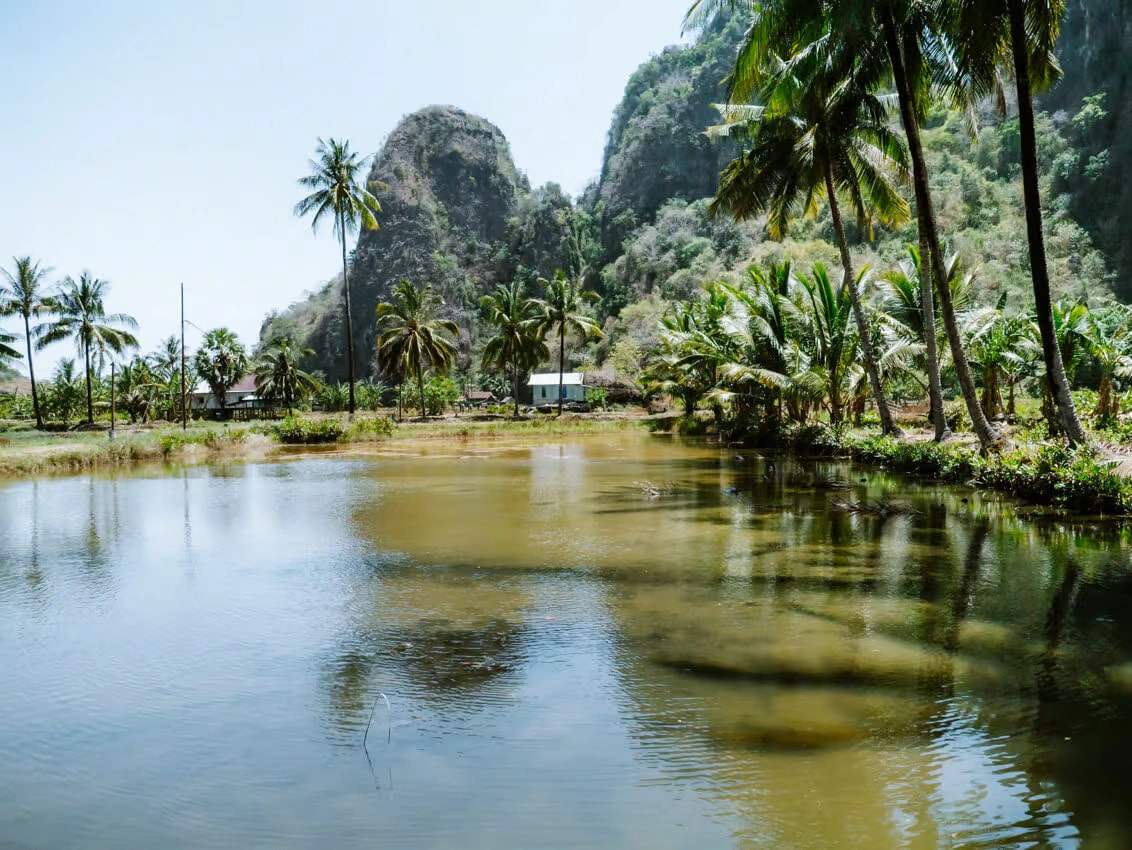
- Rammang-Rammang. Karst forest and rice paddies around the Maros river, 40 km northeast. Half-day. Reachable by Grab to the boat launch at Salenrang, then a wooden boat through the karst (€12–€19 per boat). Worth the trip for the scenery.
- Bantimurung National Park. Butterflies and waterfalls, an hour northeast. Less interesting than its reputation suggests but inoffensive for travellers with a free morning.
- Leang-Leang Prehistoric Site. Cave art dated to over 45,000 years old — among the oldest figurative art known. A short walk on a curated path. €1 entry. Worth a stop on the way to Rammang-Rammang.
When to go
The dry season runs May to October. Hot, dry, slightly windy in the afternoons. The west monsoon (November–April) brings warm rain in afternoon bursts and the occasional flooding day. Makassar functions year-round; the dry season is just more pleasant for outdoor walking.
The Makassar International Festival (early September) and the Bira-Selayar Pinisi Festival in August are worth timing a visit around if either lines up.
How long should you stay in Makassar? One night is enough for a Toraja transfer. Two nights covers Fort Rotterdam, a Losari sunset, and the three signature dishes (coto, konro bakar, pallubasa). Three nights adds Rammang-Rammang and Leang-Leang day-trips. Travellers staying longer should consider a side-trip to Bira or Selayar Island for the coast.
Practical notes
- Grab and Gojek both work well across the city. Most local travel is under €2.
- ATMs are plentiful. BCA, Mandiri, and BNI are reliable. Pull cash before heading to Toraja — highland ATMs are slower and sometimes empty.
- Language. Bahasa Indonesia is universal. Makassarese (the local language) is widely spoken among older residents; Bugis among the diaspora population.
- Sim cards. Telkomsel has the best coverage on the wider South Sulawesi peninsula. Buy at the airport on arrival.
Makassar is not Sulawesi's most beautiful city, but it is the most useful. Treat it as a working base and it earns its place in the trip.