#guide
Manado City Guide: Volcano Views and Minahasan Markets
Di A. Rahmawati29 Oct10 min di lettura
A Manado city guide for travellers passing through to Bunaken — what to see in two days, the Minahasan food worth structuring around, and where to base.
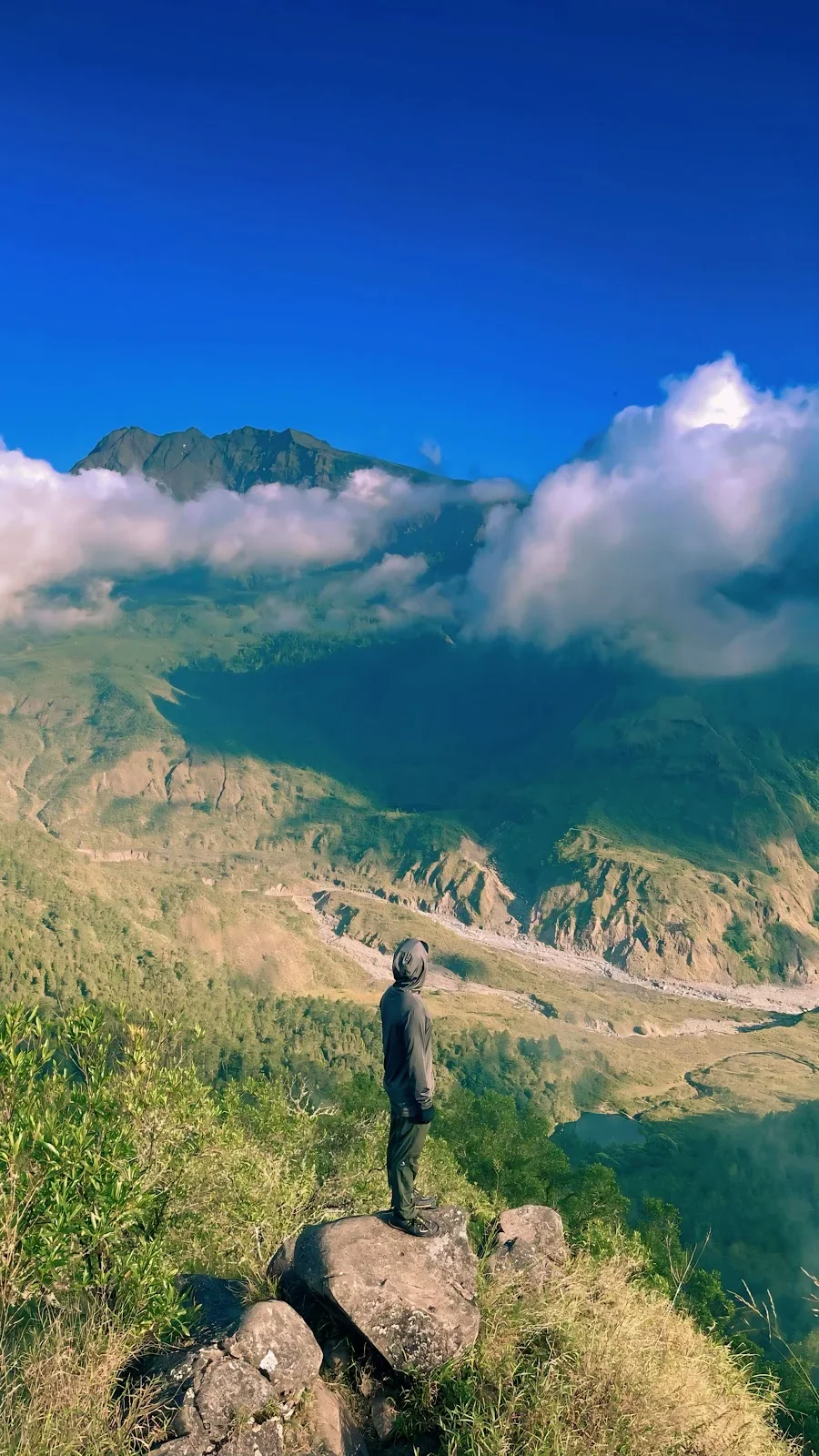
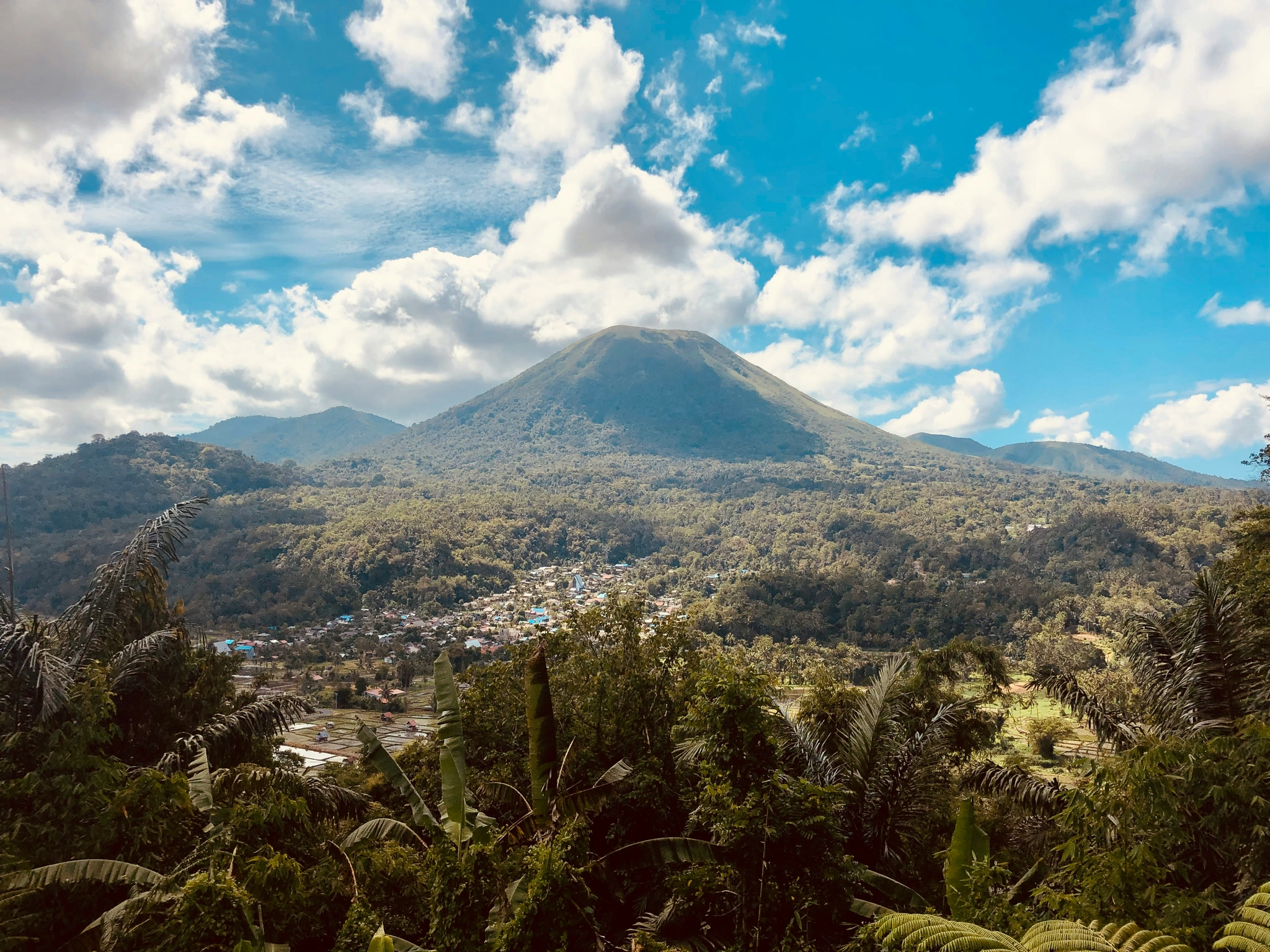
Manado is a small city by Indonesian standards — under half a million people in the urban core — but it sits at the centre of one of the country's most distinctive cultural and geographical regions. The Minahasan highlands rise sharply behind the city, with five active volcanoes visible on a clear day. The Sulawesi Sea opens west to the Bunaken reefs. The Christian-majority population gives Manado a different texture from the Bugis-Makassarese south: church spires instead of mosque minarets, pork in nearly every kitchen, and a food culture built around chilli, ginger, and bush meat.
This guide covers a working two to three days in Manado for travellers passing through on the way to Bunaken or Lembeh, plus a longer list for visitors who choose to base here.
Orientation
Manado runs in a thin strip along the western coast of the Minahasa peninsula. The city is laid out around three centres:
- Boulevard — the modern coast-front strip, with shopping malls, the larger hotels, and the cruise-ship terminal
- Pasar 45 and the old town — the heritage centre, with the central market and the older Chinatown
- The southern suburbs (Malalayang, Bahu) — quieter, residential, with the closer beach access and the resort cluster
The Sam Ratulangi International Airport (MDC) sits 14 km north of the city. Travel between airport and Boulevard is 25–40 minutes by Grab (€4–€5). The Bunaken dive resorts arrange their own transfers; the public boat to Bunaken leaves from Pasar Bersehati downtown.
What to see
A short list — Manado is more useful as a base than as a sightseeing city. Three sites cover the essentials:
Bukit Kasih. The "Hill of Love," a hilltop interfaith monument an hour south of Manado. A tall white cross sits beside a Buddhist temple, a small mosque, a Hindu temple, and a Christian church, arranged in a tight cluster on a ridge. Quietly moving, and a useful expression of how the religious mosaic of Minahasa is presented locally. €0.50 entry.
Pasar Tomohon. The Sunday-and-Wednesday traditional market in Tomohon, an hour up into the highlands. The most photographed feature is the bush-meat section — bat, civet, snake, dog, and pig — sold openly to local Minahasan customers. The market is a working market, not a tourist site; behave accordingly, ask before photographing, and accept that the scene is uncomfortable for many visitors. €0.50 informal entry; allow a half-day with the drive.
Bukit Doa Mahawu. A small Christian pilgrimage hill above Tomohon, with a series of statues depicting the Stations of the Cross arranged along a ridge walk. Good for sunrise, good for visitors interested in the Minahasan Christian culture, skippable otherwise.
What to eat
Minahasan cuisine is spicy, generous with ginger and lime, and dense with pork. Three dishes are worth structuring a day around:
- Tinutuan (bubur Manado) — a vegetable porridge of rice, pumpkin, cassava leaves, basil, and corn, served for breakfast. Light, healthy, distinctly Minahasan. Look for stalls along Jalan Wakeke. €1.
- Rica-Rica — chicken or fish in a chilli-tomato-lime stew, properly hot. Most local restaurants serve it.
- Woku — fish or chicken in a yellow turmeric-and-ginger sauce, milder than rica-rica, served with basil leaves on top. Wisata Bahari and Tinoor Indah are reliable.
For travellers willing to try local specialities:
- Paniki — fruit bat in coconut milk. Available at Christian-Minahasan family restaurants up in the highlands. Confronting if you haven't eaten bat before.
- Tikus hutan — bush rat. Same caveat. Common in Tomohon-area warungs.
Manado is the easiest Indonesian city to eat pork in. Babi tinorangsak (spicy pork) and babi guling (Balinese-style roast pork, here with a Minahasan twist) are widely available.
Where to stay
Three options for travellers:
- Boulevard (€24–€70). The mid-range and upscale hotels — Aryaduta, Four Points, Sintesa Peninsula. Modern, conveniently located, slightly disconnected from the old city.
- Old town (€14–€33). A handful of mid-range hotels and guesthouses near Pasar 45 and the cathedral. More texture, less polish.
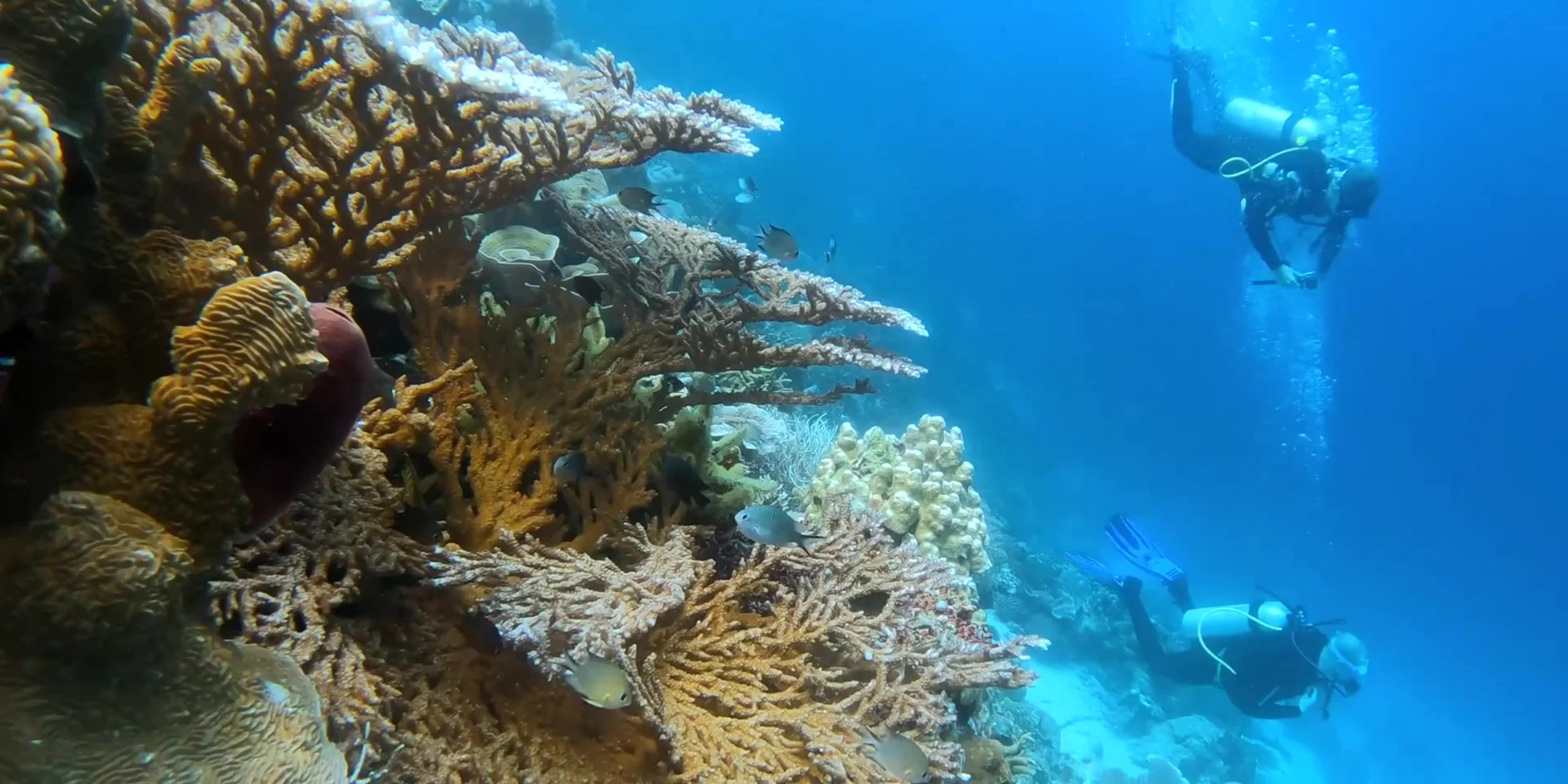
- Southern coast (€48–€145). The dive resorts at Tasik Ria, Murex, and Tasik Divers. The right choice if your trip is fundamentally a Bunaken dive trip and you want to skip the city.
For a one-night stopover before a Bunaken transfer or a Tangkoko trip, an old-town guesthouse near Pasar 45 is the easiest. For two or more nights of city exploration, Boulevard wins on convenience.
Day-trip range
Manado is unusually well-positioned for day trips. Three are worth the time:
Tomohon and the highlands. An hour up into the cooler air, with Pasar Tomohon, Bukit Doa, Tinoor (a hilltop village with a row of woku restaurants and a 180-degree view back over Manado Bay), and the cool-climate flower farms. Full day. Negotiate a driver for €29–€38 including waiting time.
Lake Tondano. A volcanic lake an hour and a half east, surrounded by Minahasan villages. Quieter than the highlands above Tomohon. A driver run is €33–€43.
Tangkoko. Two hours north on the east coast. Tarsiers and crested black macaques in the wild. Possible as a long day-trip but really a two-night stay; see the dedicated guide.
When to go
Dry season is March to October, with the calmest months April–June and September–October. The wet season is genuinely wet — afternoon thunderstorms become near-daily from December through February — but the city functions year-round and the dive sites remain workable on most days.
Festival timing: Pinkan-Pinkan in late August (cultural festival in Tomohon), the Tomohon International Flower Festival (annual, dates shift), and Manado Fiesta in September are worth coinciding with if the dates align.
Is Manado worth visiting outside the diving? Yes, especially for travellers interested in Minahasan culture and food. The city itself is functional rather than picturesque, but the highlands above it — Tomohon's traditional market, the volcanoes, Lake Tondano, and the woku-and-rica-rica restaurants of Tinoor — give Manado at least two days of substance beyond the Bunaken transfer. The Tangkoko Nature Reserve adds another two days for wildlife visitors.
Practical notes
- Grab and Gojek both work in Manado. Local fares are €1–€2.50.
- ATMs are plentiful. Use BCA or Mandiri for foreign-card reliability.
- Language. Bahasa Indonesia universal. Manado Malay (a creole) is the local everyday language and worth recognising. Some older Minahasan speakers also use the Tombulu or Tonsea languages at home.
- Religion. Manado is roughly 70% Christian (mainly Protestant) and 25% Muslim. Sundays are visibly different — half the city is in church, traffic light, shops late to open.
Manado is the right pivot point for any north Sulawesi diving or wildlife trip. Two days here, four on Bunaken, two at Tangkoko is a clean ten-day rhythm.