
#culture
Mandar Sailors: The Forgotten Maritime Tribe
Di F. Karuna11 Jun8 min di lettura
A cultural primer on the Mandar — the West Sulawesi maritime people whose sandeq outrigger sailboats can reach 20 knots, and the annual race that keeps the tradition alive.
The Mandar are one of the four major ethnic groups of South Sulawesi — alongside the Bugis, Makassar, and Toraja — but they get a fraction of the international attention the other three receive. About 400,000 Mandar live along the western coast of South Sulawesi and across the new province of West Sulawesi. They are predominantly Muslim, predominantly coastal, and maintain one of the most extraordinary traditional sailing cultures in the maritime archipelago: the sandeq, a narrow outrigger sailboat that can reach speeds of 20 knots and that until recently dominated the small-scale fishing trade of the Makassar Strait.
This is a primer on the Mandar — who they are, where to find them, what the sandeq tradition is, and how to encounter Mandar culture on a Sulawesi trip.
Geography
The Mandar heartland runs along the western coast of South Sulawesi from about Polewali north through Majene and Tinambung to Mamuju and beyond. The 2004 creation of West Sulawesi province (carved off South Sulawesi) was substantially driven by Mandar political aspirations for regional recognition.
Mandar communities also exist in eastern Kalimantan, in the southern Philippines, and in scattered diaspora locations across maritime Southeast Asia — reflecting the long-distance sailing culture.
Language
Mandar (Bahasa Mandar) is a distinct Austronesian language closely related to Bugis but mutually unintelligible. Most younger Mandar are also fluent in Bahasa Indonesia; older speakers often speak some Bugis as well.
A useful word for visitors: iyye — "yes" in Mandar (also widely used in Bugis).
The sandeq
The defining cultural artefact of the Mandar is the sandeq — a narrow, light outrigger sailboat developed for the small-scale tuna and flying-fish trade of the Makassar Strait. The hull is typically 4–10 metres long, around 60 cm wide at the beam, made of light planking on a slim keel, and balanced by two parallel outriggers (katir) connected by long beams. The single mast carries a single large triangular sail.
Sandeq are fast. With the wind on the beam and good crew, a working sandeq routinely makes 15 knots; racing sandeq have been clocked above 20. By comparison, most traditional Indonesian sailing vessels (pinisi, lambo, perahu lete) sit in the 6–10 knot range.
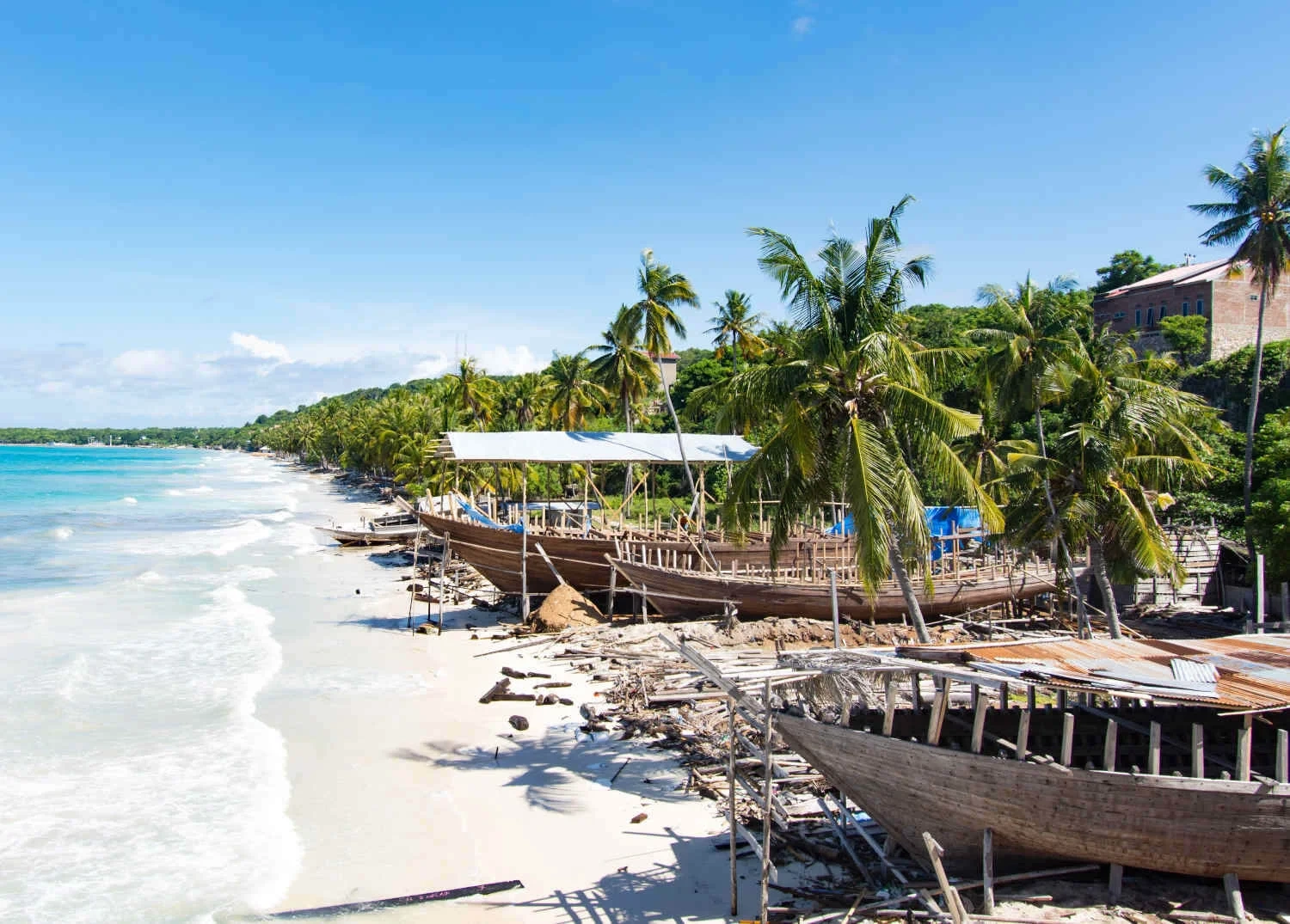
The boats are still built and sailed in the villages around Polewali and Majene, principally by older Mandar fishermen and a small number of younger Mandar who have committed to maintaining the tradition. The annual Sandeq Race, held in August or September, runs from Mamuju down the West Sulawesi coast to Makassar over several days and is the most visible expression of the tradition.
Why the tradition is fragile
The sandeq is being displaced. The economics of small-scale Strait fishing have shifted to motorised boats, which require less skill, can run in calm wind, and bring back larger catches per day. Younger Mandar are increasingly choosing motor-fishing or leaving fishing entirely for work in the regional cities.
The Sandeq Race has been the principal cultural-preservation mechanism for the tradition since the 1990s, when organisations including the Yayasan Suaka Sandeq began documenting and supporting active sailors. The race has succeeded in keeping the craft visible and recruiting a new generation of younger sailors, but the day-to-day working sandeq is in decline.
Mandar food
Mandar cuisine is recognisably South Sulawesi-Buginese with some specific dishes:
- Bau peapi — a Mandar-style fish dish, fish simmered in a sour-spicy broth of lemon, chilli, and turmeric. The signature Mandar fish preparation.
- Jepa — a crisp pancake of sago and grated coconut, eaten with fish.
- Loka Anjoroi — banana cooked in coconut milk, a common dessert.
Mandar coffee, grown in the West Sulawesi highlands, is worth seeking out at specialty roasters in Makassar or in Polewali itself.
Where to encounter Mandar culture
Three useful sites for visitors:
Tinambung, Polewali. The Mandar village most associated with the sandeq tradition. Working sandeq can usually be seen on the beach, and during the lead-up to the August race, the village fills with crews working on boats. Visit with a local guide for context.
Majene. The next significant Mandar town north. A small museum (Museum Mandar) holds material on the sandeq tradition, ikat textiles, and royal regalia from the small Mandar kingdoms that preceded Dutch colonial control.
The Sandeq Race itself (August or September). The race route runs Mamuju → Majene → Polewali → Pare-Pare → Barru → Makassar over a week, with stage finishes attracting crowds and traditional ceremonies. The dates shift annually; check local listings before planning.
How to combine with a wider trip
Mandar territory is on the western drive between Makassar and Mamuju. For travellers doing the Trans-Sulawesi loop or visiting West Sulawesi, a day in Polewali / Tinambung adds a real cultural dimension without much detour. For travellers focused on Toraja and Bira, Mandar is a deliberate detour that requires a specific interest.
The Mandar are not promoted in standard South Sulawesi tour itineraries. That is, for the right traveller, the reason to go.
Who are the Mandar people? The Mandar are one of the four major ethnic groups of South Sulawesi, with about 400,000 speakers along the western coast and across the new West Sulawesi province. They are best known for the sandeq — a narrow outrigger sailboat that can reach 20 knots and historically dominated the Makassar Strait small-scale fishing trade. The annual Sandeq Race in August or September from Mamuju to Makassar is the main cultural-preservation event.