

#wildlife
Anoa: The Dwarf Buffalo Almost No One Has Seen
Por M. Tandi09 Apr9 min de leitura
A primer on the Anoa — Sulawesi-endemic dwarf forest buffalo, two species, around 5,000 wild individuals total, and one of the hardest mammals on the island to find.
The Anoa is a small forest buffalo, roughly 90 cm at the shoulder, that exists only on Sulawesi. There are two species — the lowland Anoa (Bubalus depressicornis) and the mountain Anoa (Bubalus quarlesi) — both endangered, both notoriously shy, both rarely seen even by experienced Sulawesi wildlife guides. The Anoa is sometimes called the smallest wild cattle in the world. Total population estimates are around 5,000 across both species, declining.
The chance of seeing an Anoa in the wild on a normal Sulawesi trip is essentially zero. This guide is for the small subset of travellers willing to do the work.
The two species
Lowland Anoa (Bubalus depressicornis). The larger of the two, with relatively straight horns angling backward. Found in lowland forests below 1,000 metres elevation. Range: scattered populations across Sulawesi but most viable in Central and Southeast Sulawesi.
Mountain Anoa (Bubalus quarlesi). Smaller, darker, with shorter and more curved horns. Found in montane forests above 1,000 metres. Range: even more scattered; the best surviving populations are in Lore Lindu and the highlands of Central Sulawesi.
The two species have overlapping ranges in some areas, with intermediate forms creating genuine taxonomic debate.
Why Anoa are hard to see
Several reasons:
- They are genuinely rare. Even in the best-protected areas, Anoa density is roughly one animal per several hundred hectares.
- They are extremely shy. Anoa avoid humans on detection at distances of 100+ metres, and they detect well — good hearing, good smell.
- Their habitat is dense. Both species prefer thick forest understory, where sightlines exceed 15 metres only in clearings.
- They are not socially gregarious. Anoa are solitary or in small mother-calf pairs, not in herds. No accumulation of obvious sign at a known waterhole.
Even rangers in Lore Lindu who have worked the park for decades may have seen Anoa fewer than a dozen times. Visitor sightings are a matter of unusual luck.
Where to look
If you're going to try, three places offer the best statistical chances:
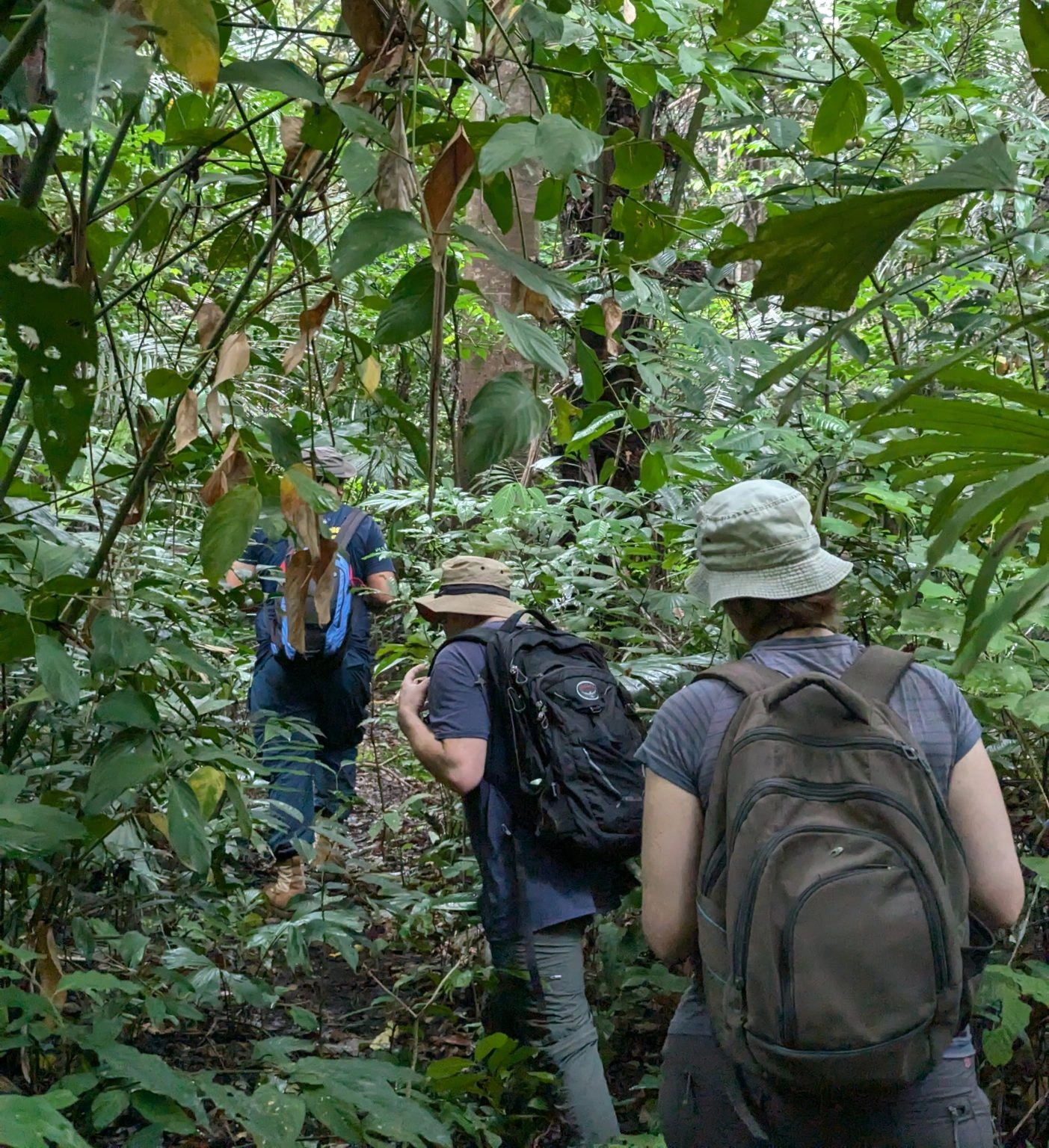
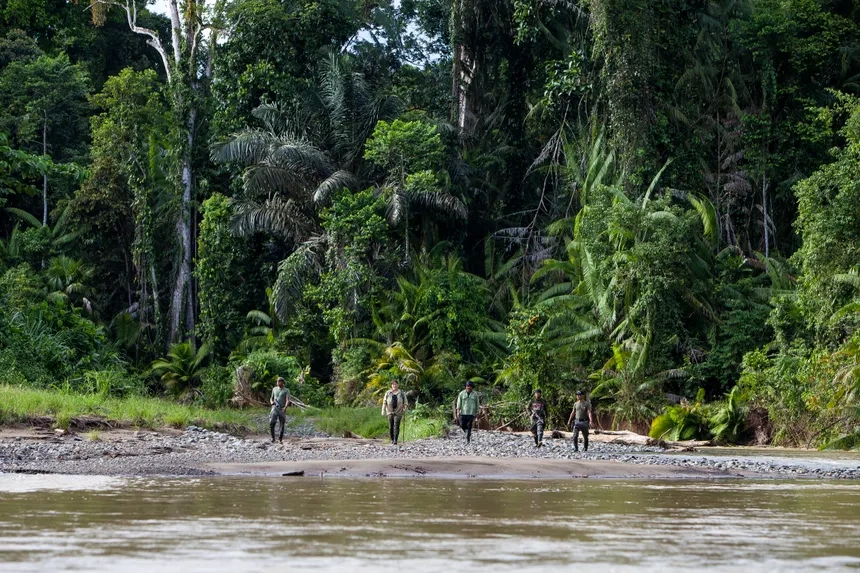
- Lore Lindu National Park (Central Sulawesi). The most-managed habitat for both species. A multi-day trek with rangers into the deeper forest is required; expect 5–7 days minimum to give yourself a real chance, and even then most groups see no Anoa.
- Anoa Breeding and Research Centre (Manado). Captive Anoa kept for breeding and study. The honest way to see Anoa with certainty. Not the wild experience but biologically informative.
- Bogani Nani Wartabone National Park (North Sulawesi). Some lowland Anoa survive; trekking access through Doloduo. Similar caveats to Lore Lindu.
What to do if you see one
Stop walking. Stay silent. Watch from a distance. Anoa generally retreat on detection, but they have been known to charge if surprised at close range, and the horns are sharp. Local guides will know the protocol.
Do not approach.
Conservation context
Both Anoa species are listed as Endangered on the IUCN Red List. The principal threats are:
- Hunting. Anoa are hunted for meat, particularly in remote rural areas. Hunting pressure is uneven across the range — heavier in poorly-protected areas, lighter inside well-staffed national parks.
- Habitat loss. Conversion of lowland forest for agriculture and mining has fragmented the lowland Anoa range substantially over the last fifty years.
- Inbreeding depression. As populations fragment, genetic diversity declines, with consequences for long-term viability.
The Anoa Breeding Centre in Manado holds a small but stable captive population that may have a role in eventual reintroduction; the more important conservation work is habitat protection at the parks and education in surrounding communities.
How to combine with a wider trip
For travellers who want to make Anoa-search part of a Sulawesi trip:
- A 7-day Lore Lindu trek with experienced birding rangers gives serious wildlife interest a real platform. The same trip should produce strong endemic-bird records and possibly Babirusa or wild Macaca sightings, regardless of Anoa luck.
- A half-day at the Anoa Breeding Centre in Manado adds biological context to a standard North Sulawesi diving trip.
The reality: for most travellers, Anoa is a species to know about rather than to seek. The Maleo, the tarsier, and the crested black macaque are the realistic Sulawesi-endemic mammal-and-bird sightings. The Anoa is one of the rarities that justify the deeper trip for the small subset willing to commit the time.
What is an Anoa? The Anoa is a small Sulawesi-endemic forest buffalo (about 90 cm at the shoulder) — sometimes called the smallest wild cattle in the world. Two species exist: the lowland Anoa (Bubalus depressicornis) and the mountain Anoa (Bubalus quarlesi). Both are endangered, with combined wild populations estimated at around 5,000. Wild sightings are rare even for experienced guides. Captive Anoa can be seen at the Anoa Breeding Centre in Manado.