
What fits in seventy-two hours in the Toraja capital without making it a march. The villages worth the drive, the funerals worth waiting for, and what to skip.
Rantepao is the working town. Tongkonan villages, cliff tombs, funeral attendances, market mornings — all of them are day trips from here, and trying to base anywhere else costs you mornings. Three days is the working minimum: one day for the close-in villages, one day for a funeral or a deep village visit if the calendar provides one, and one day to push north into the older Toraja country around Batutumonga. Anything less and you've come for the photographs; anything more and you risk doing the same village twice. This is what fits in seventy-two hours without making it a march, and what to skip when it doesn't.
Day one: the southern circuit
Start at Pasar Bolu, the cattle market. Tuesday and Saturday are the buffalo trading days and worth the early start. The animals are valued in the thousands of euros — a true albino is worth a small house — and the negotiation is its own theatre. Even on off days, the spice and meat sections of the market open at 06:00 and close out by 10:00.
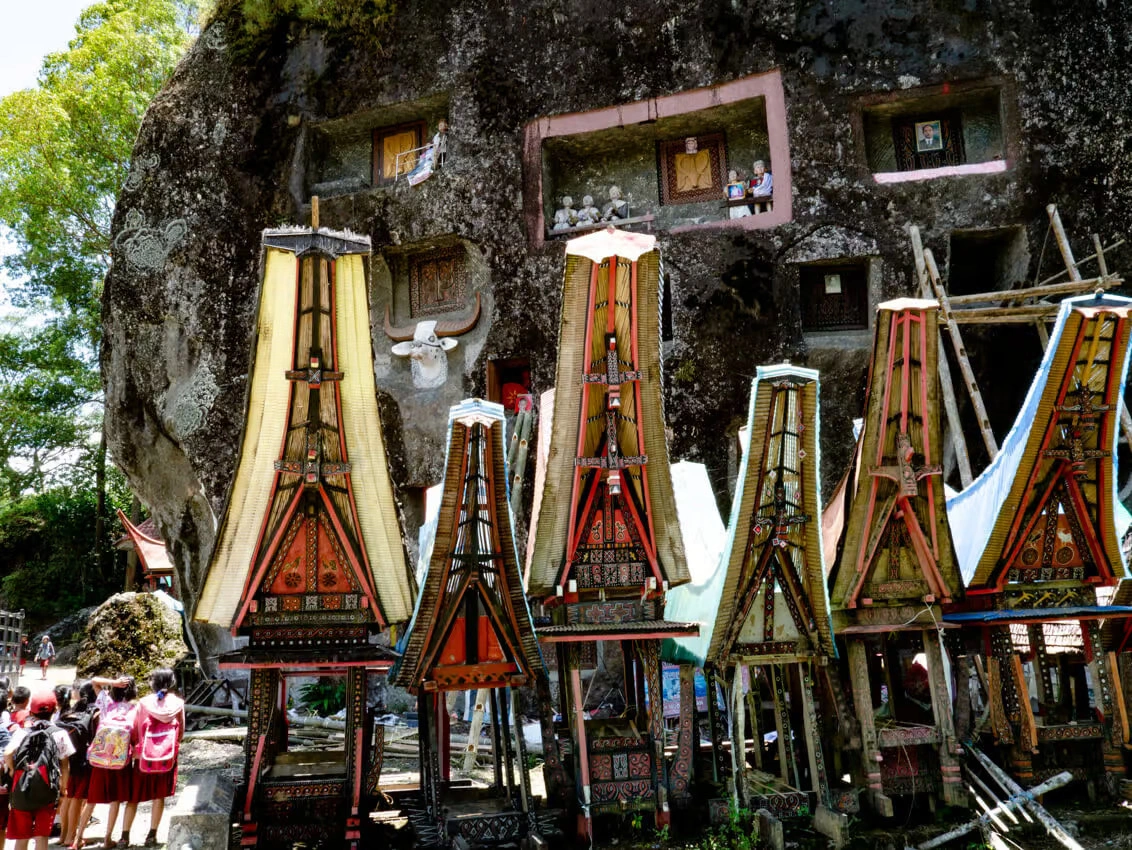
From Pasar Bolu, the southern loop runs through Lemo, Kambira, Londa, and Ke'te Kesu'. Hire a driver for the day (around €29 in 2026, including waiting time) and do them in that order. Lemo first because the gallery balconies are best in morning light; Londa last because the burial cave is darker and the headlamp tour is more interesting once you've built up context.
A practical note: the baby tree at Kambira — where Toraja families place stillborn infants inside the trunk of a living tree — is a real and current cultural site, not a museum exhibit. Visit quietly. Don't photograph the carved openings up close.
Day two: a funeral, or the deeper villages
If Rambu Solo' funerals are running during your visit, attend one. Funerals are the centre of Toraja public life and the door is genuinely open to outside visitors, with conditions. The rules: bring a carton of kretek cigarettes or a small bottle of palm wine as a gift to the host family; wear dark clothes; do not stand in the inner ring during the buffalo slaughter; sit on the side guests' platforms when offered. A village-introduced guide handles the social side; your guesthouse will know who is hosting that week and who can take you.
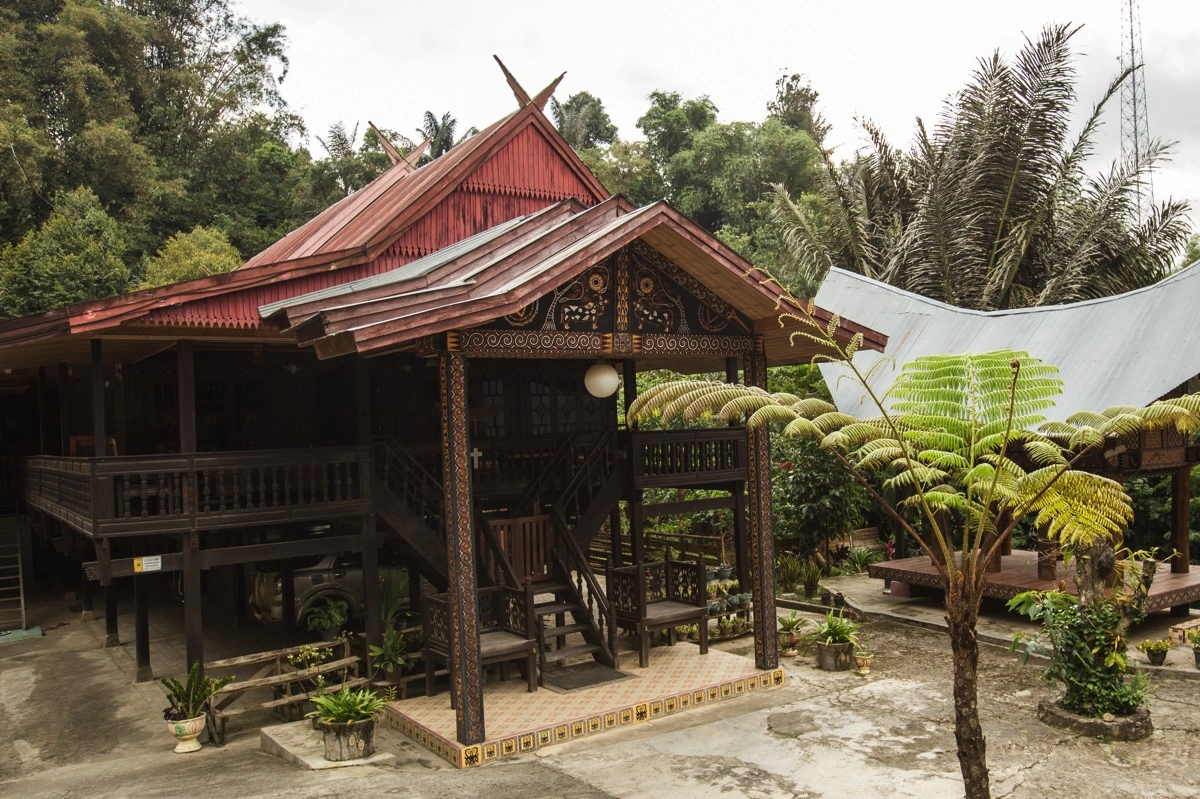
If no funeral is running, the second day goes north. Pana, Suaya, and Tumakke are the older villages and the carving work on the tongkonan there predates most of what you'll see on the southern circuit. Marante is the working farming village rather than the photogenic one. This is a four-hour driving day with three or four stops.
Day three: Batutumonga and Lokomata
The road north from Rantepao climbs into Batutumonga, an hour and a half by car, switchback country with cool mornings and rice terraces spilling down the hills. Lokomata, twenty minutes further north, holds a stone cliff with carved tombs ten metres above the ground. The villages along the ridge — Ka'e, Pengala, Pong — are working tongkonan settlements, not tourist attractions, and a slow walk between them is one of the best things you can do in Toraja.
A guide is optional for this day but worth it. The good ones know which families will offer coffee on the verandah and which prefer to be left to their day. Around €19 for a half-day from one of the Rantepao guide associations.
How many days do you need in Tana Toraja? Three full days is the working minimum from a Rantepao base: one for the southern villages and tombs, one for a Rambu Solo' funeral or a deeper village circuit, one for the highlands around Batutumonga. Five days lets you add Mamasa, the older Toraja country to the west, or Bittuang for the trekking.
What to skip
The Tilanga eel pool is a fifteen-minute visit dressed up as a half-day. The eels come for the egg the keeper offers them; everything else is a waiting area. Skip it.
Sa'dan, the weaving village on the southern road out of town, is now mostly a souvenir shop. If you want to see the traditional Toraja loom in use, go further south to Bittuang.
The cliff-edge restaurant chains north of the market are fine for a coffee but the menu is everywhere identical. Eat where the drivers eat, downhill near the bus terminal.
Where to stay
Two reliable mid-range options in Rantepao town: Toraja Heritage and Misiliana. Heritage is more comfortable; Misiliana is more central. Both around €33 a night in 2026.
For something different, base in Pana or Ke'te Kesu' for the second and third nights at a homestay-style tongkonan. €17 a night with breakfast. Cold-water bucket bath, no English from the host, an unforgettable morning — which is the genuine point. [VERIFY: confirm the Pana homestay is still operating in 2026; it was running through 2024.]