
A guide to seeing the crested black macaque (Macaca nigra) at Tangkoko — Sulawesi's flagship endemic primate, critically endangered, and behind the famous 2011 selfie copyright case.
The Sulawesi crested black macaque (Macaca nigra) is the more famous of Sulawesi's seven endemic macaque species — partly because of its dramatic appearance (jet black coat, tall mohawk-like crest, salmon-pink hindquarters) and partly because of an unusually visible Wikipedia legal case in 2011, when one of the macaques at Tangkoko took a selfie on a wildlife photographer's camera and the resulting copyright dispute went viral. The species is critically endangered, with a total population estimated at 4,000–6,000 in the wild, almost all in the small forest reserves of the northern Minahasa peninsula.
This is a short guide to the crested black macaque — what makes it distinct, where to see it, and the conservation status.
Identification and behaviour
A male crested black macaque is about 60 cm tall standing, with a body weight around 10 kg. The defining features:
- Jet black coat with no grey or brown markings.
- Tall crest of erect hair running over the top of the head.
- Salmon-pink ischial callosities (the bare skin on the hindquarters) — pinker in females, more reddened in oestrus.
- Long muzzle with prominent canine teeth in males.
- No visible tail — they have a vestigial tail that is barely visible in field observation.
Crested black macaques live in groups of 30–80 individuals, larger than most macaque species. The social structure is matrilineal and complex. Groups have well-defined territories which they patrol daily; conflict between neighbouring groups, when it happens, is loud and visible.
They are largely diurnal, omnivorous (fruit, seeds, insects, occasional small vertebrates), and unusually tolerant of human presence in protected areas.
Where to see them
Tangkoko Batuangus Nature Reserve. The standard answer. Two habituated groups of crested black macaques live in the coastal forest at Tangkoko and are routinely encountered on the morning ranger walks. Sightings are reliable — most visitors who do a half-day Tangkoko walk see at least one macaque group at close range. See the dedicated Finding Tarsiers in Tangkoko article for broader park context.
Bogani Nani Wartabone National Park. Wild macaques present at lower density than Tangkoko. Sightings less reliable on a short visit.
Lihaga / Bangka islands (off Likupang). Some macaques on the smaller islands; sightings sporadic.
For most travellers, Tangkoko is the right answer. A morning walk produces a strong macaque encounter at high probability.
What a macaque encounter looks like
The habituated Tangkoko groups treat human visitors with what reads as practised indifference. The macaques continue feeding, grooming, and moving without obvious behavioural change. Visitors can approach within 3–5 metres if the rangers permit; the macaques may pass within touching distance of standing humans without reacting.
This is unusual primate behaviour and reflects decades of careful management at the reserve. It also creates a temptation that travellers should resist: do not feed the macaques, do not touch them, do not move suddenly. Habituation is a useful conservation tool only when respected; aggressive incidents can result in animals being relocated or, in serious cases, killed.
The 2011 selfie case
In 2011, British wildlife photographer David Slater set up his camera in the forest and a curious crested black macaque pressed the shutter, taking what became one of the most widely circulated macaque photographs in history. Wikipedia hosted the photograph as public domain, arguing that the macaque (not Slater) had taken it and that animals cannot hold copyright. A multi-year legal dispute followed, with the People for the Ethical Treatment of Animals (PETA) suing on the macaque's behalf and the case settled in 2018 with no clear precedent established.
The photograph is genuinely good — the macaque smiling at the lens, eyes meeting the camera, no human visible. Whether or not copyright applies, the species got better international recognition from the dispute than from any prior conservation campaign.
Conservation status
Critically endangered. The wild population has declined roughly 80% over the last 40 years, principally from:
- Hunting. Macaque meat is consumed in some North Sulawesi communities, particularly at traditional Christian-Minahasan markets. Pasar Tomohon has historically sold crested black macaque alongside other bush meat, though regulation has reduced this in recent years and some sellers have moved to other species.
- Habitat loss. Forest conversion for agriculture has fragmented range significantly.
- Human-wildlife conflict. Crop-raiding macaques are sometimes killed by farmers.
The Tangkoko population is the most secure. Other populations are smaller and more vulnerable; the Bogani Nani Wartabone population is the second-largest stronghold.
Conservation organisations
- Macaca Nigra Project. Long-running research and conservation programme based at Tangkoko, with field stations and community engagement.
- Selamatkan Yaki. Indonesian-led conservation organisation focused on this species.
Visitors interested in supporting macaque conservation can contact either organisation directly; the Tangkoko visit itself contributes through the park entry fees and ranger employment.
When to visit
Year-round. Macaque sightings are reliable in any season. Dry season (May–October) is more comfortable for the walking and photography conditions.
A practical morning at Tangkoko
For the standard macaque-focused visit:
- 05:30. Leave Batu Putih homestay.
- 06:00. Arrive at the park gate, meet ranger.
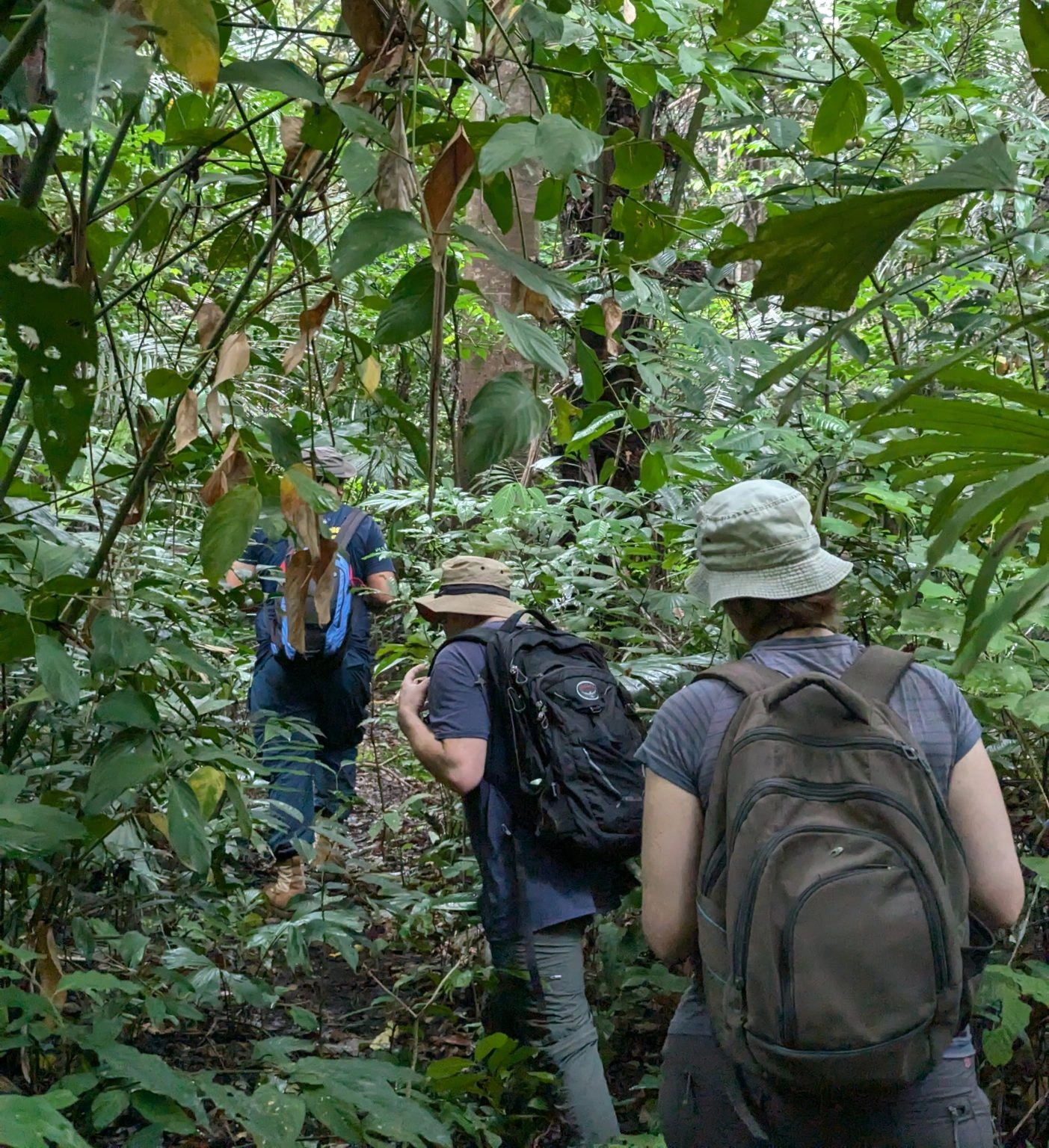
- 06:30–08:30. Forest walk. Macaque group encounter typically within the first hour.
- 08:30. Return to homestay for breakfast.
Combine with the dusk tarsier walk in the same day for a one-day Tangkoko wildlife sweep.
Where can you see crested black macaques in Sulawesi? The Sulawesi crested black macaque (Macaca nigra) is reliably seen at Tangkoko Batuangus Nature Reserve, 90 minutes northeast of Manado. Two habituated groups encounter visitors on the morning ranger walks. The species is critically endangered (4,000–6,000 wild individuals total) and almost entirely confined to the northern Minahasa peninsula.