#wildlife
Rammang-Rammang: The Karst Forest of Maros
Por M. Tandi05 Mar8 min de lectura
A guide to Rammang-Rammang — the world's third-largest karst formation, an hour from Makassar by car, with wooden boat tours through 300m limestone towers.
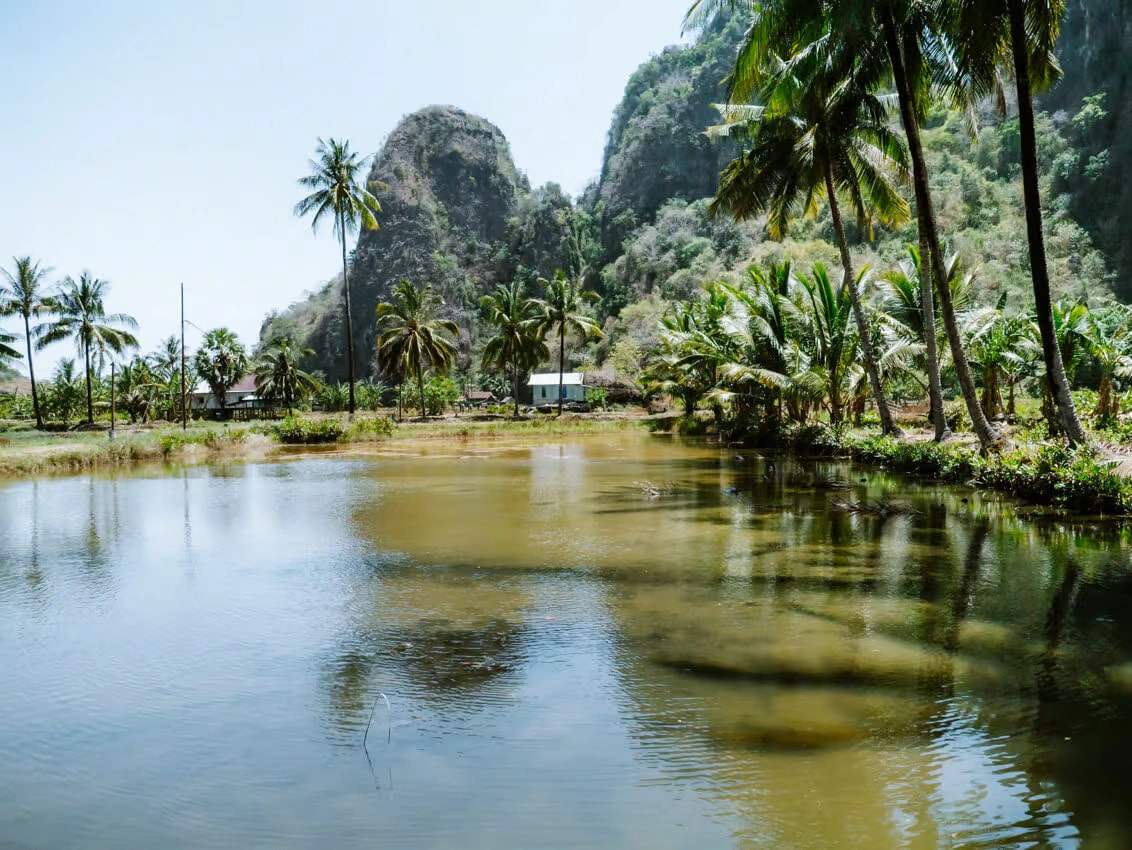
Rammang-Rammang is the dense limestone karst landscape east of Makassar — about 45,000 hectares of vertical limestone towers rising 100 to 300 metres straight out of rice paddies and river-fed valleys. The local Makassar name rammang-rammang means roughly "cloud-like," referring to the way mist gathers among the towers in the early morning. It is one of the most photogenic landscapes within easy distance of Makassar, the world's third-largest karst formation, and a worthwhile half-day to full-day trip for travellers based in the city.
This is a short guide to visiting Rammang-Rammang — how to get there, what the visit looks like, and how to combine it with the Leang-Leang prehistoric site and Bantimurung National Park.
What's there
The Rammang-Rammang karst landscape consists of:
- Limestone towers. Vertical formations carved by millions of years of erosion. The taller towers reach 300+ metres; the dense cluster around Salenrang village is the visited section.
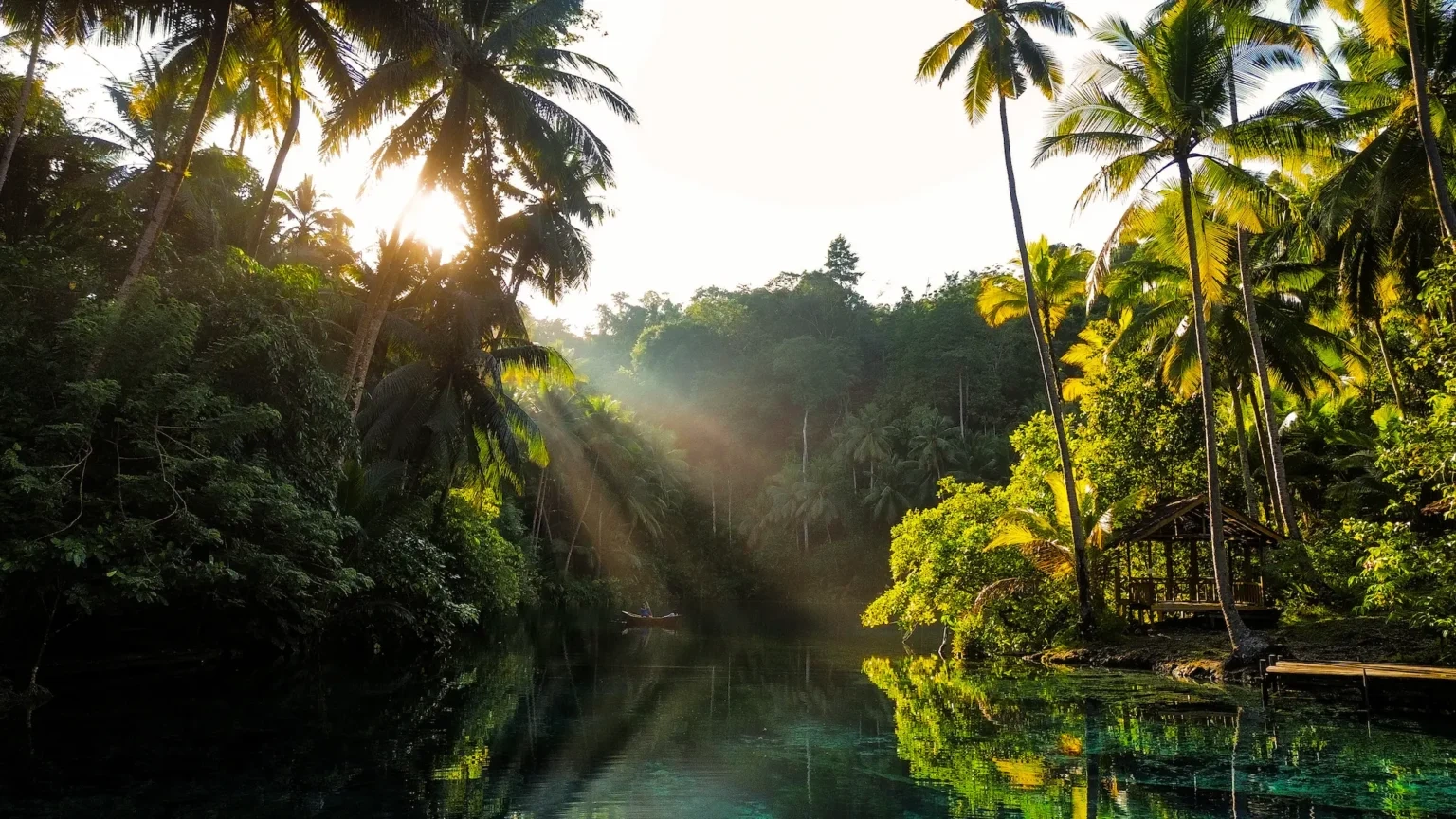
- The Salenrang river. A narrow river that runs through the centre of the towers, with wooden boats serving as the practical transport for visitors.
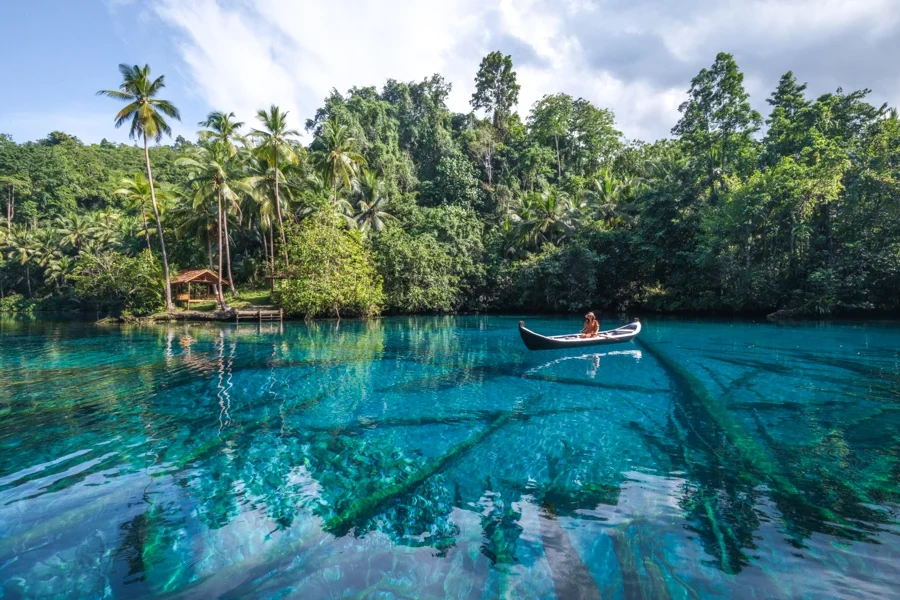
- Telaga Bidadari ("Angel Lake") and several other interior lakes among the towers.
- Cave art. Several caves within the karst hold prehistoric paintings, though the most-visited are at the adjacent Leang-Leang site.
- A small number of villages integrated into the karst landscape, including Salenrang, which serves as the practical entry point.
How to visit
The standard visit:
- Drive from Makassar. 40 km, 90 minutes by Grab or private car (€12 one way).
- Arrival at Salenrang. Park at the boat launch on the riverbank. The wooden boat tour through the karst takes 90 minutes round-trip (€17–€24 per boat for up to four people).
- Boat tour. Glide between the towers along narrow river channels with mangrove-like vegetation. Stop at Telaga Bidadari for a short walk; some boats include a visit to a small cave with prehistoric paintings.
- Lunch at one of the riverside warungs in Salenrang. Fresh river fish and rice. Around €3.
- Return to Makassar or continue to Leang-Leang and Bantimurung.
A half-day fits a standard Makassar morning visit. A full day adds the adjacent prehistoric and waterfall sites.
Leang-Leang and the cave art
Leang-Leang Prehistoric Site, 20 km north of Rammang-Rammang, contains some of the oldest figurative cave art in the world — dated by uranium-series analysis to over 45,500 years ago, predating European cave art by tens of thousands of years. The site includes hand stencils, a hunting scene depicting a wild pig surrounded by human-like figures, and several other panels.
Access requires a short walk on a curated wooden boardwalk; site fees €1. The on-site information panels are modest; for serious archaeology context, read background material before visiting.
Allow 90 minutes for the visit.
Bantimurung National Park
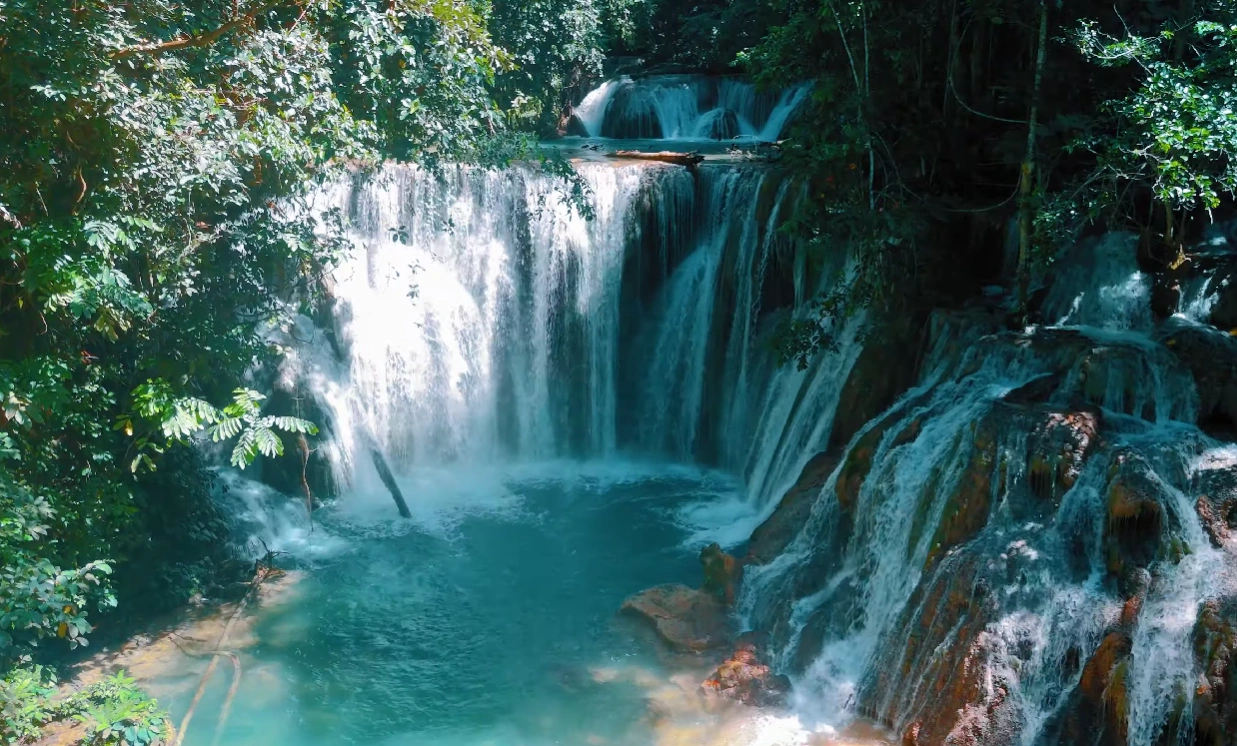
15 km further north of Leang-Leang. Famous for its butterflies — Bantimurung was nicknamed "The Kingdom of Butterflies" by Alfred Russel Wallace during his nineteenth-century travels — and for a sequence of small waterfalls. The butterfly density is real (over 250 species recorded in the park) but is now visibly lower than in Wallace's day due to habitat pressure and informal collection. The waterfalls are pleasant but unspectacular.
Worth a visit if you're already in the area and have time. Skippable if not.
A combined day plan
For a full-day trip from Makassar covering all three sites:
- 07:00. Leave Makassar.
- 08:30. Arrive Rammang-Rammang. Boat tour.
- 10:30. Continue to Leang-Leang. Site visit.
- 12:30. Lunch at Bantimurung gate (limited options, basic warungs).
- 13:30. Bantimurung butterfly park and waterfall walk.
- 15:30. Return to Makassar.
- 17:30. Back in Makassar.
A long but doable day. Hire a driver for the trip (€38–€57); negotiating each separate transport is inefficient.
When to visit
Year-round is fine, with the dry season (May–October) giving more reliable boat conditions on the Salenrang river. The wet season makes the karst more atmospheric (low mist among the towers) but the river can run high.
Mornings are best for both photography and butterfly activity.
How long to stay in Maros
For most Makassar-based travellers, Rammang-Rammang and the adjacent sites are a single-day visit. For visitors with specific archaeological interest, an overnight in Maros town (€12–€19 for a small hotel) allows two morning visits with better light and less driving.
Photography notes
The karst towers photograph well from the river boats, particularly with the morning mist. The Leang-Leang cave panels are protected behind glass and difficult to photograph well; the boardwalk and tower setting around the caves photograph better. Bantimurung's waterfalls are best in the late dry season when the water is clearer.
A standard travel photographer with a wide-angle lens will get strong images of the karst landscape itself; serious archaeological photography at Leang-Leang requires specialist permits arranged through the site management.
What is Rammang-Rammang? Rammang-Rammang is the limestone karst landscape east of Makassar — about 45,000 hectares of vertical limestone towers 100–300 metres tall, the world's third-largest karst formation. Visitors take wooden boats through the Salenrang river to glide between the towers. The site combines easily with the adjacent Leang-Lurang prehistoric cave art (over 45,000 years old) and Bantimurung National Park for a day-trip from Makassar.