






#culture
Animism and Aluk To Dolo: Pre-Christian Torajan Belief
Par A. Rahmawati23 Apr10 min de lecture
A primer on Aluk To Dolo, the pre-Christian Torajan belief system — the three-tier cosmology, the 7,777 ritual rules, and how it persists under contemporary Christianity.
Aluk To Dolo — "the way of the ancestors" — is the pre-Christian belief system of the Toraja people of the South Sulawesi highlands. Although Christianity is now the dominant religion in Tana Toraja (the regency is about 70% Christian, mainly Protestant), Aluk To Dolo has not disappeared. It persists in the structure of funeral ceremonies, in the architecture of tongkonan, in the layered cosmology that Torajan Christians still draw on, and in a small number of communities that maintain the older tradition as their primary faith.
This is a short primer on Aluk To Dolo — what it teaches, how it relates to contemporary Torajan Christianity, and where to encounter it on a visit.
The core cosmology
Aluk To Dolo is a three-tier cosmological system, parallel to the structure of the La Galigo Bugis epic. The three tiers are:
- The Upper World (langi') — the realm of Puang Matua, the creator deity, and the higher spirits.
- The Middle World (lino) — the realm of humans, organised around the tongkonan and the rice fields.
- The Underworld (tana sangbasaran) — the realm of the dead before they ascend, and of the spirits of the soil and water.
A person's life journey is upward through these tiers — from middle-world life, through the underworld after death, and finally upward to join the ancestors in the upper realm. The funeral ceremony (Rambu Solo', see related article) is the ritual that moves the deceased from middle to underworld and starts the upward journey.
The 7,777 rules
Aluk To Dolo is traditionally understood to contain 7,777 sukaran aluk — ritual rules — governing every aspect of life, agriculture, kinship, death, and worship. The number is symbolic rather than literal; the underlying point is that the tradition is dense, prescriptive, and covers the full domain of community life.
Major categories within the rule structure:
- Aluk Rambu Tuka' ("the rising smoke") — life ceremonies, weddings, house-blessings, harvest rituals.
- Aluk Rambu Solo' ("the descending smoke") — death and funeral ceremonies.
- Aluk Padang — agricultural rituals, particularly rice-planting and harvest.
The metaphor of smoke — rising and descending — captures the directional cosmology of the system, with life ceremonies oriented upward and death ceremonies oriented downward toward the underworld.
The arrival of Christianity
Dutch Reformed missionaries arrived in Toraja in the early 1900s through the Gereformeerde Zendingsbond mission, building schools and churches that became the institutional foundation of contemporary Torajan Protestantism. Conversion accelerated through the twentieth century, particularly after Indonesian independence, and most rapidly after the 1965–66 anti-communist purges, during which Indonesia formally required citizens to adopt one of the recognised state religions. Aluk To Dolo was eventually classified as a sect of Hinduism (the Indonesian state's category for indigenous religions) to give its remaining practitioners a recognised legal status.
The conversion was not always a clean displacement. In many cases, Torajan Christians retained substantial elements of Aluk To Dolo practice within nominally Christian frameworks. Modern Torajan funerals routinely include both a Christian service and a full Rambu Solo' sequence performed over the same week. Tongkonan continue to be oriented on the cosmological north-south axis. Buffalo sacrifices continue in scale that explicitly references the older tradition.
Where Aluk To Dolo survives as primary practice
A small number of Aluk To Dolo communities remain — concentrated in the more remote western and northern parts of Tana Toraja, particularly in some Pana and Sa'dan-area villages, and in pockets of the Mamasa regency to the west. Estimates suggest something between 5,000 and 15,000 active practitioners across these areas, though the numbers are imprecise.
Visiting Aluk To Dolo communities directly is possible but should be approached with care. The communities have legitimate reasons to be cautious of outside attention, and visits should be arranged through a Torajan guide with established trust in the specific village.
How Aluk To Dolo shows up in everyday Torajan life
For travellers who do not visit dedicated Aluk To Dolo communities, the tradition still appears constantly in standard Tana Toraja experience:
- At funerals. The structure of the Rambu Solo' is Aluk To Dolo's structure, even when wrapped in Christian observance.
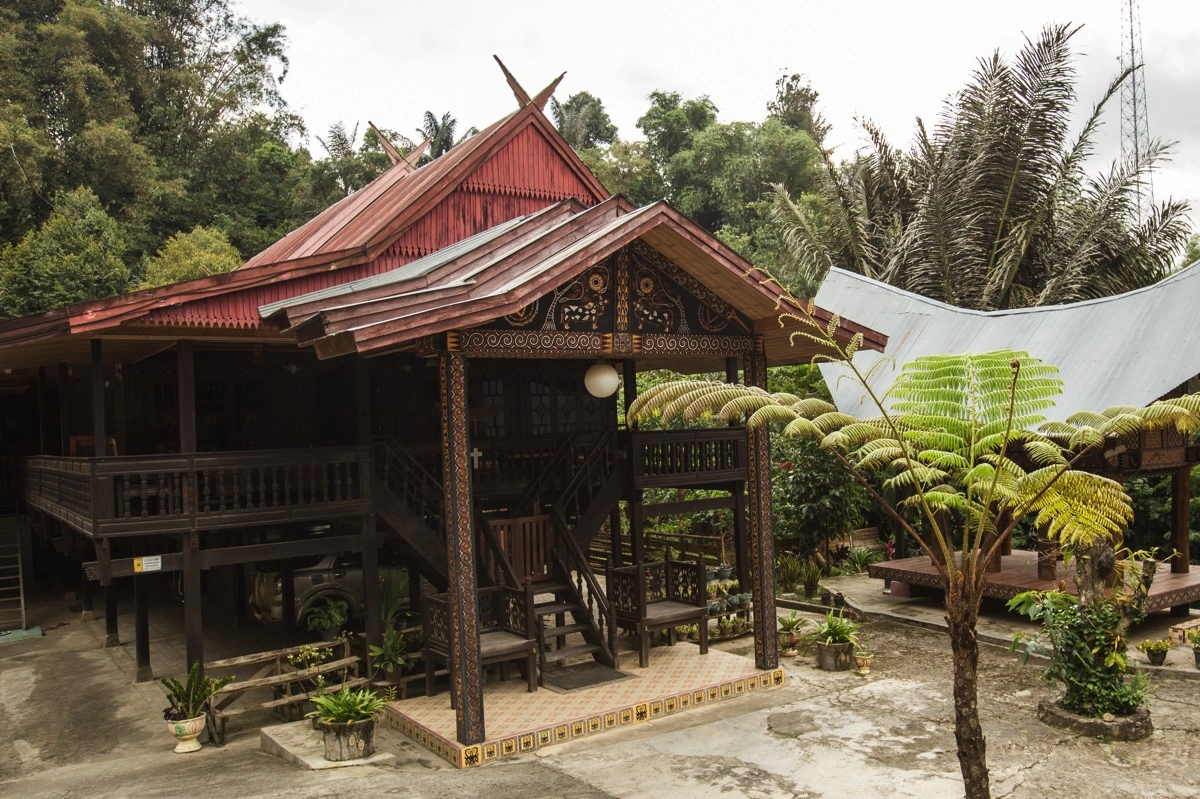
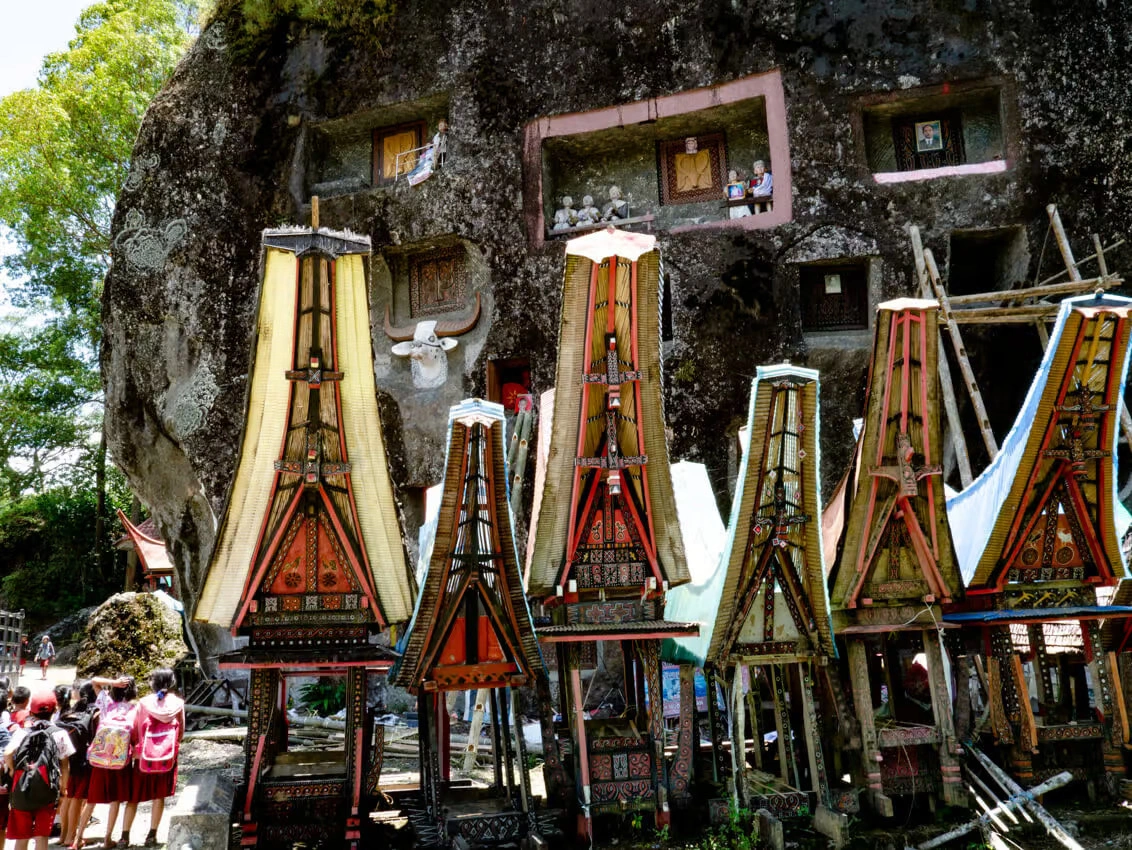
- In tongkonan architecture. The north-south orientation, the carvings, the buffalo horns — all rooted in Aluk To Dolo cosmology.
- In cliff burial sites. Lemo, Londa, the hanging effigies (tau-tau) — Aluk To Dolo's burial tradition continuing.
- In agricultural cycles. Rice-planting and harvest rituals retain Aluk To Dolo elements in most villages.
- In the tongkonan-versus-Christian-church spatial dialogue. Most Torajan villages have both a tongkonan compound and a church, side by side, expressing the religious layering directly.
Why it persists
Aluk To Dolo persists because the work it did has not been fully replaced by Christianity in the lived experience of most Torajans. The funeral system is the most visible example: a Christian service alone does not perform the social, economic, and ritual functions of Rambu Solo' — the gathering of extended family, the redistribution of wealth through buffalo meat, the long mourning process across multiple days. Christianity offers a different theological frame; Aluk To Dolo offers a still-functioning ritual structure.
The layering is not always comfortable. Conservative Torajan Christian voices have at various times pushed for sharper separation between the two traditions. Other Torajan voices have argued that the layering is the authentic Torajan way and should be defended. The conversation continues.
Reading further
For travellers who want depth, Roxana Waterson's The Living House and Toby Volkman's writing on Toraja funerals are the standard scholarly references. Both are available in academic library collections.
What is Aluk To Dolo? Aluk To Dolo ("the way of the ancestors") is the pre-Christian belief system of the Toraja people of South Sulawesi. It teaches a three-tier cosmology (Upper World, Middle World, Underworld) and contains 7,777 traditional ritual rules covering life, agriculture, and death. Although most Toraja are now Christian, Aluk To Dolo persists in funeral ceremonies, tongkonan architecture, and a small number of communities that maintain it as primary faith.