

#guide
Bunaken Marine Park: Diving One of Indonesia's Top Reefs
Par D. Manangkasi26 Nov11 min de lecture
A working diver's guide to Bunaken Marine Park — the signature wall sites, when to come, where to stay, and when to swap reefs for Lembeh's muck.
Bunaken's reefs sit at the edge of a 1,500-metre drop. The walls plunge from coral garden into deep blue in the first ten metres of a dive, and the current pushes turtles, schools of Lutjanus, and the occasional whitetip past you in the same fifty-minute window. Bunaken is famous for wall diving for a reason. It is also famous for being slightly past its early-2000s peak, with reefs that have lost some coral cover to bleaching events in the last decade. Both are true.
This guide is for divers planning a trip — what makes the diving distinctive, which sites are worth your tanks, how long to stay, where to base yourself, and when to skip Bunaken for one of the harder muck-diving sites elsewhere on the island.
What makes Bunaken's diving distinctive
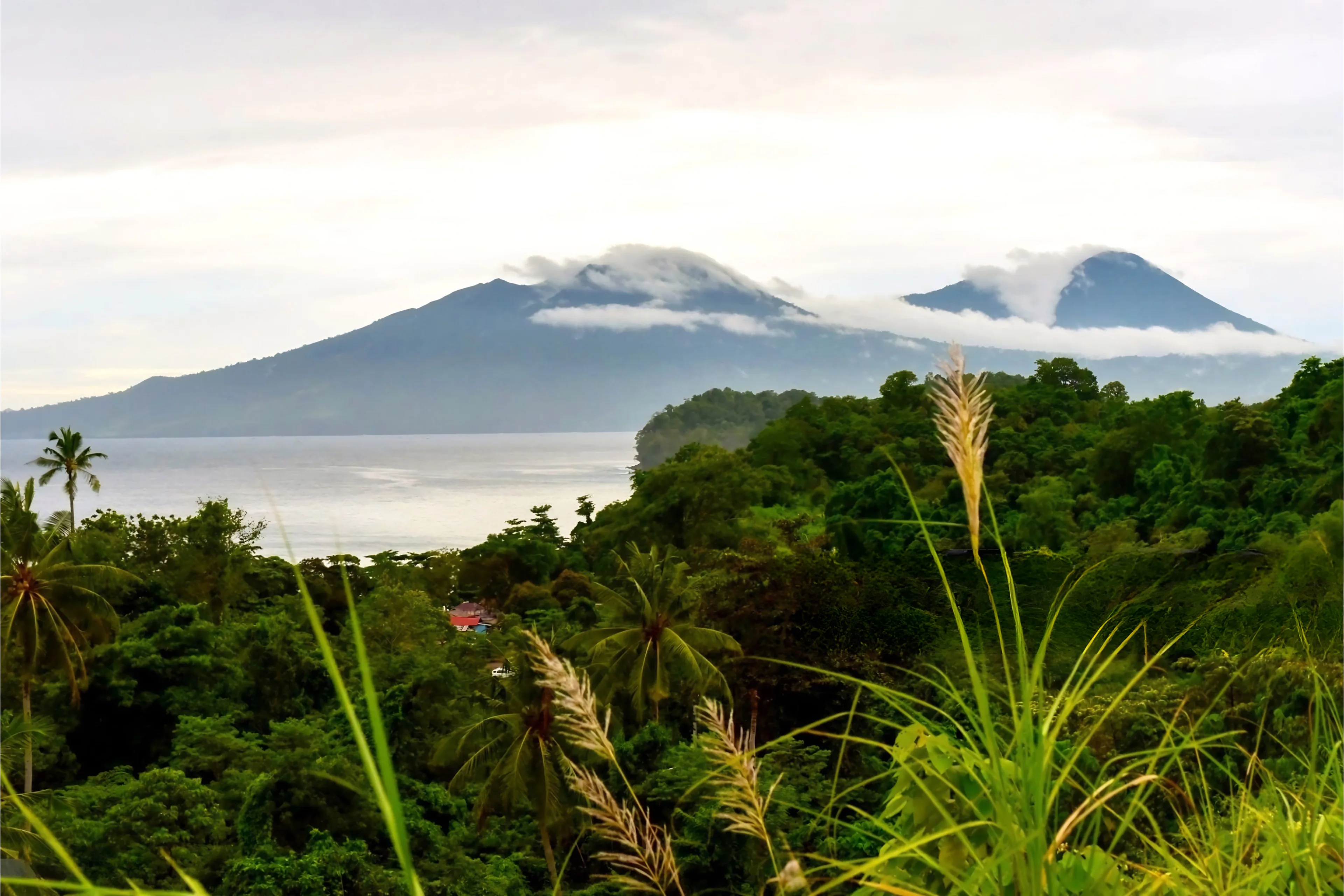
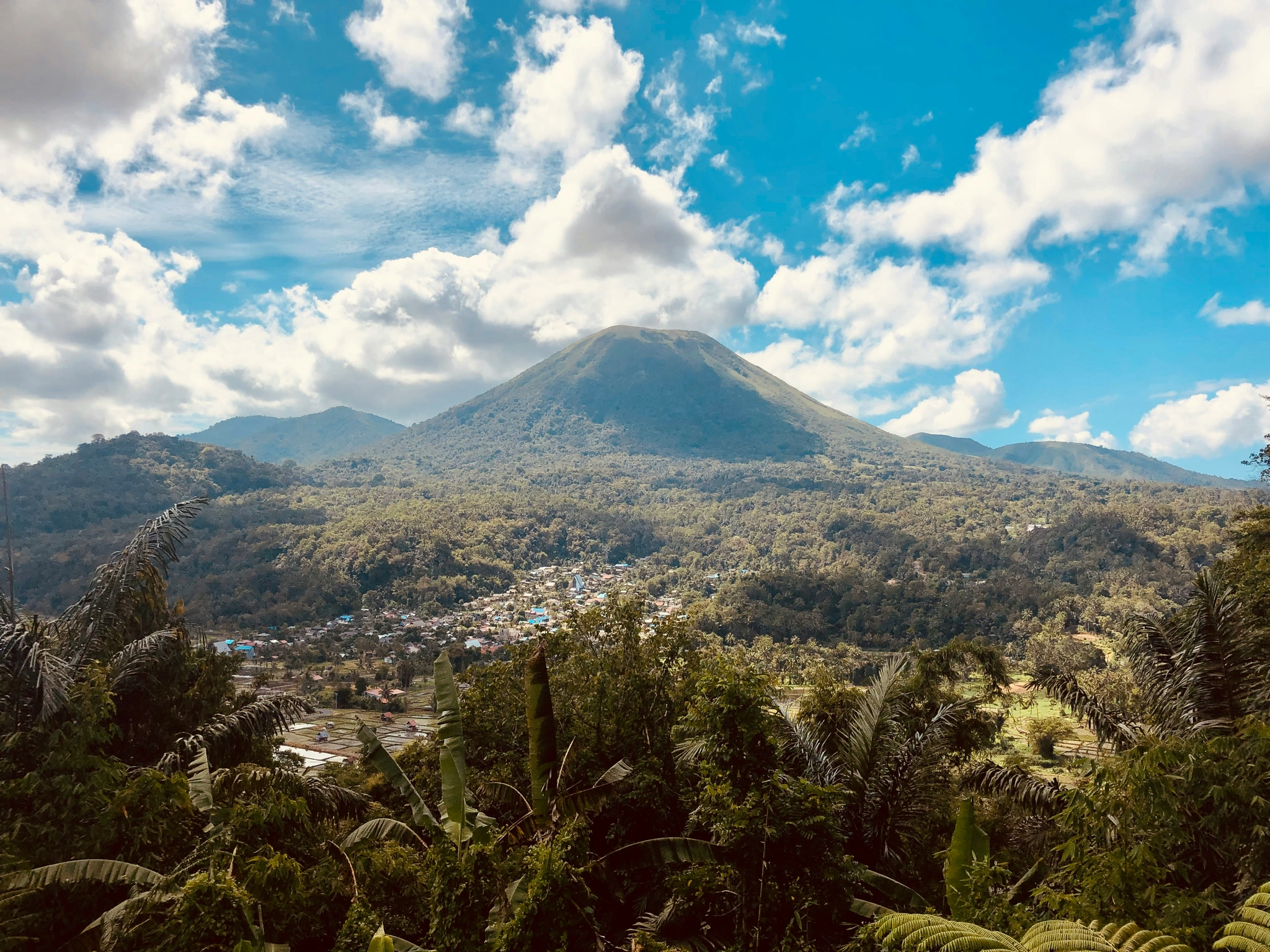
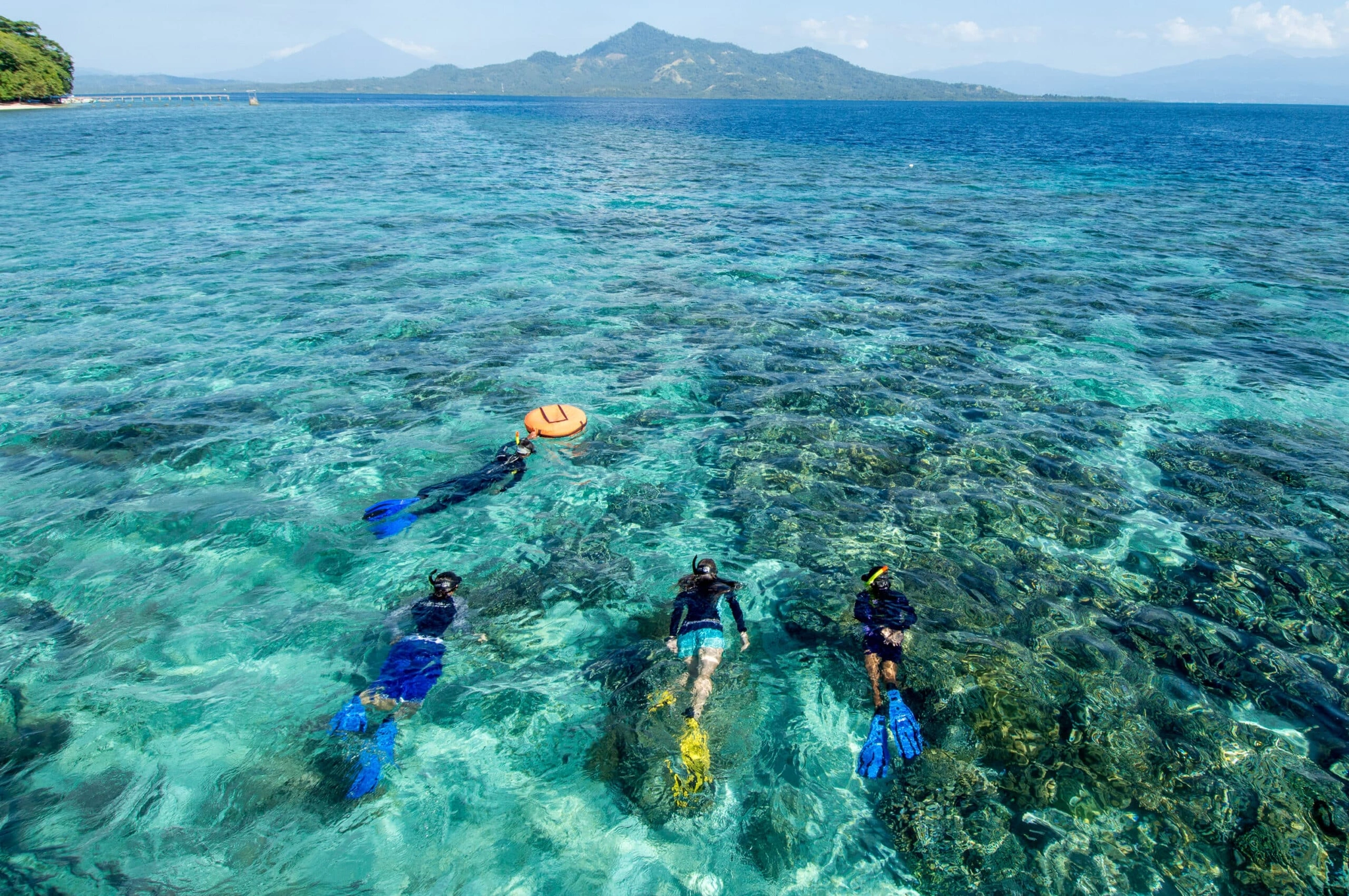
Bunaken Marine Park covers about 89,000 hectares of water around five islands on the southern Celebes Sea: Bunaken itself, Manado Tua (a dormant volcano cone), Siladen, Mantehage, and Nain. The park was gazetted in 1991 and has been continuously managed since, with a foreign-visitor entry fee of €7 that funds the rangers and the buoy system on the dive sites.
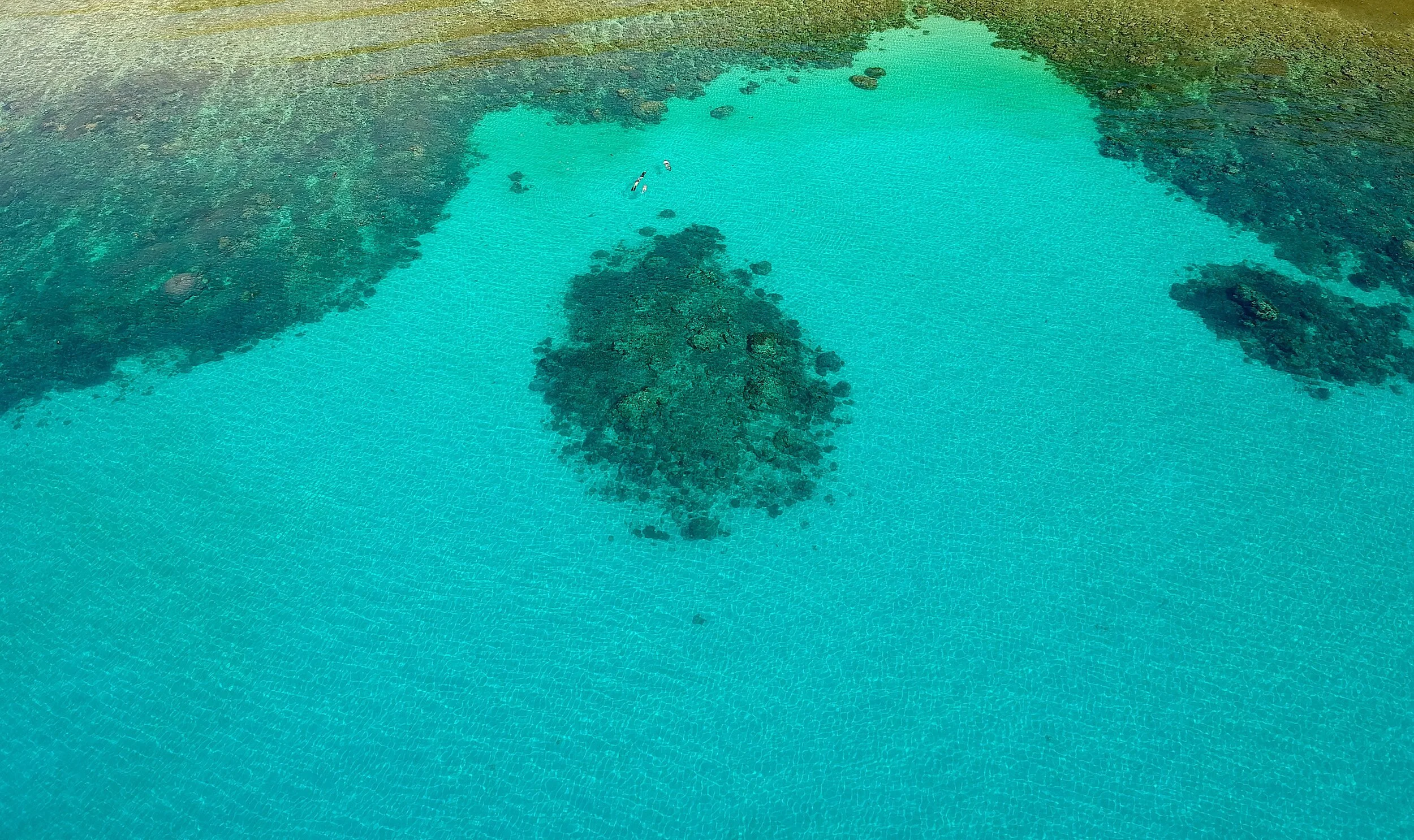
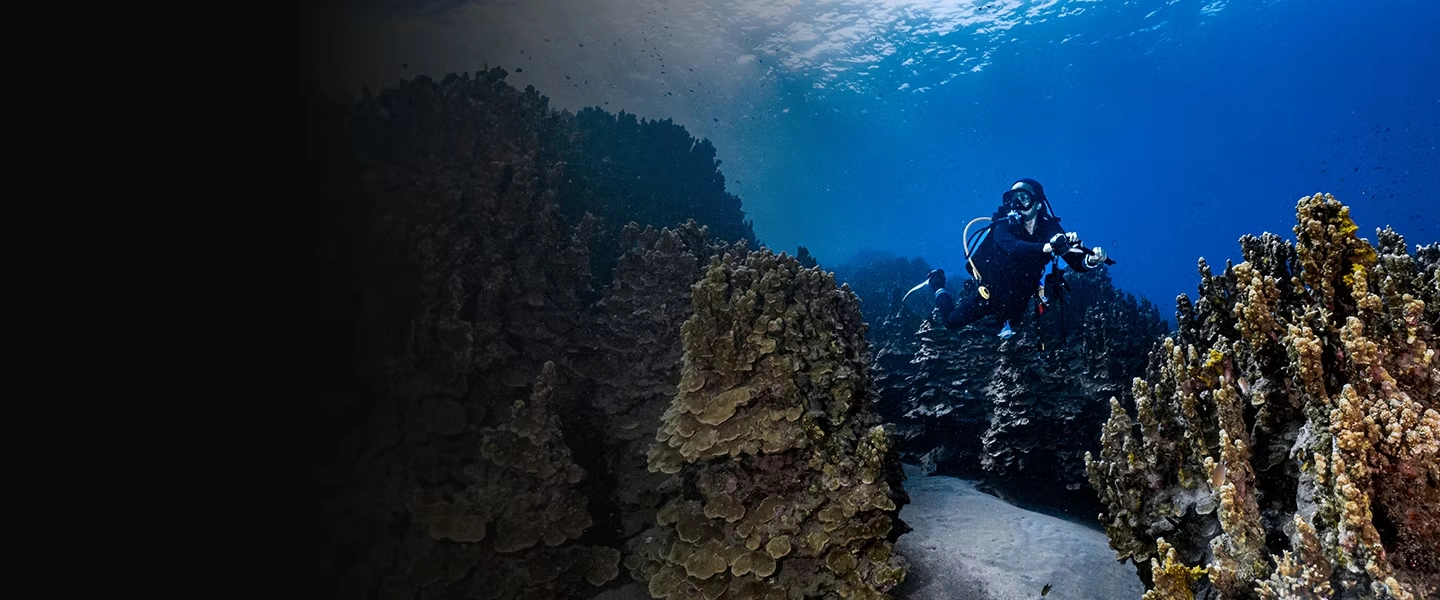
The signature feature is the wall. Bunaken sits on the edge of an ancient coral platform; the platform stops, abruptly, in a vertical wall that runs almost the full perimeter of the island and the neighbouring Manado Tua. The walls average 80–120 metres of vertical relief in the diveable range and host the dense soft-coral and gorgonian gardens that show up in the photographs.
Visibility is generally 20–30 metres in dry season, dropping to 10–15 metres in the wet. Water temperature 27–29°C year round. Currents are moderate on most sites and strong on a handful (Mandolin, Sachiko's) where the walls funnel water.
The signature sites
Twelve or thirteen named dive sites cluster on Bunaken and Manado Tua. The ones worth your time on a first trip:
- Lekuan I, II, and III — the iconic Bunaken wall sequence on the south side. Soft corals, fans, a turtle on most dives. Easy entry, gentle current. Lekuan II is the textbook Bunaken dive.
- Mandolin — the corner on the southwest tip of Bunaken. Current site; drift along the wall, look out into the blue for jacks and the occasional reef shark.
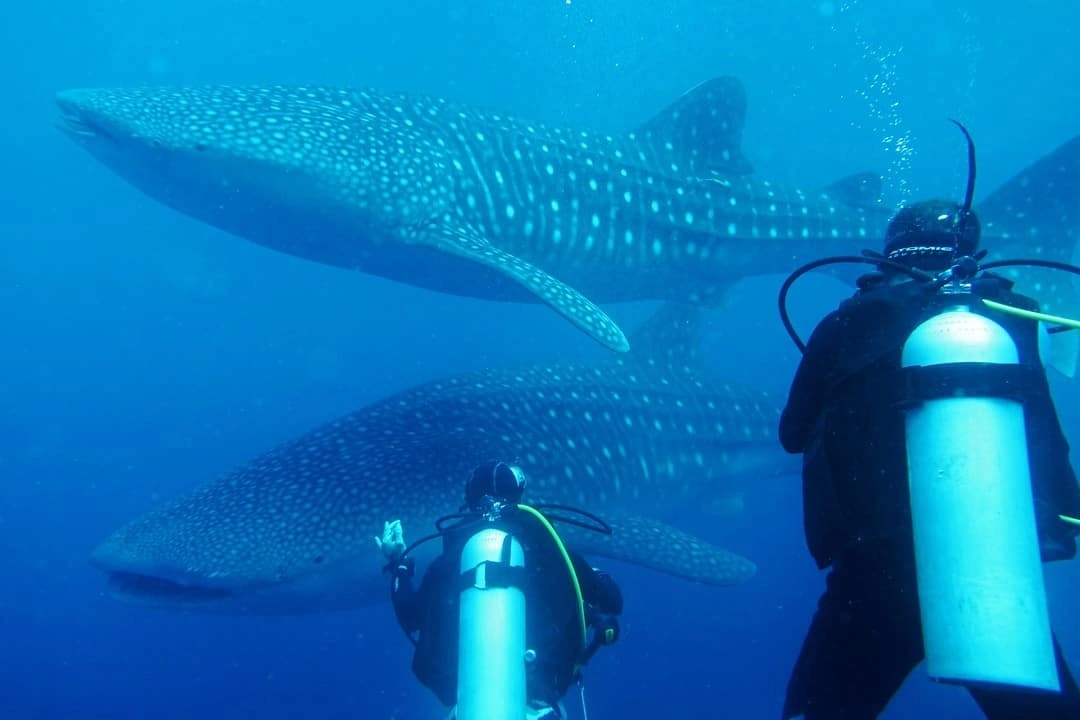
- Sachiko's Point — on the south face of Manado Tua. Sheer wall, large pelagics, a regular dolphin sighting in the right months. Currents strong.
- Fukui Point — on the north side. Sand-and-coral slope rather than wall, with a resident school of bumphead parrotfish at dawn dives.
- Tanjung Kopi (Coffee Cape) — Mantehage. Out-of-the-way, less dived, often the best critter dive of a Bunaken trip.
Skip on a first trip: Siladen Reef (shallow, bleached); Pangulingan (worn out from heavy use); Mike's Point (a one-trick swim-through that isn't worth the boat ride for most divers).
When to go
Dive season is March to November. April–June and September–October are the calmest months with the best visibility. July and August are diveable but bring stronger southeast winds and choppier surface conditions, especially on the eastern sites.
November–March brings the northwest monsoon. Surface conditions deteriorate, visibility drops to 10–15 metres on bad days, and several sites on the north side become inaccessible. Resorts stay open and dive year-round, but if you have flexibility, come in the drier months.
How many days, how many dives
A Bunaken trip is fundamentally a five-day, ten-to-twelve-dive trip. Three full days of diving is the minimum to make the long flight to Manado worth it; five days gives time to cover the variety. Twelve dives across five days leaves room for a non-dive day to recover and visit Tangkoko's tarsiers on the way back.
Most resort packages quote three dives a day. Two morning dives are the standard pairing; the afternoon dive is on the closer, easier sites. Night dives at the house reef are usually included and worth doing — Bunaken's house reefs come alive after dark with shrimps, decorator crabs, and the occasional walking shark.
Where to base yourself
Three options, in rough order of cost:
- Bunaken village homestays — the budget end. Lorenzo's, Daniel's, a handful of others on the south side of the island. From €17 per night including meals; dives arranged with one of two village-operator dive shops at €24–€31 per dive.
- Dive resorts on Bunaken — small to mid-size, in the €57–€119 per night range with full board. Established names: Living Colours, Two Fish, Cha Cha. All run their own boats and have decent house reefs.
- Manado mainland resorts — Tasik Ria, KMD Cottages, the Murex group on the south coast. Higher comfort, longer boat rides (40–60 min to Bunaken sites), and access to the south Manado reefs as well. Better choice for non-diving partners.
For a first trip focused on diving, a small Bunaken resort is the sweet spot.
Bunaken vs Lembeh vs Bangka
North Sulawesi has three different dive personalities, and serious divers usually combine at least two on a single trip.
- Bunaken — wall diving, reef fish, large schools, occasional pelagics. The classic Indonesian reef experience.
- Lembeh Strait — muck diving. Black sand, weird small things (mimic octopus, hairy frogfish, blue-ringed octopus). The world capital of macro photography.
- Bangka Island — soft coral and reef diving north of Manado. Quieter than Bunaken, less critter-dense than Lembeh, with strong currents and dramatic seamounts.
The standard ten-day trip pairs Bunaken (4–5 nights) with Lembeh (3–4 nights) and a single transfer day. Bangka is a worthwhile add-on if you have a fortnight.
Is Bunaken still worth diving? Yes, for wall diving, soft corals, and reliable turtle and pelagic sightings, Bunaken remains one of Indonesia's strongest reef destinations. Some shallow reef areas have suffered bleaching damage; the iconic deep walls along Lekuan, Mandolin, and Sachiko's Point on Manado Tua are largely intact. Most divers combine Bunaken with Lembeh Strait for muck-diving contrast.
Conservation note
The Bunaken Marine Park is managed under a joint authority with a visible ranger presence on the dive sites. The €7 entry tag — clip it to your BCD — funds the patrols. Plastic, anchoring outside the buoy zones, and fishing inside the park are all formal offences. Behave like a guest of the park and the dives stay good for the next decade.