







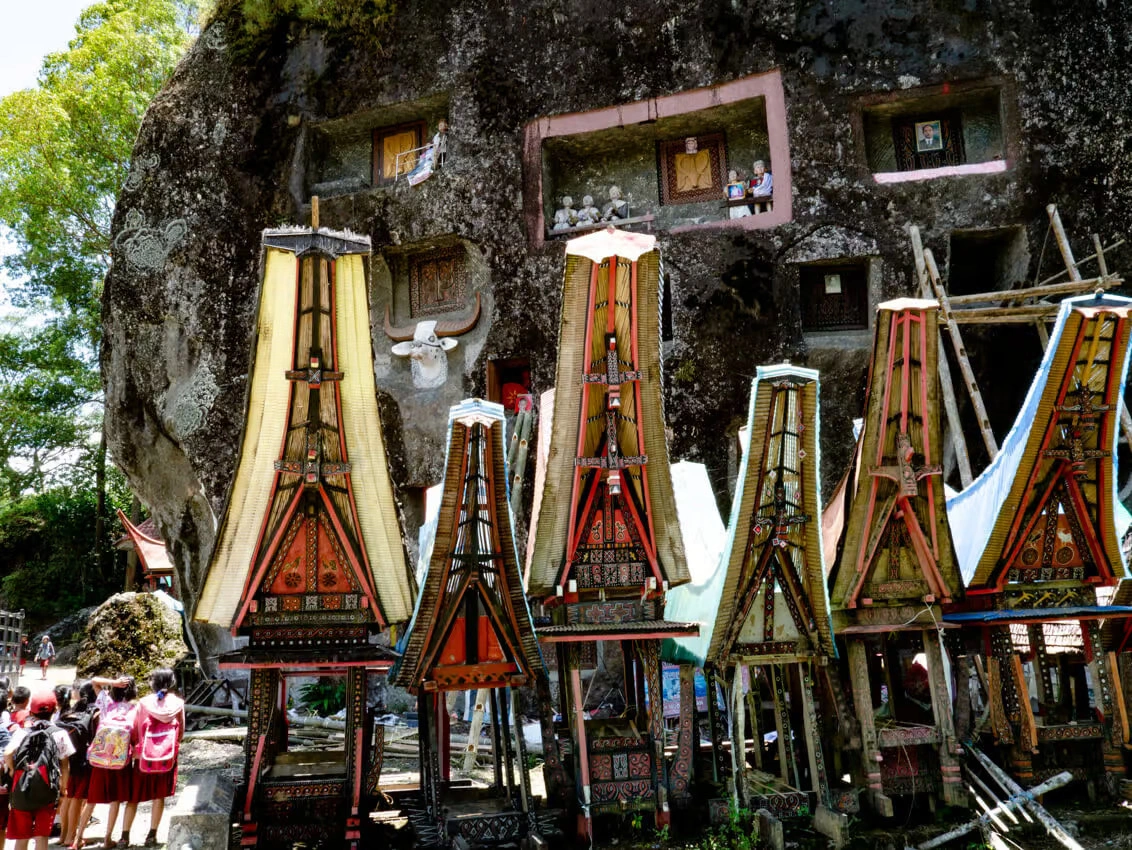
A cultural primer on the Toraja funeral ceremony — what happens across the seven days, why the buffalo, and how outside visitors should behave when invited.
The Rambu Solo' — literally "the smoke goes down" — is the highland Toraja funeral ceremony. It is also the largest, longest, and most visible cultural ritual still routinely practised in Indonesia. A high-status Rambu Solo' can last seven days, involve the sacrifice of dozens of buffalo, and draw thousands of guests from across the Bugis, Mandar, and Toraja diaspora. The deceased may have been kept in the family home for weeks or even years, treated as still living, while the family raised the resources to bury them with the honour their status requires.
This is a cultural and practical primer on Rambu Solo' — what it is, what happens during the days, why it persists, and what visitors should understand before attending.
What Rambu Solo' is
In Torajan tradition, death is not a single moment but a process. A person is not fully dead until the funeral has been performed; until then, the body is treated as to ma'kula — "a person who is sick" — and remains in a side room of the family house, where they are offered food daily and addressed by family members as if still alive.
The actual transition to ancestor status happens through the Rambu Solo' ritual. Until the ritual is complete, the deceased cannot enter Puya, the world of ancestors. The longer the wait between physical death and the ceremony, the more resources the family is expected to have gathered, and the larger the ceremony.
For high-status families, the gap can be years. For ordinary families, it is typically a few months to a year.
The structure of a high-status Rambu Solo'
A full ceremony runs over several days, with specific phases:
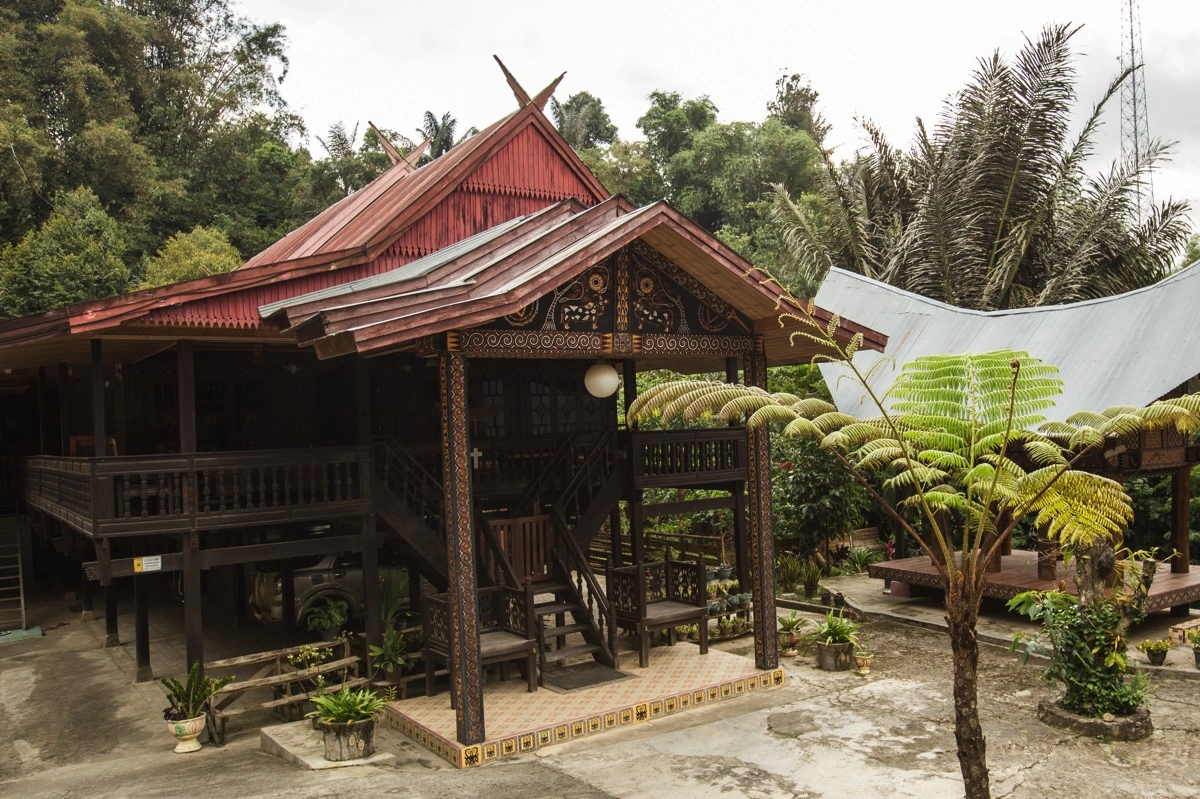
- Day 1 — Ma'tundan. Reception of guests. Family members and extended relatives arrive at the rante (ceremonial field) and are welcomed at temporary bamboo pavilions built specifically for the occasion.
- Day 2–3 — Ma'palao and Mantarima Tamu. Continued reception and the formal acceptance of buffalo and pig sacrifices brought by guests. The buffalo themselves are paraded.
- Day 4 — Mantunu. The main sacrifice day. Buffalo are killed in a public ritual at the rante. The number depends on the deceased's status; six to twelve is common for middle-status, twenty-plus for high-status.
- Day 5–6 — Ma'pasonglo and ceremonies. Cultural performances, including the Ma'badong funeral dance — a circle of men chanting in a slow rotation that may last hours.
- Day 7 — Ma'pakande and burial. The deceased is finally interred — either in a liang (cliff grave), a patane (built family vault), or, traditionally, in a tree.
For shorter or lower-status funerals, the structure compresses to two or three days.
Why the buffalo
The buffalo sacrifice is the part visitors find hardest. In Torajan cosmology, the slaughtered buffalo accompany the deceased into the afterlife as wealth — the more buffalo, the better-equipped the spirit's journey. The meat is then distributed across the family and community, in proportions tied to social standing.
Black-and-white spotted tedong saleko buffalo are the highest-status, often costing €24,000 or more each. A high-status Rambu Solo' with twenty buffalo can run to hundreds of thousands of euros; families plan and save for years.
The buffalo are killed quickly with a long blade. The act is uncomfortable to watch for first-time witnesses and is widely critiqued from outside Toraja. Within Toraja, it is the central ritual act of the ceremony, and the family's commitment to it is the measure of their respect for the deceased.
What visitors should understand
A few essentials for outside visitors:
- You are a guest, not a tourist. The family is grieving and is also performing a status-defining ritual. Behave as you would at a Western funeral with similar visibility.
- Dress in dark colours. Black or dark blue is correct. No bright shirts, no shorts, no exposed shoulders.
- Bring a gift. A carton of cigarettes (Gudang Garam or Dji Sam Soe, 12-pack) or a box of palm sugar is appropriate for foreign visitors. Cash in an envelope is also accepted. €5–€14 is the right scale.
- Greet the elders first. Your guide will introduce you to the family head and the senior relatives present. A short bow and a thank-you is enough.
- Photographs are tolerated but not unlimited. Wide shots and ceremony documentation are generally fine. Close-ups of grieving family members and the actual moment of slaughter are not. Ask.
- You may be offered food. Accept and eat. Refusing is a small breach of hospitality.
Why the ritual persists
Christianity arrived in Toraja with Dutch missionaries in the early 1900s and is now the dominant religion (the regency is roughly 70% Christian, mainly Protestant). The arrival did not displace the older Aluk To Dolo ("the way of the ancestors") belief system; the two layered. A modern Torajan funeral may include both a Christian service and a full Rambu Solo' sequence, performed in succession over the same week.
The ritual persists because it does work that nothing has replaced: it organises the extended family, signals social standing, redistributes wealth (the buffalo meat goes to a wide community), and offers a structured way to mourn over many days rather than one.
When to see one
The peak Rambu Solo' season runs from mid-July through mid-September, around the school holidays when relatives can return from Jakarta, Singapore, and Australia. Smaller ceremonies happen throughout the year. Any guide in Rantepao can find one on with a few hours' notice in season, and a day or two of notice out of season.
What happens at a Toraja Rambu Solo' funeral? A Rambu Solo' is a multi-day Toraja funeral ceremony in which buffalo and pigs are sacrificed to accompany the deceased into the afterlife. High-status ceremonies run seven days and may include 20+ buffalo sacrifices, formal guest reception, the Ma'badong circle chant, and burial in a cliff grave or family vault. The family may have waited months or years to gather the resources.