#guide
Wakatobi Travel Guide: Independent Travel in the Coral Triangle
執筆者 D. Manangkasi12 Nov11分で読めます
Wakatobi without the resort — flying in to Wangi-Wangi, basing on Hoga or Tomia, and diving the Coral Triangle on local boats from €24 a dive.
Wakatobi has a name problem. To most international divers, "Wakatobi" means the all-inclusive resort on Tomia — a private island operation that has been running expensive packages with charter flights from Bali since the late 1990s. The resort earned its reputation, and the dive sites it operates on are genuinely first-tier. But Wakatobi is also a regency of Southeast Sulawesi containing four large inhabited islands and dozens of smaller ones, all reachable on commercial transport, with homestays and locally-run dive operations that almost no one writes about.
This guide is for travellers visiting Wakatobi independently — not the resort. It covers how to get there, where to stay on Wangi-Wangi, Hoga, and Tomia, what the diving is like outside the private operation, and how the trip compares to the cheaper, easier Togean Islands further north.
What Wakatobi actually is
Wakatobi is an acronym, not a Sulawesian word. The name combines the first two letters of the four largest islands in the regency:
- Wangi-Wangi — the gateway island, with the regency capital and the airport
- Kaledupa — the second-largest, paired with the small island of Hoga
- Tomia — site of the famous resort and the best-known dive sites
- Binongko — the southernmost, least-visited, known for traditional ironworking
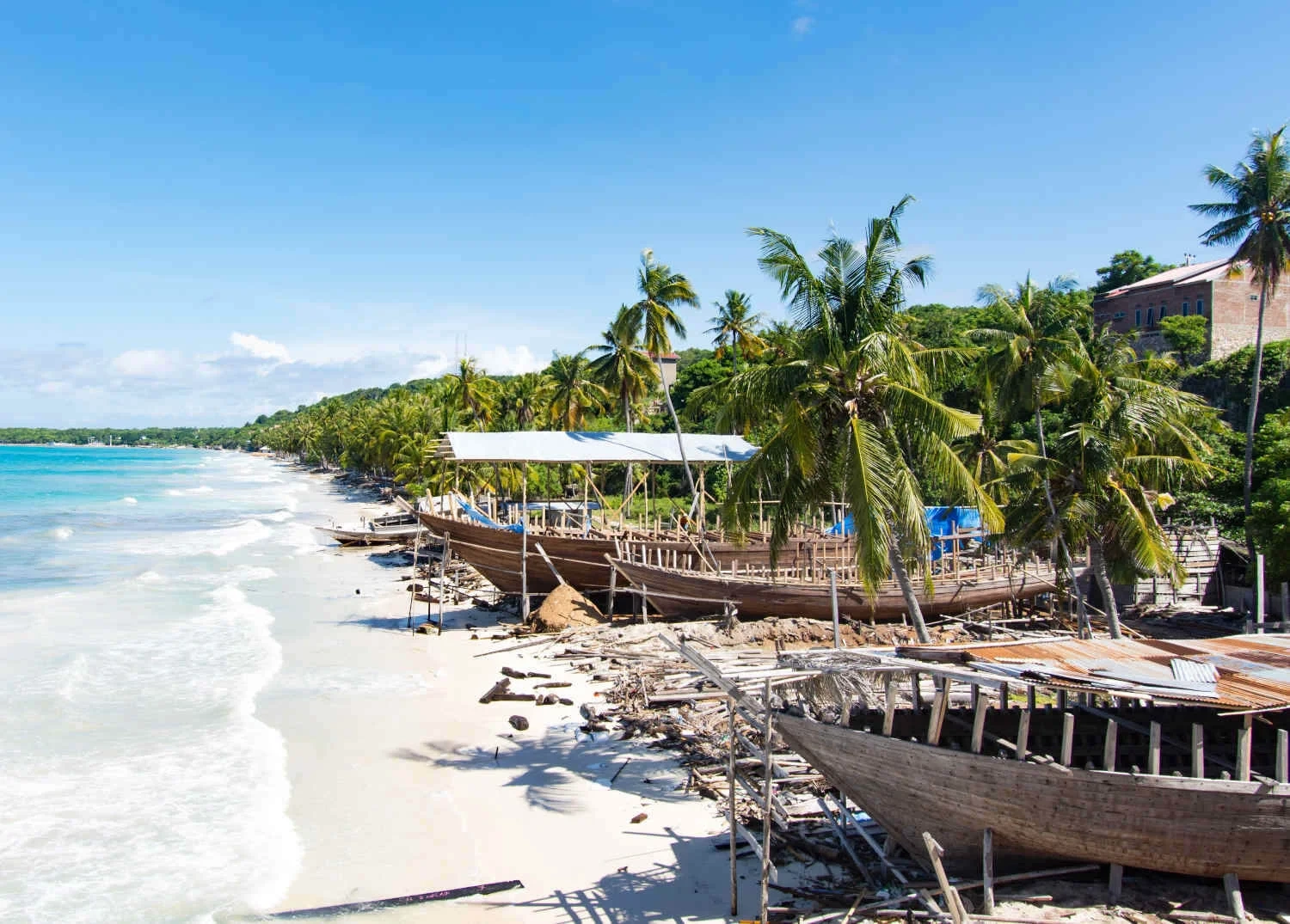
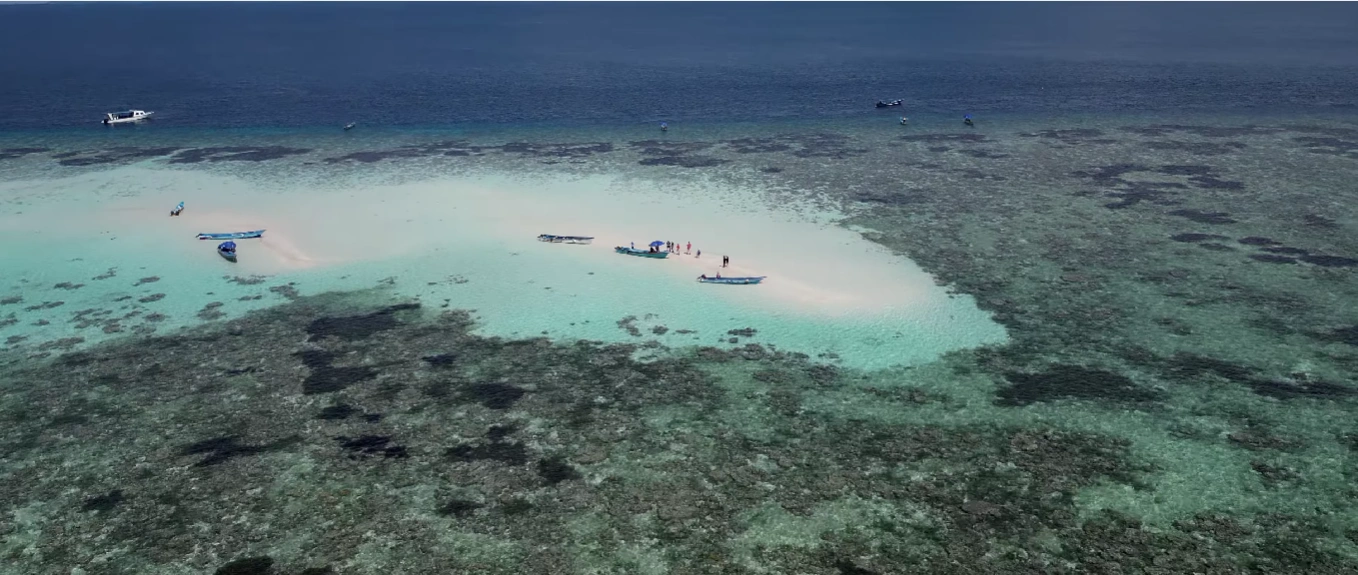
The four islands plus the surrounding water form the Wakatobi National Park, gazetted in 1996 and covering about 1.4 million hectares of the Banda Sea. The reefs sit at the geographic centre of the Coral Triangle and host roughly 750 of the world's 850 reef-building coral species.
Getting to Wakatobi
The airport on Wangi-Wangi (WNI) takes daily flights from Kendari and three or four flights a week from Makassar via Bau-Bau. Wings Air and Citilink are the operators. Fares run €38–€71 one way depending on season. Book early — the flights are small ATR-72s and fill up.
The cheaper and slower alternative is the ferry from Bau-Bau (the second city of Buton Island, reached by ferry or short flight from Kendari). Several weekly sailings, eight to twelve hours, deck-or-cabin tickets €10–€24.
Inter-island transport within Wakatobi is by public boat. Wangi-Wangi to Kaledupa is a daily morning sailing, two hours, €5. Kaledupa to Hoga is a 30-minute charter, €10. Kaledupa to Tomia is two hours by daily ferry, €7. Schedules slip — always confirm the night before.
Where to stay
The right base depends on what you came for.
Wangi-Wangi has the most infrastructure and is the easiest day-one base. Stay in or near Wanci, the main town. Mid-range guesthouses run €14–€24 per night. The diving directly from Wangi-Wangi is competent but not as strong as Hoga or Tomia; treat the island as a logistics base, not a destination.
Hoga is the dive-camp island. A handful of long-running homestays sit along a single beach, all built around a daily boat-dive schedule. Hoga has no electricity grid (generator hours only) and almost no other infrastructure. The reefs in front of the homestays are the best-known house reef in the regency. €19–€33 per night including meals.
Tomia is the upscale option for the resort-free traveller. Pulau Tolandona and the small Tomia village of Onemay both have a handful of homestays and one or two locally-run dive shops. The Wakatobi resort sits at the western tip of the island; their dive sites are off-limits to outside operators, but the rest of Tomia's reef is open and uncrowded. €24–€38 per night including meals.
The diving
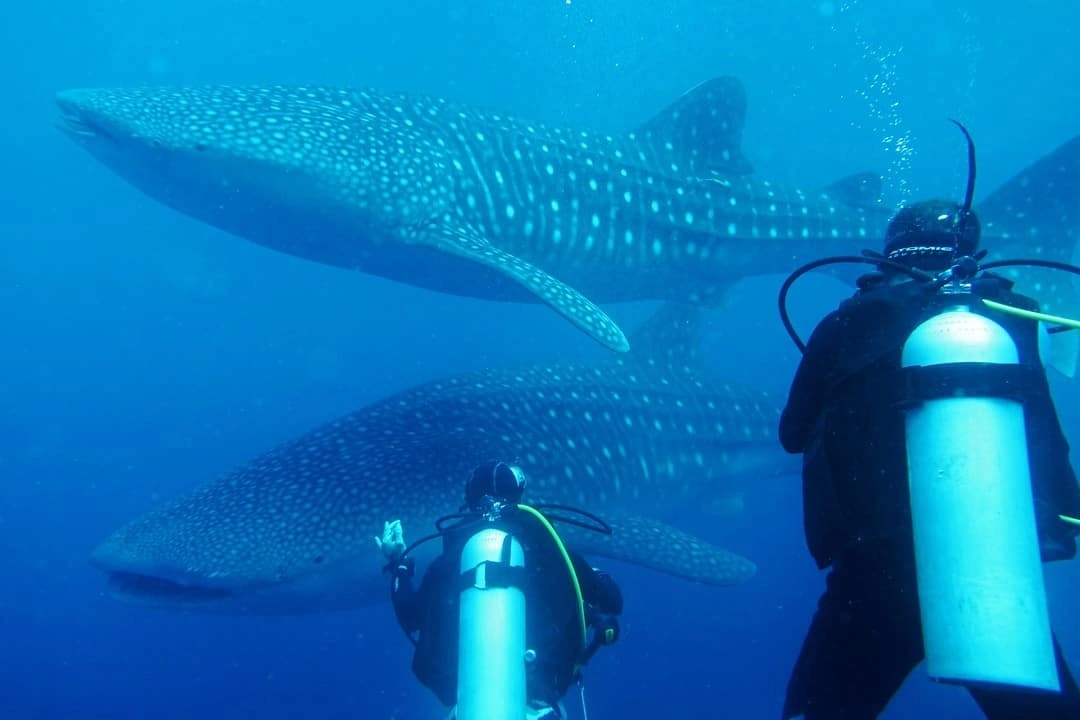
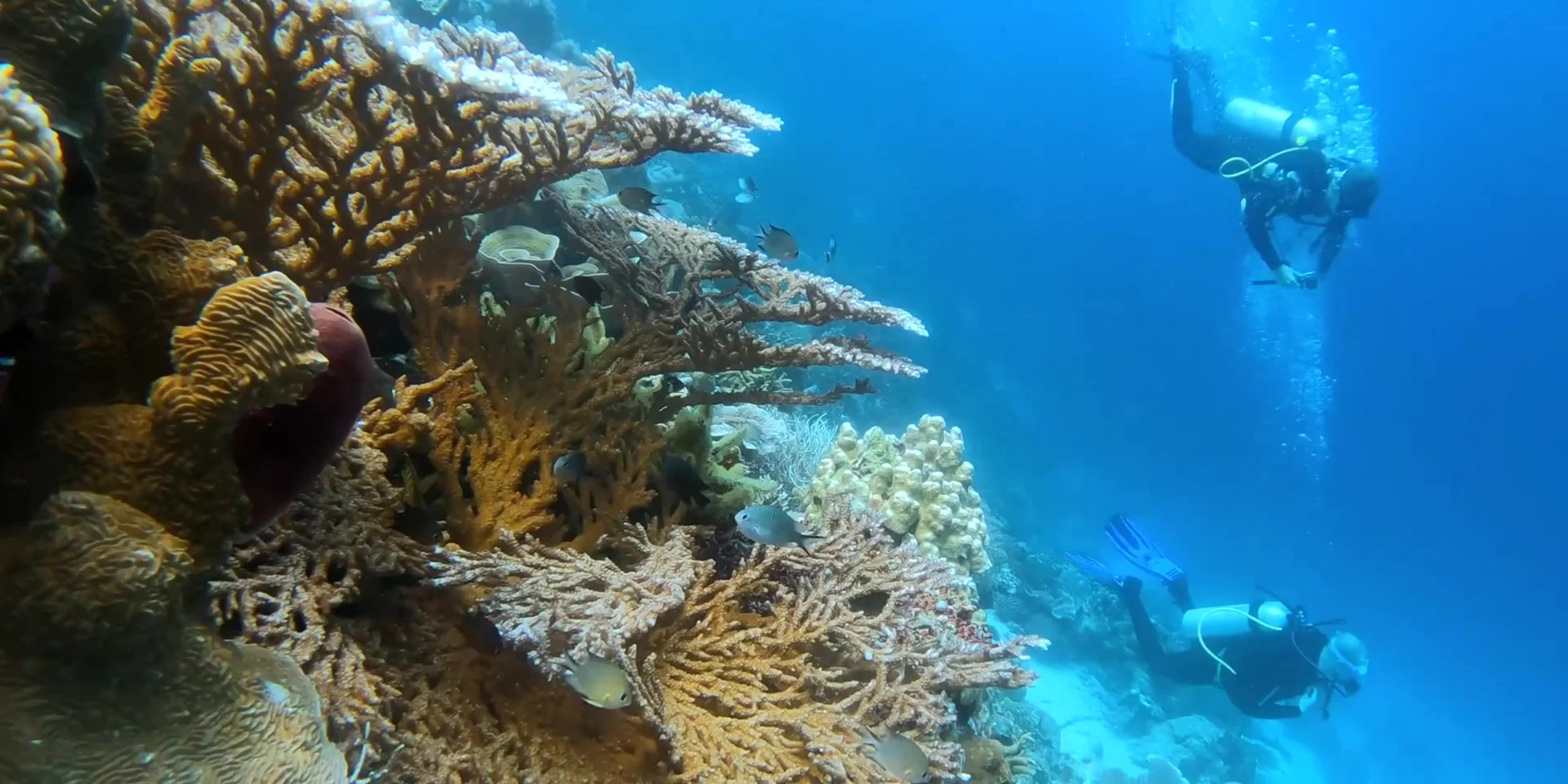
Wakatobi's reefs are recognisably Coral Triangle: dense coral cover, large schools of reef fish, regular pelagics on the deeper sites. The walls are not as dramatic as Bunaken's, but the coral cover is significantly better, and the bommies on the Hoga and Kaledupa side hold more species per dive than almost anywhere on the Sulawesi mainland.
Sites worth your time:
- Mari Mabuk (Hoga). Drift along a coral wall in moderate current; large barrel sponges, schools of Lutjanus, regular turtle sightings.
- Pinnacle 1 and 2 (Hoga). Two seamounts rising from 30m to within 8m of the surface, dense soft corals, the occasional whitetip.
- Roma (Tomia). The most famous Tomia site outside the resort's reserved list. Sloping reef, large schools of jacks, strong cleaning-station activity.
- Cornucopia (Tomia). Deep wall, fans, sometimes hammerhead sightings in the right months.
Two dives a day is the norm. Most homestays run a 09:00 and a 13:30 boat at €24–€33 per dive including tank and weights.
When to go
Diving conditions are good year-round, with the strongest months April–June and October–November. July–August can bring stronger easterlies that ruffle the surface; January–March, the wet season, brings shorter visibility windows and more lost days to weather.
Land-based logistics are easier in the dry season for the same reasons that affect every part of Sulawesi: ferries run reliably, drier walking paths, no need to wait out a storm at the Wakai-style port.
Wakatobi vs Togean
Both are remote Sulawesi archipelagos with strong reefs and basic homestays. The differences:
- Access. Wakatobi has a working commercial airport. The Togeans are reached only by ferry. Wakatobi is shorter on transit days.
- Diving. Wakatobi's reefs are denser and more species-rich. The Togeans have more variety of reef type (fringing, barrier, atoll) in a small area.
- Atmosphere. The Togeans are slower; Wakatobi is busier (the resort traffic is felt even from independent bases).
- Cost. The Togeans are slightly cheaper per night. Wakatobi is cheaper per trip once flights are counted.
For a first-time visitor with strong diving ambitions, Wakatobi wins on quality of reef. For travellers who want quiet over diving, the Togeans win on atmosphere.
Can you visit Wakatobi without staying at the resort? Yes. Wakatobi National Park covers four large islands — Wangi-Wangi, Kaledupa, Tomia, and Binongko — with commercial flights to Wangi-Wangi, homestays from €19 per night on Hoga and Tomia, and locally-run dive operations from €24 per dive. The famous Wakatobi resort reserves a section of Tomia reef; the rest of the park is open.
A working itinerary
Seven nights for a first independent visit:
- Day 1. Fly to Wangi-Wangi via Makassar or Kendari. Overnight in Wanci.
- Day 2. Morning ferry to Kaledupa, transfer to Hoga. Afternoon house-reef snorkel.
- Days 3–4. Diving from Hoga (Mari Mabuk, Pinnacles).
- Day 5. Ferry to Tomia. Overnight at a locally-run homestay.
- Days 6–7. Diving from Tomia (Roma, Cornucopia).
- Day 8. Ferry back to Wangi-Wangi, evening flight out.
Build a buffer day if you can. Schedules slip.