







A guide to Makassar's two banana desserts — Es Pisang Ijo (cold, with pandan-dough and coconut sauce) and Pisang Epe (grilled and flattened with palm sugar syrup at sunset).
Two Makassar desserts dominate the local sweet scene. Es pisang ijo is the cold one — a ripe banana wrapped in green pandan-dyed dough, sliced, and served in a sweet coconut sauce with shaved ice and rose syrup. Pisang epe is the warm one — a ripe banana grilled over coals, flattened in a wooden press, and drizzled with palm sugar syrup. Both are essential Makassar street food, sold from the bay-front warungs at Pantai Losari and from market stalls across the city.
This is a short guide to the two dishes — what's in each, where to find them, and how they fit into a Makassar food day.
Es pisang ijo
The cold one. Almost certainly the more famous internationally.
What's in the bowl:
- A ripe pisang raja or pisang kepok banana, peeled and wrapped in a sheet of pandan-coloured (green) rice-flour-and-coconut-milk dough, then steamed.
- The wrapped banana sliced into 2cm rounds.
- A thick sweet coconut sauce (kuah) made from coconut milk, sugar, pandan, and a little salt.
- Crushed ice or shaved ice.
- A drizzle of red rose syrup (sirup mawar).
- Sometimes condensed milk.
Served in a small bowl or tall glass. €0.50–€1.50.
Where to eat it:
- Es Pisang Ijo Bravo on Jalan Lasinrang is the historic Makassar reference. Two branches; the original location.
- Pantai Losari floating warungs serve a quicker version at sunset.
- Most Makassar Indonesian restaurants have it on the dessert menu.
For a Makassar visitor with one es pisang ijo experience, Bravo is the right place.
When to eat it: Mid-afternoon, when the city is hottest. The cold dessert with the warm-sweet sauce is the kind of refreshment Makassar's tropical climate built itself around.
Pisang epe
The warm one. Less internationally known, more genuinely Makassar.
What it is:
- A ripe but firm banana (pisang kepok is preferred) grilled over charcoal until the skin chars.
- The grilled banana is then placed between two flat wooden boards and pressed flat to a thickness of about 5mm — the "epe" part of the name means "to press."
- The flattened banana is briefly returned to the grill to firm up.
- Served warm with a generous drizzle of palm sugar syrup (gula merah cair), often flavoured with pandan or durian.
€0.50–€1 per piece, depending on the syrup option.
Where to eat it:
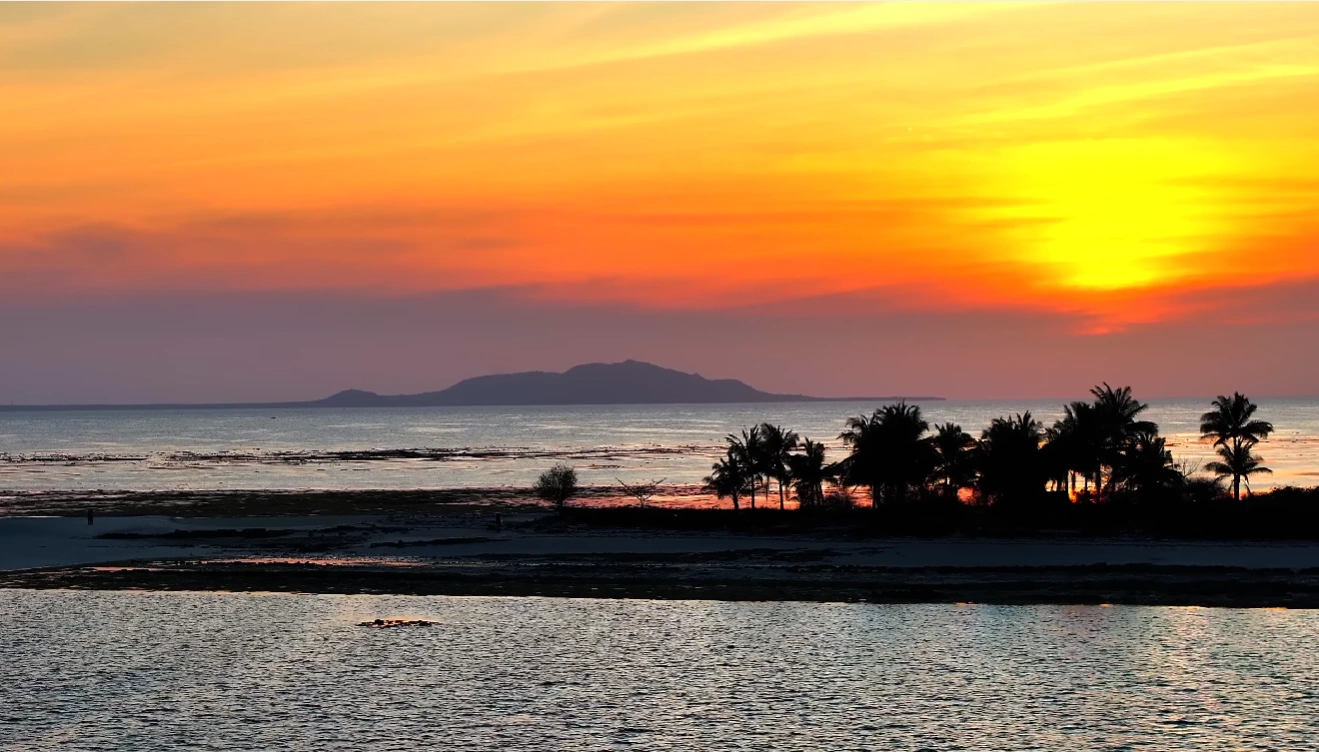
- Pantai Losari floating warungs — the iconic location, where the entire western bay-front fills with pisang epe vendors at sunset.
- Pasar Sentral food stalls — daytime version.
- A few specialised pisang epe stalls along Jalan Andi Cammi.
For visitors with one pisang epe experience, Pantai Losari at sunset is the right setting.
When to eat it: 17:00 to 22:00. Pisang epe is evening food and is best fresh off the grill.
A word on the palm sugar syrup
The palm sugar syrup (gula merah cair) that finishes pisang epe is half the dish. Quality varies between stalls. The good version is:
- Made from fresh palm sugar, melted with a small amount of water.
- Sometimes flavoured with pandan leaves or durian pulp.
- Thick enough to coat the banana, thin enough to pour from a spout.
- Deep mahogany in colour, not the pale-amber of commercial palm sugar syrups.
Some stalls offer multiple syrup options — durian, cokelat (chocolate), keju (cheese, controversially). The pandan or plain palm sugar is the traditional choice. The cheese option is a contemporary phenomenon and best skipped.
How they fit into a Makassar day
A standard food day in Makassar puts both desserts at specific points:
- Mid-afternoon (15:00–16:00). Es pisang ijo at Bravo, as an interlude between pallubasa lunch and the evening.
- Sunset (17:30–18:30). Pisang epe at Pantai Losari, with a glass of saraba.
Trying to do both at the same sitting works but is heavier than ideal. Spaced across the afternoon and evening, they fit naturally.
A note on banana varieties
Both dishes call for specific banana varieties:
- Pisang raja — the "king banana," large, firm, mildly sweet. The premium choice for es pisang ijo.
- Pisang kepok — shorter, firmer, less sweet, holds up better to grilling and pressing. The standard for pisang epe.
Western bananas (Cavendish-type) are too watery and soft for either dish. Visitors trying to recreate at home should source the Asian-market banana varieties for proper results.
Variations across South Sulawesi
Beyond Makassar:
- Bira and the southern coast have pisang epe variants with coconut as a topping in addition to palm sugar.
- Toraja has its own banana-and-palm-sugar preparations, related but distinct.
- Mandar and West Sulawesi have grilled-banana dishes with lime as a finishing element.
The Makassar versions are the canonical ones for visitors.
Where to take home
Palm sugar (gula merah) is widely sold at Pasar Sentral in Makassar and travels well. A small block makes a sensible food souvenir; it keeps for months and is the key ingredient for recreating either dessert at home.
Pisang ijo dough is harder to source outside Indonesia but can be approximated with green-tea-dyed mochi flour. Both dishes are forgiving recipes that produce recognisable versions on a first home attempt.
What are pisang ijo and pisang epe? Two Makassar banana desserts: es pisang ijo is a banana wrapped in green pandan dough, sliced, and served in sweet coconut sauce with ice and rose syrup. Pisang epe is a banana grilled, pressed flat between wooden boards, and drizzled with palm sugar syrup. Es pisang ijo is mid-afternoon food (try Bravo on Jalan Lasinrang); pisang epe is sunset food at Pantai Losari.