

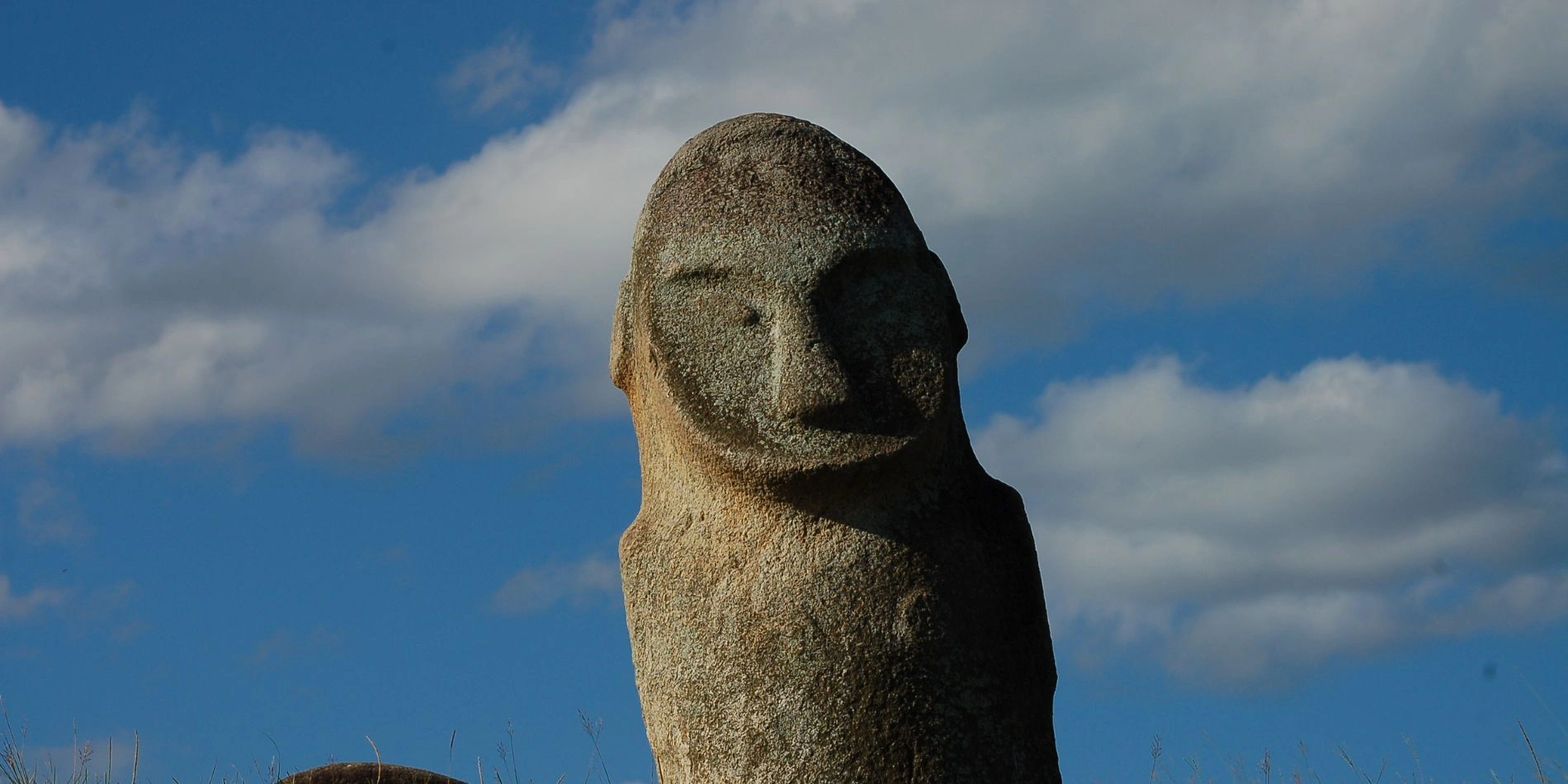
A guide to the Bada Valley megaliths — 400+ carved stone figures in Lore Lindu National Park, dated 1,000 BCE to 1,000 CE, and reached on a 12-hour drive from Palu.
In the highlands of Central Sulawesi, in a valley a hard day's drive from anywhere, around four hundred carved stone figures stand in rice paddies, on hillsides, and at the edges of forest tracks. Some are anthropomorphic — recognisable human or near-human figures, the largest more than four metres tall. Others are stone vessels: massive carved kalamba urns, some over two metres across, with carved lids and animal-headed reliefs. They have been there for somewhere between one and two thousand years. Nobody knows for certain who made them, why, or how the carvers moved stones weighing several tons across rivers and through forest without metal tools.
This is a short guide to the Bada Valley megaliths — what they are, what is known about them, and how to visit.
What's actually there
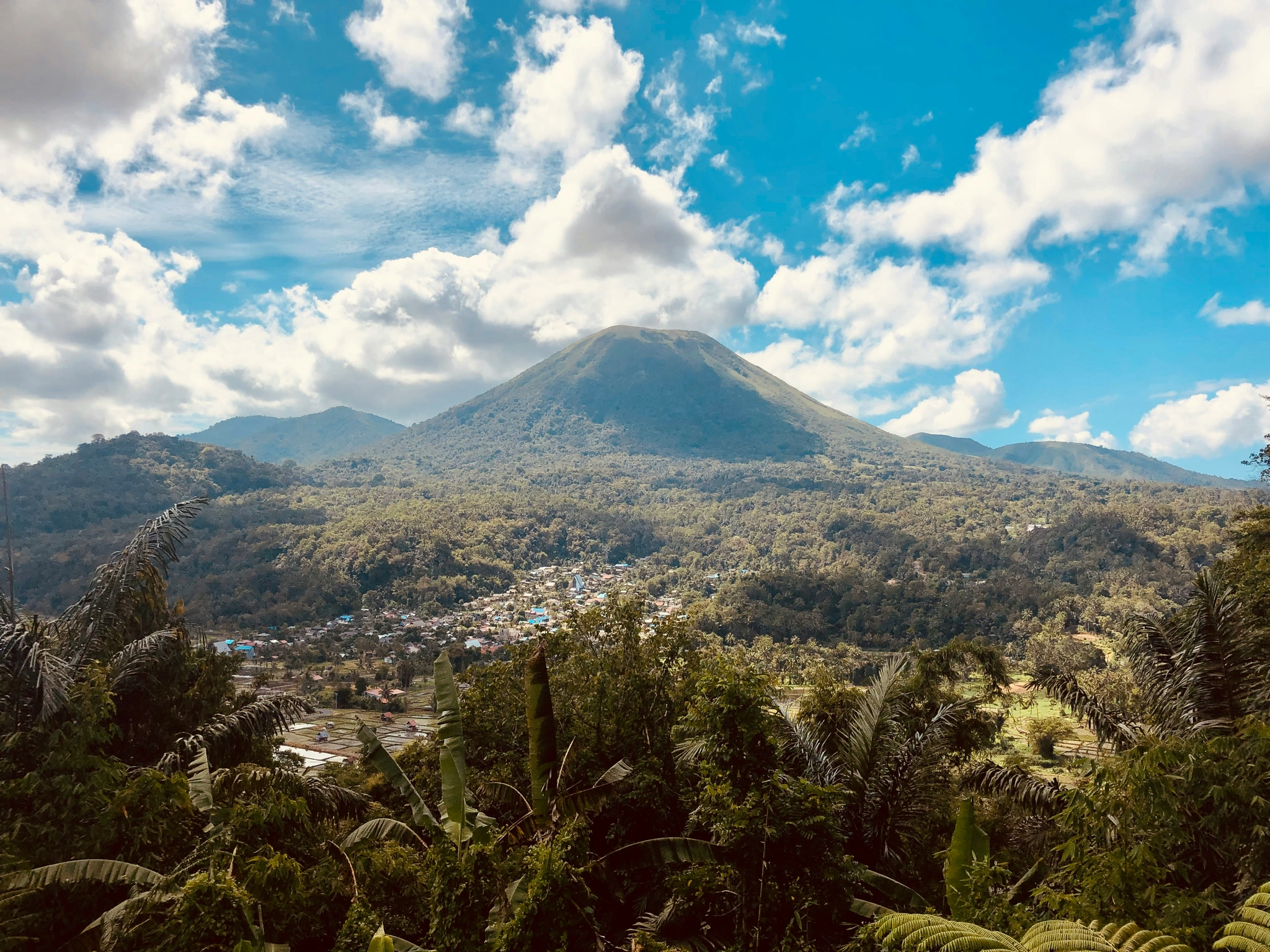
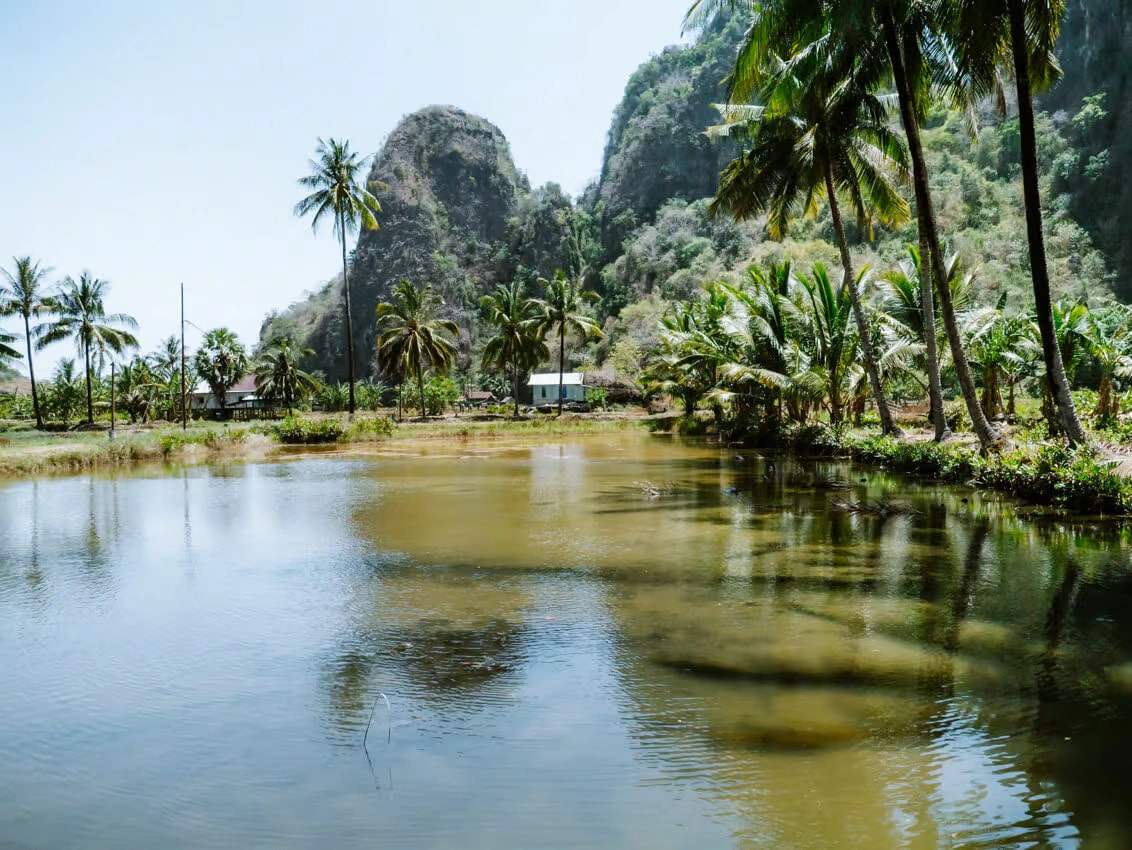
The Bada Valley (Lembah Bada in Indonesian) lies inside Lore Lindu National Park in Central Sulawesi, at around 700 metres elevation. The valley is a long bowl surrounded by forest-covered hills, with the small villages of Doda, Bewa, Bomba, Lengkeka, Tuare, and a few others scattered across the rice plain.
The stone figures cluster in fields and at the edges of these villages. The most famous are:
- Palindo ("the entertainer") — 4.5 metres tall, the largest anthropomorphic figure in the valley. Standing in a field near Sepe village. The figure is so well-known locally that it has its own short name (Palindo).
- Maturu ("the sleeper") — a recumbent figure 2 metres long, near Doda.
- Loga — a smaller standing figure with intact facial features, near Bomba.
- Watu Saruma — a kalamba urn near Lengkeka, 2 metres across with a fitted lid.
In total, more than four hundred stones are catalogued across the valley. Many are still partly buried; new ones are occasionally uncovered when farmers expand cultivation.
What's known
Honestly: not much.
The stones are dated, by association with surrounding archaeological material, to roughly 1,000 BCE to 1,000 CE — a wide window. No firmly dated single piece exists. The stylistic similarity of the figures suggests a single tradition rather than accumulation over many cultures.
The kalamba urns are believed to be funerary vessels, used for secondary burial (the practice of recovering bones after primary decomposition and reinterring them in a final vessel). Similar practices are documented in other parts of South-East Asia from comparable periods. The anthropomorphic figures are less well-understood; theories range from ancestor figures, to territorial markers, to representations of specific cultural heroes.
Who made them is the biggest open question. The current inhabitants of the Bada Valley — the Bada and related groups — speak Austronesian languages and arrived in the area within the last two millennia. They consider the megaliths to be the work of ancestors but do not preserve specific oral traditions tying the stones to known historical figures. Whether the original carvers were ancestors of the present population, or a different group displaced by them, is unresolved.
Getting to the Bada Valley
The trip is real. The Bada Valley is one of the harder-to-reach sites in Central Sulawesi.
By road from Palu. The standard route. Palu to Tentena (six hours), Tentena to Doda (six more hours on a rough mountain road, much of it unsealed). Total: 12+ hours from Palu. Most visitors break the trip in Tentena and travel onward the following morning.
By road from Poso. Poso to Tentena (90 minutes), Tentena to Doda (six hours).
In both cases, a 4WD vehicle with a driver who knows the road is essential. Solo car rental is not feasible; the road conditions exceed what a tourist driver should attempt. Engage a driver from Palu or Tentena (€70–€120 per day depending on the vehicle).
Where to stay
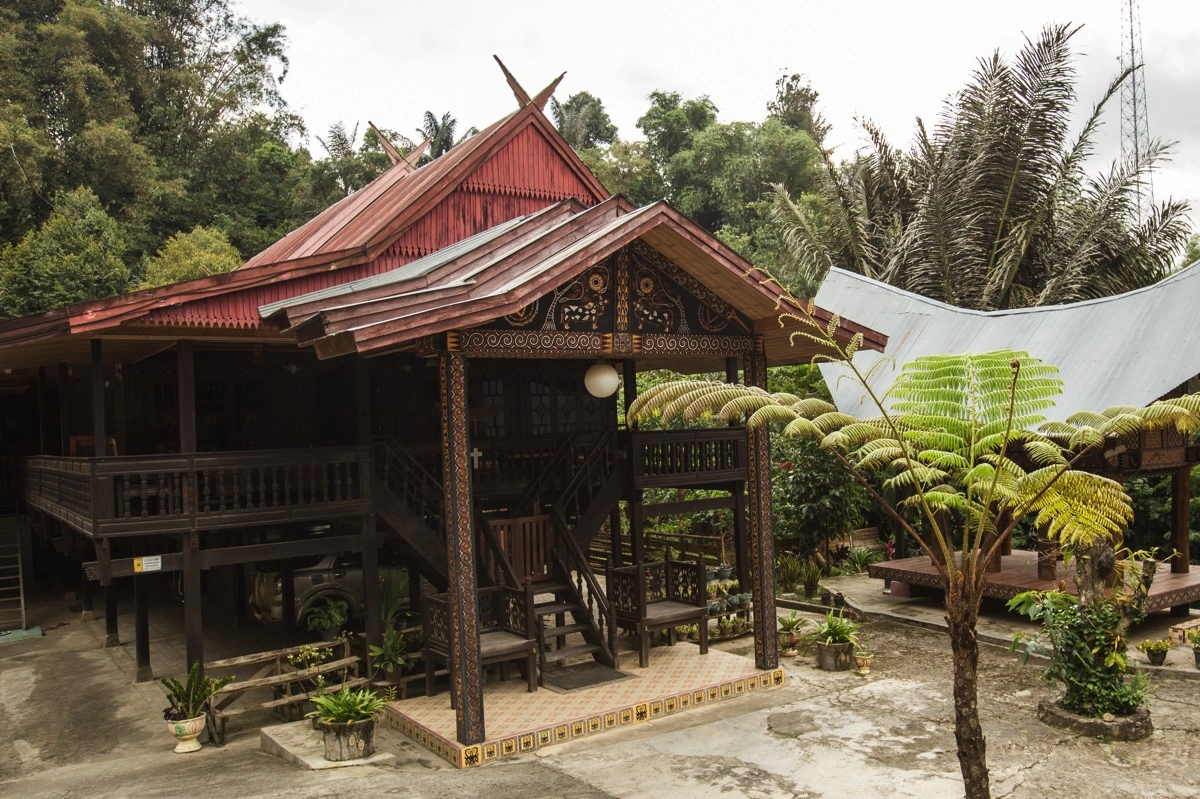
Modest accommodation in the valley:
- Mama Lina Homestay (Doda) — basic homestay, €10 per night including meals.
- A couple of similar small homestays in Doda and Bomba.
There are no hotels in the conventional sense. Expect cold-water bucket bath, no internet, generator electricity (often only evening). The food is local Bada Valley cooking — fish, vegetables, rice, sometimes pork (the Bada are mostly Christian).
How to see the stones
Once in the valley, the megaliths are scattered across a 20 km area. A local guide (€10 for a half day) is essential to find the more isolated stones. Most visitors do a one-day loop covering the four or five best-known figures and one or two kalamba urns; serious archaeology-interested visitors stay longer and cover more sites.
The walks between stones range from 200 metres to several kilometres on dirt paths through rice fields. Footwear that can handle mud is essential. Bring water; villages along the route can usually provide tea and snacks.
When to visit
May–October is the dry season and the only sensible window. The unsealed roads become impassable for stretches of the wet season, and even when the roads work, fieldwork on the stones in heavy rain is unpleasant.
How long to stay
A minimum of three nights in the valley to see the main figures without rushing. Five or six nights for serious archaeological visitors. Combine with Lore Lindu birding (the national park's other major draw) for a 7–10 day Central Sulawesi trip.
Why visit
The Bada Valley is not for every traveller. The journey is long and uncomfortable, the accommodation is basic, the explanation of what the stones are and mean is limited. For visitors who have specific interest in megalithic archaeology, in the deeper history of Indonesia before Austronesian arrival, or simply in standing alone in front of a 4-metre stone figure that nobody fully understands — the valley is exceptional.
For other travellers, the Bada Valley is a deliberate pilgrimage, not a side-trip.
What are the Bada Valley megaliths? The Bada Valley in Lore Lindu National Park, Central Sulawesi, contains over 400 carved stone figures and kalamba funerary urns dated to roughly 1,000 BCE to 1,000 CE. The largest figure, Palindo, is 4.5 metres tall. The makers are unknown; the current Bada population arrived after the stones were carved. The valley is reached on a 12-hour drive from Palu and is one of Indonesia's hardest-to-access major archaeological sites.