A primer on the religious geography of Sulawesi — Muslim-majority Bugis south, Christian-majority Minahasan north and Toraja highlands, and how the mosaic works day to day.
Sulawesi is one of the most religiously mixed parts of Indonesia. Roughly 80% of the island's 19 million people are Muslim — concentrated in South Sulawesi and the Bugis-Makassar coastal areas — and roughly 17% are Christian, mostly Protestant, concentrated in North Sulawesi (the Minahasa region) and Tana Toraja. The remaining few per cent practise Hindu (Balinese transmigrant communities, plus some interior groups), animist or syncretic traditions, and other faiths. The mosaic is not random: it tracks the geography of trade contact, missionary history, and the older animist traditions onto which both Islam and Christianity layered.
This is a short primer on the religious geography of Sulawesi — who lives where, why, how the communities coexist, and what travellers should understand before visiting either side.
The geography
A first sweep:
- South Sulawesi. Roughly 90% Muslim. The Bugis, Makassar, Mandar, and other dominant ethnic groups have been Muslim since the seventeenth century. Christian minorities exist in the Toraja highlands (Tana Toraja and North Toraja regencies, both majority Christian) and in scattered Chinese-Indonesian communities in Makassar.
- West Sulawesi. About 80% Muslim, 16% Christian. Mandar-majority coast; Toraja Mamasa Christian highlands.
- Central Sulawesi. About 75% Muslim, 17% Christian. The split is geographic — coastal Kaili Muslim majority; interior Poso, Sigi, and Lore Lindu areas have substantial Christian communities. The 1998–2001 Poso conflict, which had Muslim-Christian dimensions among other causes, was concentrated in this geography.
- Southeast Sulawesi. About 95% Muslim. Wakatobi, Buton, Muna, and the mainland are overwhelmingly Muslim; Christian communities are small and largely Chinese-Indonesian or transmigrant.
- Gorontalo. Over 95% Muslim. The most religiously homogeneous Sulawesi province.
- North Sulawesi. Majority Christian (about 64%, mainly Protestant) with substantial Muslim minority (about 32%, concentrated in the coastal areas around Bitung and Gorontalo border). The Minahasan highlands are heavily Christian; the Sangihe and Talaud archipelagos in the north are mixed.
The dividing line, roughly, runs through Central Sulawesi: south and east are Muslim-majority, north and the Christian-Toraja highlands are mixed-to-Christian-majority.
Why this distribution
Two long histories explain the pattern.
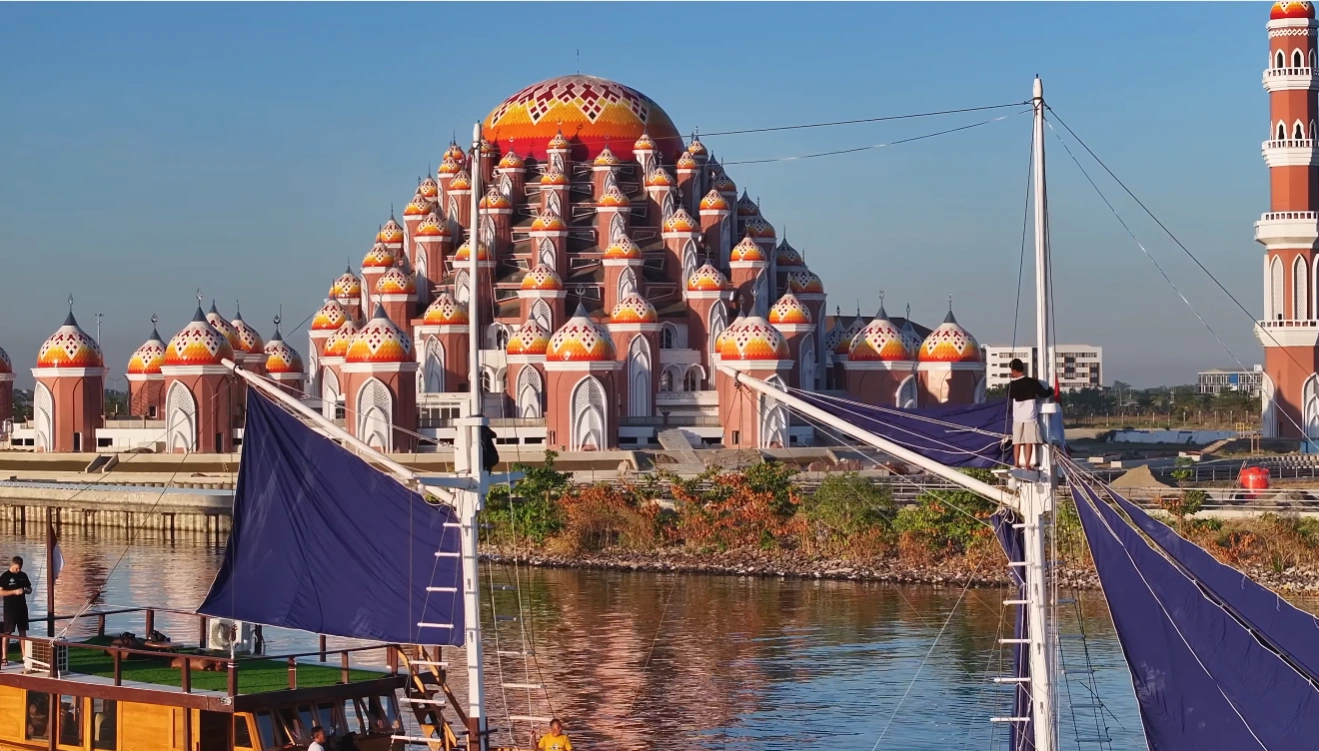
Islam came by sea, from the south and west. Sulawesi's conversion to Islam happened principally through Bugis and Makassar maritime contact with the wider archipelagic Muslim trading network in the sixteenth and seventeenth centuries. The Bugis kingdoms of Bone, Wajo, and Soppeng adopted Islam in the early 1600s; the conversion spread along the coastal trade routes to the Mandar, Buton, and Wakatobi areas. The interior was reached later and incompletely.
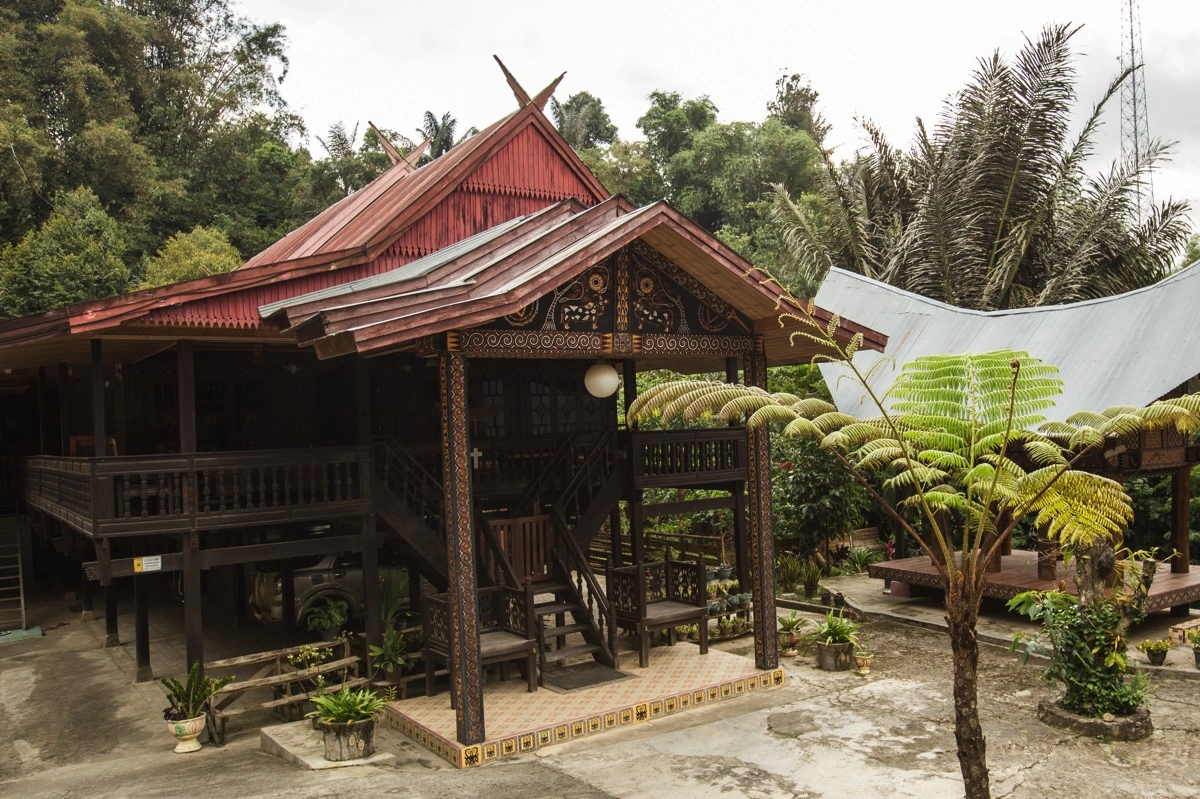
Christianity came by land, from the north and through the highlands. Dutch Protestant missionaries arrived in the Minahasa region in the early nineteenth century, building an institutional Christian presence through schools and churches that persists today. Tana Toraja was opened to mission work in the late nineteenth century, with conversion accelerating in the early twentieth century. The Toraja Christianisation overlaid an older animist tradition (Aluk To Dolo) that was never fully displaced and continues to coexist with Christian practice today.
How the communities coexist day to day
In most of Sulawesi, the religious mosaic functions as everyday neighbourliness. Mixed communities — Manado especially — show this clearly: the call to prayer and church bells share Sunday morning, Eid and Christmas are both public holidays at the family level, and intermarriage, while not universal, is common enough not to be remarkable.
The Poso conflict (1998–2001) is the most serious recent breakdown. Originally local in character (sparked by a fight between two young men) and inflamed by political and economic pressures, the violence acquired explicitly religious dimensions, with mosques, churches, and entire villages targeted. The conflict killed roughly 1,000 people and displaced tens of thousands. Reconciliation has been substantial in the two decades since; the underlying issues — particularly land disputes and ethnic-political competition — have not been fully resolved.
Outside of the Poso flare-up, the mosaic has been remarkably stable.
What travellers should understand
A few practical and cultural points:
- Dress. Dress modestly in mixed-religion areas, particularly when entering mosques or churches. Long sleeves and trousers (or long skirts) are appropriate.
- Food. Muslim-majority areas (most of Sulawesi) avoid pork. Christian-majority areas (Tana Toraja, Minahasa) eat pork widely and serve it openly. Don't assume one rule.
- Alcohol. Strongly restricted in Muslim-majority areas. Widely available in Christian-majority Manado, Tomohon, and the Toraja highlands.
- Photographing places of worship. Generally welcomed; ask before photographing during active services.
- Friday in Muslim areas, Sunday in Christian areas. Plan around the heavier observance days. Many shops close midday Friday in Bugis cities; many close Sunday morning in Manado and Rantepao.
- Ramadan. Restaurants in Muslim-majority areas reduce or restrict daytime service during Ramadan. Plan accordingly if travelling in Bugis, Makassar, or Wakatobi cities during the fast.
Where to see the mosaic in microcosm
A few places make the religious mixing visible at small scale:
- Manado. The interfaith Bukit Kasih monument has a cross, a mosque, a Hindu temple, a Buddhist temple, and a small church arranged together on a hilltop. Visit free.
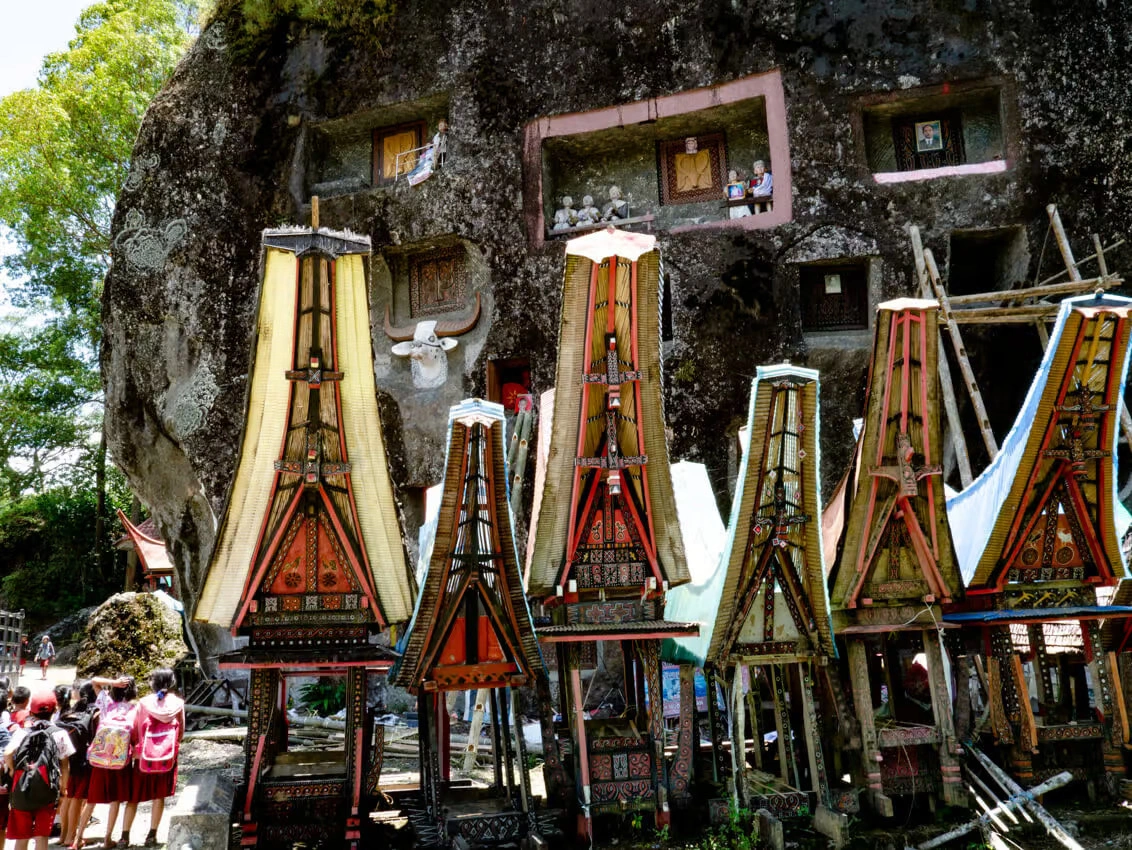
- Tana Toraja. Christian funerals routinely incorporate Aluk To Dolo (pre-Christian animist) elements. Catholic and Protestant churches operate alongside the older tradition with limited friction.
- Palu. The post-earthquake mosques, churches, and community buildings rebuilt together as a deliberate signal of reconciliation.
- Gorontalo. The Tugu Adipura monument complex includes both an Islamic and a Christian commemorative section.
What to read
For travellers wanting more depth, Lorraine Aragon's academic work on the Poso conflict and Greg Acciaioli's writing on Bugis Islam are useful starting points. Both are available in university library collections; neither is light reading.
What is the religious mix of Sulawesi? Sulawesi is about 80% Muslim and 17% Christian, with the geographic split running roughly along an interior diagonal. The Bugis-Makassar south and west, plus Gorontalo and Southeast Sulawesi, are Muslim-majority. The Minahasan north, Tana Toraja, and parts of interior Central Sulawesi are Christian-majority. The mosaic dates to coastal Islamic conversion (1600s) and inland Christian missions (1800s-1900s).