

A guide to the Babirusa — Sulawesi's strangest wild pig with tusks that grow up through the snout, best seen at the Adudu Salt Lick in Nantu Wildlife Reserve.
The Babirusa (Babyrousa celebensis and related species) is one of the strangest mammals in Asia. A wild pig native only to Sulawesi and a small handful of nearby islands, the male grows two pairs of curved tusks — one pair from the lower jaw, the other pair growing from the upper canine teeth upward through the snout, curving back over the face. The name babirusa combines the Indonesian words for pig (babi) and deer (rusa), reflecting the fact that the tusks visually resemble deer antlers.
Babirusa are endangered. Hunting for meat (Sulawesi has a substantial bush-meat tradition) and habitat loss have reduced the wild population substantially over the last few decades. Like the Anoa, the Babirusa is hard to see in the wild. Unlike the Anoa, there is one excellent and reliable location for wild sightings: Adudu Salt Lick in Nantu Wildlife Reserve.
The tusks
The defining feature. Male Babirusa have:
- Lower tusks — curving up and outward from the lower jaw, similar to a conventional wild pig but more pronounced.
- Upper tusks — and this is the unusual part. The upper canines grow vertically upward through the bone of the snout, exit through the top of the muzzle, and curve back over the face. In old males, the upper tusks can curve far enough to touch the forehead or even pierce the skull.
The biological function of the upper tusks is debated. They are too fragile and badly placed to be effective fighting weapons; the leading hypothesis is sexual selection — females selecting males with impressive tusks as an indicator of age, health, and genetic fitness, even when the tusks themselves serve no other purpose.
The result is one of the more visually striking wild mammals in the world.
The species question
Taxonomy of the Babirusa has been revised several times. Most contemporary classifications recognise three or four species:
- Babyrousa celebensis — North Sulawesi Babirusa, the most widespread.
- Babyrousa togeanensis — Togean Islands Babirusa, the smallest.
- Babyrousa babyrussa — Buru Babirusa (off Sulawesi, in the Moluccas).
All are endangered. The North Sulawesi species is the one most travellers might encounter.
Where to see them
Adudu Salt Lick, Nantu Wildlife Reserve (Gorontalo). The only reliable wild-sighting location for Babirusa anywhere. Babirusa come to Adudu daily through the morning to lick mineral-rich soil; observation from a hide produces sightings on most visits. The reserve requires guided access; logistics through the Nantu Forest Conservation Foundation. Two- to three-day trip from Gorontalo town.
Lore Lindu and Bogani Nani Wartabone. Both parks have wild Babirusa but at far lower density than Nantu. Sightings during normal trekking are unusual.
Captive populations. The Anoa Breeding Centre in Manado holds Babirusa alongside Anoa. Several international zoos also keep Babirusa; the captive population is reasonably stable.
What a Nantu visit looks like
The standard visit involves:
- Day 1: Travel from Gorontalo to Nantu (4 hours by road and boat). Overnight at the reserve field station.
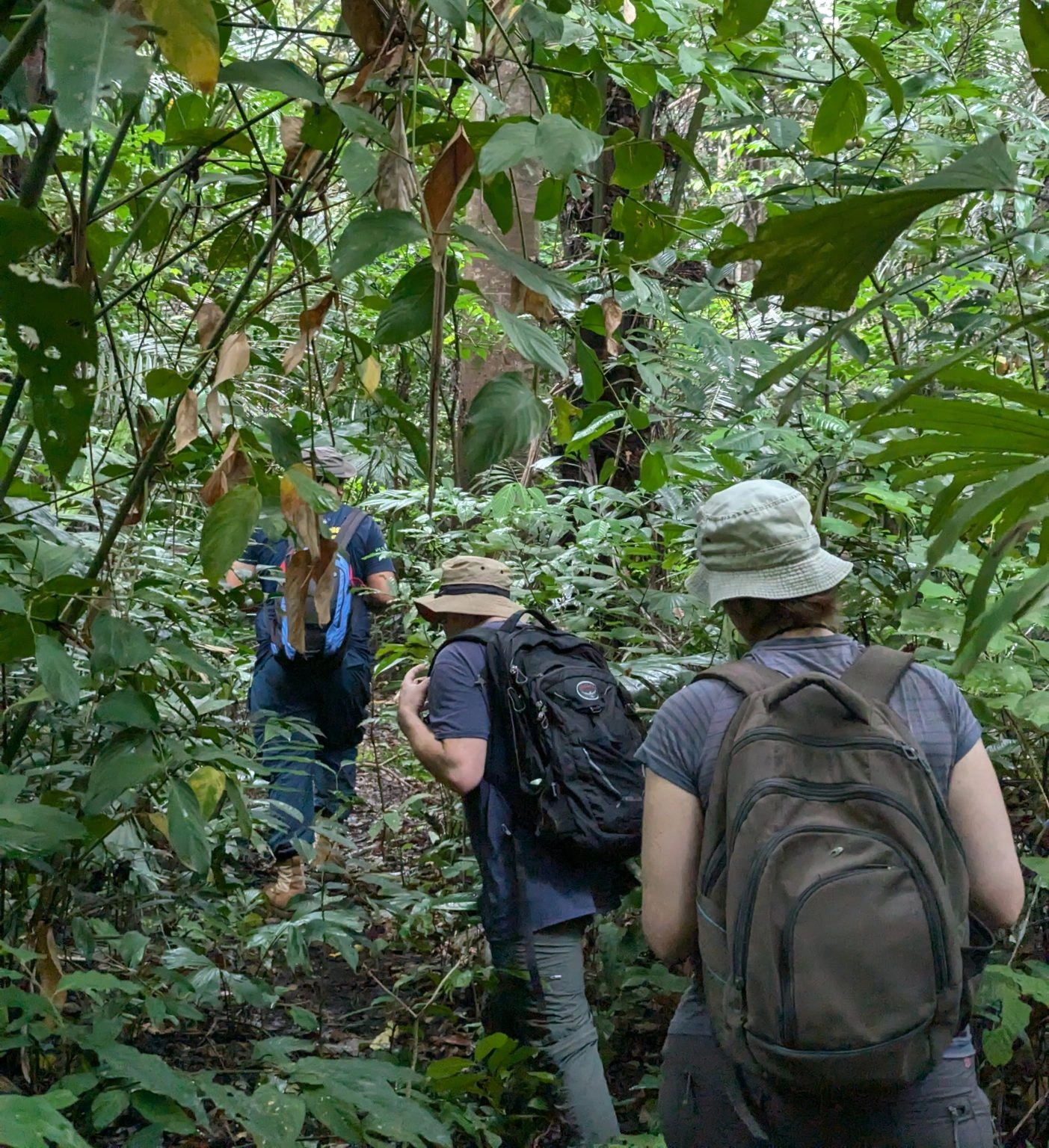
- Day 2: Early-morning walk to Adudu Salt Lick. Observation from the hide, generally 06:00 onward. Babirusa sightings typical, often with multiple animals. Other species frequently seen include anoa (rare but possible), wild pigs, and several endemic birds. Return to field station; second observation in the afternoon.
- Day 3: Return to Gorontalo.
Trip cost runs €167–€238 per person depending on group size and logistics. Most of this funds the conservation work at the reserve.
When to visit
Babirusa visit Adudu year-round but more reliably in the dry season (May–October). The reserve roads can be difficult in heavy rain.
How to combine with a wider trip
Nantu pairs naturally with:
- A Togean Islands trip via Gorontalo (Gorontalo → Nantu → Togean ferry).
- A wider North Sulawesi diving trip (Bunaken → Nantu → Tangkoko).
Add two to three nights to a wider Sulawesi itinerary.
Conservation context
Babirusa face two principal threats:
- Hunting. Babirusa meat is consumed across parts of North Sulawesi, particularly in Christian communities where pork is widely eaten. The bush-meat trade at Pasar Tomohon historically included Babirusa, though regulation has reduced this in recent years.
- Habitat loss. Lowland forest conversion for agriculture has reduced range substantially.
The Nantu Wildlife Reserve has been a major conservation success story for the species. The Adudu salt lick was the focus of long-running research by Lynn Clayton (whose work in the 1990s and 2000s documented Babirusa behaviour at the lick more comprehensively than any prior study), and the area has been continuously protected since.
For travellers interested in eastern Indonesian endemic wildlife, the Nantu visit is one of the more memorable single-trip experiences available.
What is a Babirusa? The Babirusa is a Sulawesi-endemic wild pig in which the male grows two pairs of curved tusks — one pair from the lower jaw and a second pair from the upper canine teeth growing vertically up through the snout and curving back over the face. The species is endangered; the most reliable wild-sighting location is the Adudu Salt Lick in Nantu Wildlife Reserve, Gorontalo, reachable on a 2–3 day trip from Gorontalo town.