
#guide
Coffee Trail: Toraja, Enrekang, Kalosi, and Mamasa
بقلم A. Rahmawati16 Apr10 دقيقة قراءة
A 7-day coffee-focused itinerary covering the South Sulawesi coffee belt — Mamasa, Tana Toraja Sapan, Enrekang Kalosi — with working cuppings and direct estate purchases.
The South Sulawesi coffee belt — running from Mamasa in West Sulawesi through the Toraja highlands and down to Enrekang's Kalosi growing area — produces some of the more interesting specialty coffees in Indonesia. The geography is compact: the major producing areas are all within a 200 km north-south corridor, reachable on a single multi-day road trip that doubles as a coffee education. For travellers interested in coffee at a serious level, the South Sulawesi coffee trail is one of the more rewarding focused trips available.
This is a 7-day coffee-focused itinerary covering the principal Sulawesi origins.
The premise
The trip covers:
- Mamasa highlands. The westernmost coffee area; less famous than Toraja, distinct cup profile.
- Tana Toraja (Sapan and adjacent estates). The most internationally recognised origin.
- Enrekang (Kalosi and Baraka). The dense, chocolatey origin south of Toraja.
- Pinrang and Sidenreng. The southern lowland edge of the coffee belt.
For travellers willing to engage with both the agronomy and the cup, a week through these areas produces a working understanding of why Sulawesi coffee tastes the way it does.
A 7-day itinerary
Day 1: Arrival in Makassar.
- Fly into UPG.
- Afternoon: visit a specialty café (Coffee Cartel, Toko Kopi Jaga) for the introduction.
- A side-by-side Sapan and Kalosi cupping if available.
- Hotel: any mid-range Makassar option.
Day 2: Makassar to Enrekang (Baraka).
- Drive north (5 hours).
- Afternoon: a small Kalosi estate visit at Baraka. Cupping with the estate owner.
- Overnight in Enrekang town or at an estate guesthouse.
Day 3: Enrekang to Rantepao.
- Morning: a second Kalosi estate (different elevation or processing).
- Drive to Rantepao (4 hours).
- Late afternoon: arrival, settle in.
- Evening: pa'piong dinner with Toraja coffee.
Day 4: Sapan and the upper estates.
- Pre-arranged visit to a Sapan estate (1,500–1,700m).
- Full-day estate visit including a walk through the plots and a working cupping session.
- Return to Rantepao for evening.
Day 5: Pulu-Pulu and Bittuang.
- Smaller, less-known Toraja origins.
- Two morning estate visits.
- Afternoon at Rantepao specialty cafés for comparison cupping.
Day 6: Rantepao to Mamasa.
- Drive west to Mamasa (3–4 hours over the mountain road).
- Afternoon: Mamasa coffee estate visit.
- Overnight in Mamasa.
Day 7: Mamasa to Makassar.
- Drive back to Makassar via Polewali (8 hours; long day).
- Or fly Mamasa if a small commercial service is running (check).
What you'll taste
A side-by-side trip comparison:
Mamasa profile.
- Slightly lighter body than Toraja or Enrekang.
- Brighter acidity.
- Floral and citrus notes.
- Often clean processing (washed or honey) at the small estates.
Toraja Sapan profile.
- Medium-bodied with a syrupy texture.
- Low to medium acidity.
- Dark fruit (prune, plum, fig).
- Long earthy-spicy finish.
- Giling basah (wet-hulled) processing characteristic.
Enrekang Kalosi profile.
- Denser body than Toraja.
- Lower acidity.
- Pronounced chocolate and tobacco notes.
- Longer chocolatey finish.
A coherent trip allows direct comparison across the three. The geographic distance is small (under 200 km from Mamasa to Baraka), but the cup difference is meaningful.
The estates
A few specific estates worth knowing about:
Toraja:
- Sulotco — established estate, accepts booked visits.
- Toarco — Japanese-Indonesian joint venture, similar.
- Smaller Pulu-Pulu estates — arranged through your Rantepao guide.
Enrekang:
- Smaller estates around Baraka — arranged through local guides or Baraka Kopi café.
Mamasa:
- A handful of estates around Mamasa town — arranged through your local guide.
Practical note. Estate visits should be pre-arranged 1–2 weeks ahead. Most estates welcome serious coffee visitors but the workshops are working operations, not tourist attractions.
The processing question
A key thing to understand on this trip:
Wet-hulled (giling basah) is the traditional Sulawesi processing. Produces the characteristic deep-cup colour and earthy-spicy profile. Most commercial Sulawesi coffee is this.
Fully washed and honey processing are increasingly used by specialty-focused estates. Produces brighter, cleaner cups. The "modern" Sulawesi style.
For travellers serious about coffee, asking each estate about their processing and tasting the same beans across different processing methods is one of the more interesting parts of the trip.
Beyond cupping
The coffee trail can extend beyond the cupping into broader agronomy:
Variety identification. Typica, S795, Bourbon, Catimor. Visible in the plot.
Elevation effects. Coffee from 1,400m vs 1,700m tastes different. Visit both.
Cherry picking and pulping. If you visit during harvest (April–July for most Sulawesi estates), see the working process.
Drying patios. The drying step is critical for cup quality. Different estates use different methods (raised beds, patio drying, partial mechanical).
A working coffee trip engages with all of these rather than just the cup.
Practical considerations
Costs.
- Estate visits with cupping: €10–€19 per estate.
- Drivers for the wider route: €57–€70 per day.
- Accommodation: standard mid-range Sulawesi (€19–€38 per night).
- Coffee purchases: budget €24–€70 if you want to bring beans home.
Total trip cost: €700–€1,300 per person, excluding international flights.
When. The harvest season (April–July) is the best time for serious coffee travellers — you see the working processing. Outside harvest, you can still cup and tour the estates but the agronomic dimension is less visible.
May–July is the optimal window.
What to bring.
- A notebook for tasting notes.
- A camera with macro capability for cherry and bean photography.
- Coffee-purchase budget.
- A modest gift for the estate owners (Indonesian convention; bringing a small token is appreciated).
What to buy
For travellers wanting to bring back coffee:
Whole bean, not ground. Always.
Buy from the source. A 250g bag of Sapan or Kalosi at the estate is roughly 50–60% of the supermarket retail price.
Sample multiple processings. Buy a small bag of wet-hulled and a small bag of fully-washed from the same estate to taste the difference at home.
Shipping logistics. Coffee travels fine in luggage. Some estates can arrange international shipping for larger orders, useful for travellers who want to send a quarterly subscription home.
What this trip is and isn't
This trip is:
- A focused engagement with the working Sulawesi coffee economy.
- A real cupping comparison across three distinct origins.
- A combined cultural-and-product trip through the Sulawesi highlands.
This trip is not:
- A cultural Toraja trip in the standard sense (it bypasses funerals and Kete Kesu).
- A relaxing beach trip.
- A trip for travellers without specific coffee interest.
A natural pairing
For travellers with a week's extension available, the coffee trail combines well with:
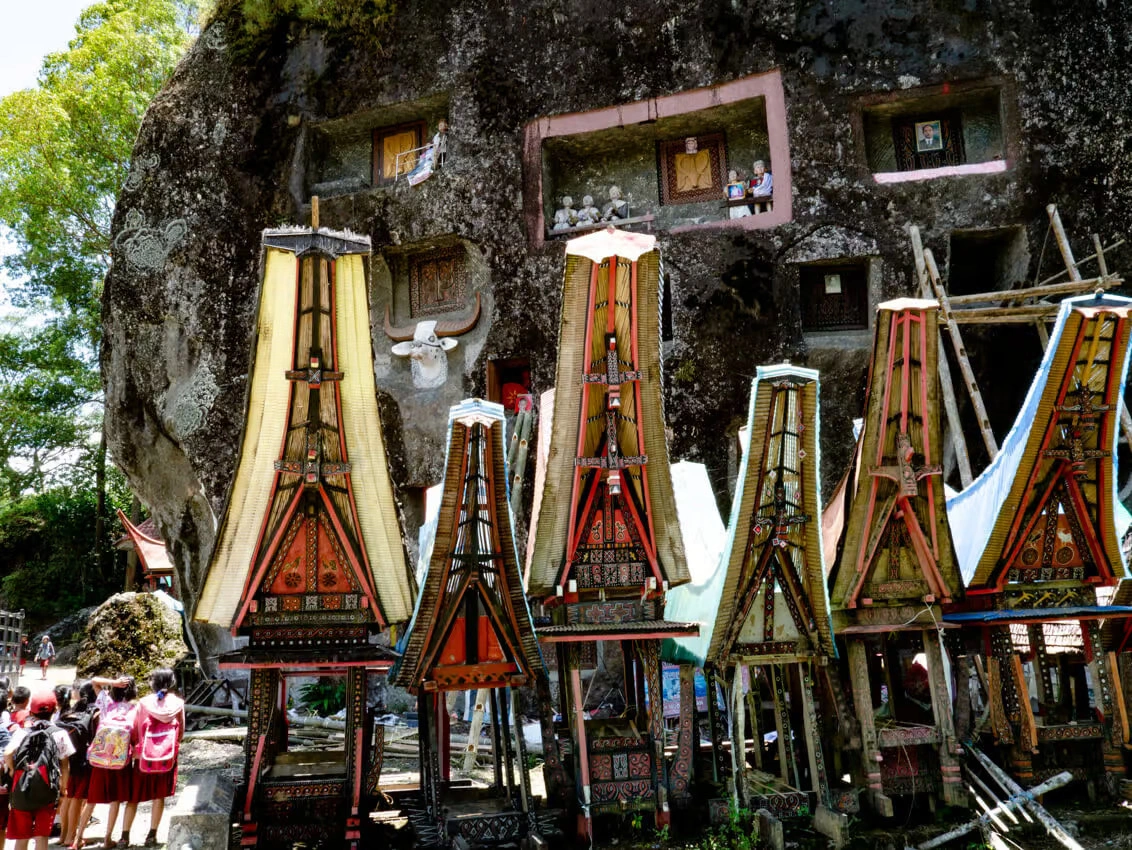
Add Tana Toraja (3–4 extra days). Funeral attendance, Kete Kesu / Lemo / Londa, the wider cultural experience.
Add Bira (2 extra days). Beach reset after the highland trip.
Add Bunaken (5 extra days). Cross-island flight for the diving / reef experience.
A coffee-and-culture trip totalling 10–14 days is a natural extension of the focused coffee week.
The framing
For most travellers with serious coffee interest, the South Sulawesi coffee trail is the highest-yield coffee trip available in Indonesia. The geography is compact, the origins are genuinely distinct, the working culture is welcoming to visitors, and the cups justify the trip. For travellers without specific coffee interest, the trip is over-specialised. Match it to your interest.
What's the South Sulawesi coffee trail? A 7-day itinerary covering the principal Sulawesi coffee origins — Enrekang (Kalosi from around Baraka), Tana Toraja (Sapan, Pulu-Pulu), and Mamasa highlands — through estate visits, working cuppings, and direct purchases at the source. Best months April–July (harvest season). Mid-range trip cost €700–€1,300 per person. Pairs naturally with a wider Tana Toraja cultural visit and onward to Bira or Bunaken.