#practical
Photography Permits and Cultural Etiquette in Toraja
بقلم A. Rahmawati02 Jul9 دقيقة قراءة
A practical guide to photographing Toraja respectfully — what requires permission, funeral photography etiquette, and where the local conventions actually fall.
Tana Toraja is one of the more photographed cultural destinations in Indonesia, and the photography culture has accumulated specific norms over decades of foreign and Indonesian visitor presence. Most visitors photograph respectfully without much guidance and have no problems. Some don't, and the friction has produced a few specific local conventions that travellers should know. This is a working guide to photographing Toraja respectfully — what's fine, what requires permission, and where the lines actually fall.
The general framework
Three rough levels:
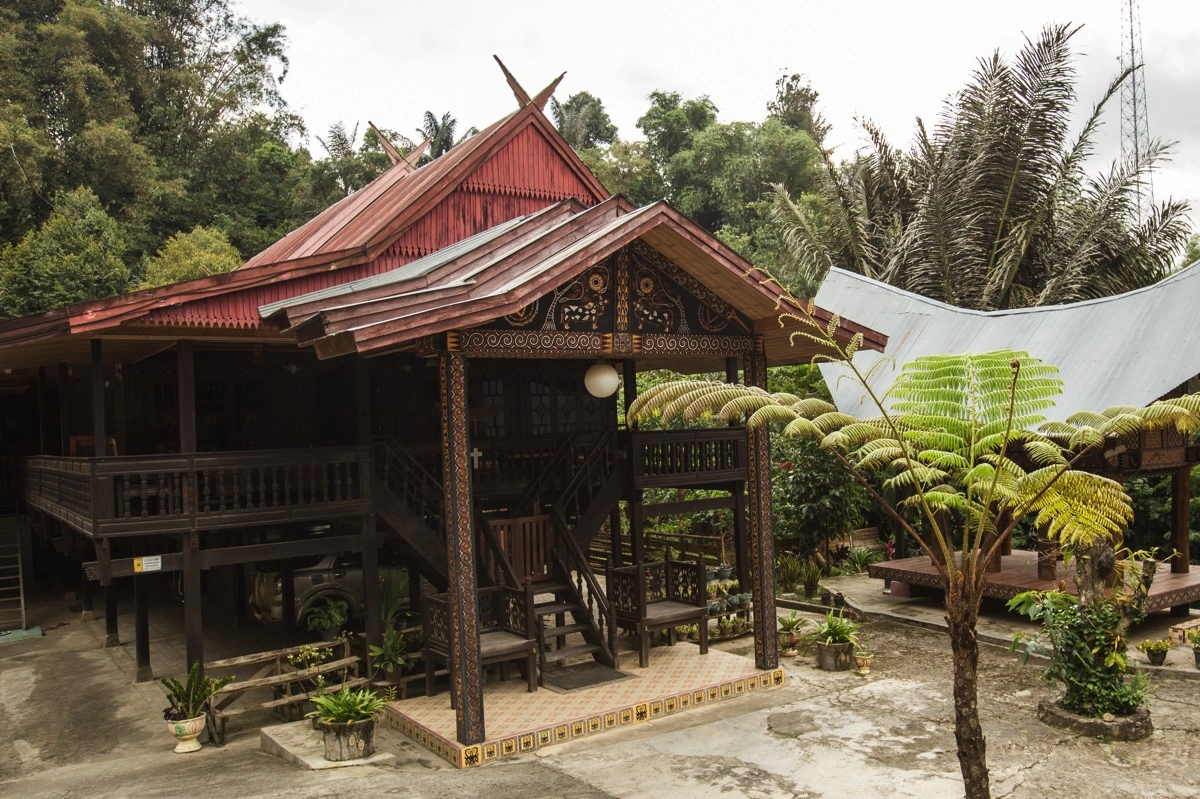
Free to photograph. Public landscapes, the exterior of empty tongkonan, market stalls (with the vendor's general awareness), traditional textiles and handicrafts in shops, public streetscapes.
Photograph with awareness. People in public going about their day. Generally fine to include them in wide shots; close-up portraits should be requested.
Requires permission. Funerals (specific guidance — see below), private homes, religious ceremonies in progress, individuals you want to photograph in close-up, children.
Off-limits or restricted. Cliff burial sites with active tau-tau (effigies of deceased ancestors) require specific protocol. The interior of consecrated tongkonan. Photographs of the deceased themselves at a funeral.
Permits and fees
Most Toraja sites are open without formal photography permits. The exceptions:
Drone use. Requires informal permission from the village head at most sites. Some sites prohibit drones outright. Ask through your guide before flying.
Commercial photography. If you're shooting for commercial use (paid editorial, advertising), formal permits from the regency tourism office are required. The process takes 1–2 weeks and is workable through a fixer; not relevant for individual travel photography.
Cliff burial sites at Lemo, Londa, Kete Kesu, and Suaya. Entry fees include photography rights for personal use. €1.50 entry covers it.
Specific funeral ceremonies. Some families request no photography; some welcome it. Always ask through the guide.
For most personal-travel photographers, no formal permits are needed.
Funeral photography in detail
The most sensitive area. Rambu Solo' funerals are public ceremonies that welcome visitors but operate by specific protocols.
What's generally fine:
- Wide shots of the ceremonial field (rante).
- Procession photographs (the buffalo brought in, the relatives arriving).
- The pavilions, the tongkonan, the architectural settings.
- Cultural dance performances (Ma'badong, Ma'pasonglo).
- The wider crowd.
Approach with care:
- Close-up portraits of family members. Generally welcomed but ask first through the guide.
- The ceremonial coffin (lakkean).
- Active religious portions of the ceremony.
Generally not appropriate:
- The actual moment of buffalo slaughter. Put the camera down.
- The body or face of the deceased.
- Grieving family members in private moments.
Specific rules:
- No flash (especially during indoor portions of the ceremony).
- Don't direct subjects; you are documenting, not staging.
- Keep your distance during religious portions.
- If a family member or guide says "stop," stop immediately.
Tau-tau and burial sites
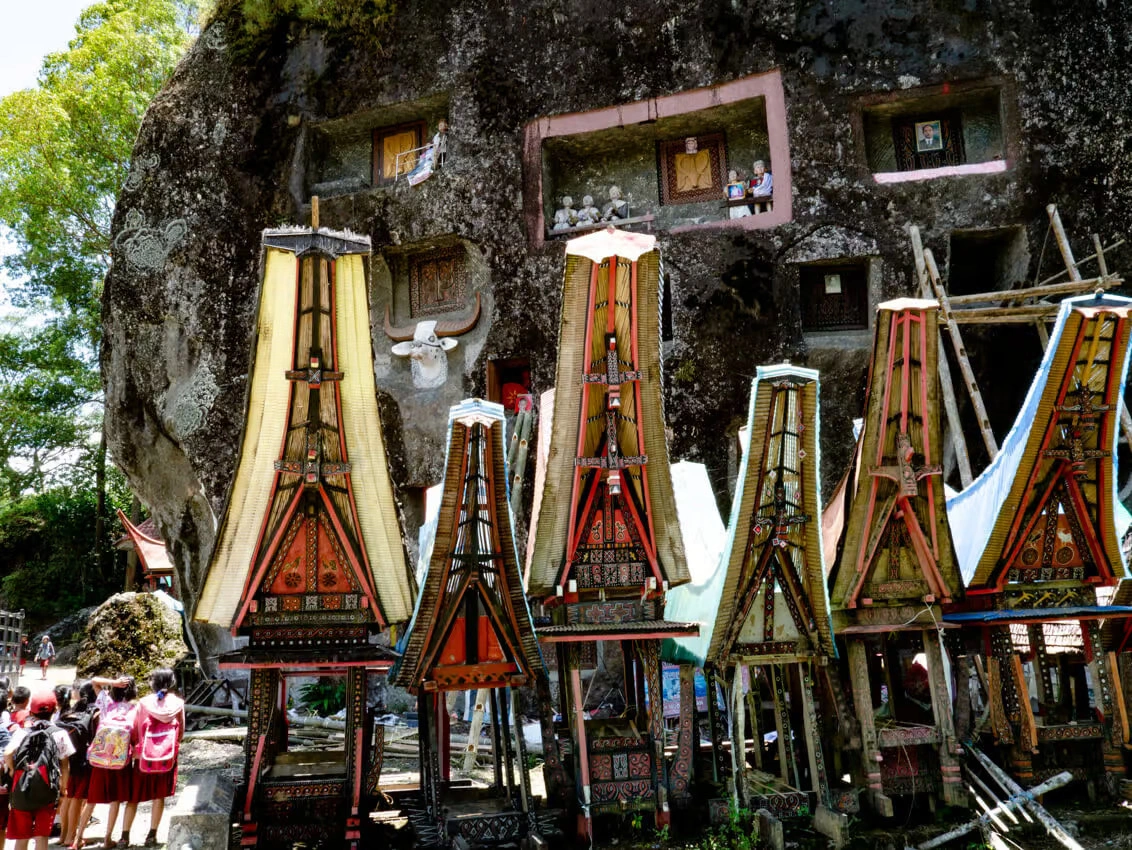
The tau-tau (carved wooden effigies of deceased ancestors, placed at the entrance to cliff graves) are among the most photographed Toraja subjects, with specific cultural sensitivities:
The tau-tau represent specific deceased individuals. They are not generic carvings; they are portraits of real people maintained as connections to the ancestors.
Photography at Lemo and Londa is permitted and is part of why visitors pay the entry fee.
Close-up portraits are fine but should be approached with the same respect as photographing a person.
Replica tau-tau in souvenir shops are fine to photograph; original tau-tau in family compounds are not — ask before photographing private displays.
Photographing villagers and children
Standard cultural-travel photography norms apply:
Adults. Ask first ("Boleh foto?" — May I photograph?). Most agree. A short visit, a few photos, a thank-you exchange (a small tip of €1–€2.50 if the photo is a deliberate portrait).
Working people in markets, fields, etc. Generally accept being photographed as part of public-place documentation. A gesture indicating the camera and a smile is enough.
Children. Always ask the parent or guardian. The convention is more cautious in Toraja than in some other Indonesian regions due to specific incidents in the past.
Wedding and family gatherings. Different from funerals. Ask the host before photographing.
Tongkonan interior photography
The interiors of tongkonan are private spaces:
Restored show-pieces (the visitor-facing tongkonan at Kete Kesu, etc.) — interior photography generally permitted.
Working family tongkonan — interior photography requires permission. Many families welcome respectful interest; some don't.
The back room of a tongkonan where the deceased may be kept pending the Rambu Solo' — generally off-limits to photographers. Don't even ask.
Your guide will know the conventions for each site. Follow the guide's lead.
Drone photography
Drone use is an emerging area:
The technology is more visible in Toraja now than five years ago. Some sites have explicit no-drone rules; others tolerate drones with informal permission.
General convention.
- Ask the village head before flying at any village.
- Don't fly directly over private compounds or funerals.
- Don't fly when other photography is restricted (e.g., during sacrifices).
- Keep distance from cliff burial sites.
Formal rules. Indonesia has drone registration requirements for drones over 250g; international visitors should check the current Civil Aviation Authority status before bringing serious drone equipment.
For most travellers, drone photography in Toraja is workable but requires more local negotiation than ground photography.
A few specific situations
Pasar Bolu (Rantepao market): General photography fine. Ask before close-ups of individual vendors.
Kete Kesu village: Wide-scene and architectural photography fine. Tongkonan interiors require permission.
A Rambu Solo' funeral you're invited to: Photography generally welcomed except as noted above. Ask before close family-member portraits.
A coffee estate or weaving workshop: Generally welcoming to photographers. Tipping the working subjects is appreciated.
Tomohon Pasar (market) — even though that's North Sulawesi: Specifically sensitive due to the bush-meat sections. Wide market shots fine; close-ups of bush-meat displays attract negative attention from vendors and have been the basis of several international controversies. Ask carefully; if the vendor declines, accept it.
What to do with the photographs
A few considerations beyond the act of photographing:
Sharing photographs with hosts. If you photograph a host family or a funeral family, sharing photographs back is appreciated. WhatsApp transfer or printed copies sent later are both effective.
Publishing. Personal-blog and social-media publishing of personal-travel photographs is standard. Commercial publication (paid editorial, stock photography, advertising) requires formal permits.
Stock photography. Don't upload your Toraja photos to commercial stock platforms without considering the consent question. Indonesian subjects rarely sign model releases at the moment of photography.
A practical kit
For travellers serious about photography in Toraja:
- A standard zoom (24–70mm equivalent) covers most situations.
- A telephoto (70–200mm equivalent) useful for keeping distance at funerals.
- A wide-angle (16–35mm equivalent) for tongkonan exteriors and landscape.
- No flash for cultural events.
- A small tip envelope (€2.50–€5 in small bills) for individual subjects you deliberately photograph.
The underlying principle
For Toraja photography, the underlying principle is consistent with the principle of attending a Toraja ceremony in general: you are a guest at a working cultural site, not a customer at a curated tourist attraction. Behave with the gravity the culture warrants. Photographs taken with this attitude are usually welcomed; photographs taken without it produce friction that affects future visitors.
Done well, Toraja photography is among the most rewarding cultural travel photography in Indonesia.
What are the photography rules for Tana Toraja? Most Toraja sites permit personal photography without formal permits — the cliff burial sites at Lemo, Londa, Kete Kesu, and Suaya include photography rights in the €1.50 entry. At Rambu Solo' funerals, wide shots and processional photography are welcomed; the moment of buffalo slaughter, the body of the deceased, and grieving family members in private moments are not. Always ask through the guide before close-up portraits, and skip flash entirely.