

A wider overview of Sulawesi coffee — the Toraja, Enrekang, and Mamasa origins, the giling basah wet-hulled tradition, and how the specialty export trade actually works.
Sulawesi has been on the international specialty coffee map for half a century, but the geography most international roasters use is approximate. "Sulawesi" on a coffee label usually means the highland origins of South Sulawesi — Toraja's Sapan area, Enrekang's Kalosi area, and the surrounding small estates in between — without much distinction between them. For visitors interested in coffee, the more precise geography is worth knowing: each origin produces a recognisably different cup, the processing tradition has shifted significantly in the last decade, and the trip from Makassar up through coffee country is one of the more rewarding food-related drives in Indonesia.
This is a wider overview of Sulawesi coffee, complementing the dedicated Coffee Culture in Toraja vs Enrekang article. Where that piece focuses on the cup differences between the two main origins, this one covers the broader geography, the production system, and how the export trade actually works.
The Sulawesi coffee map
Three main coffee zones in South Sulawesi:
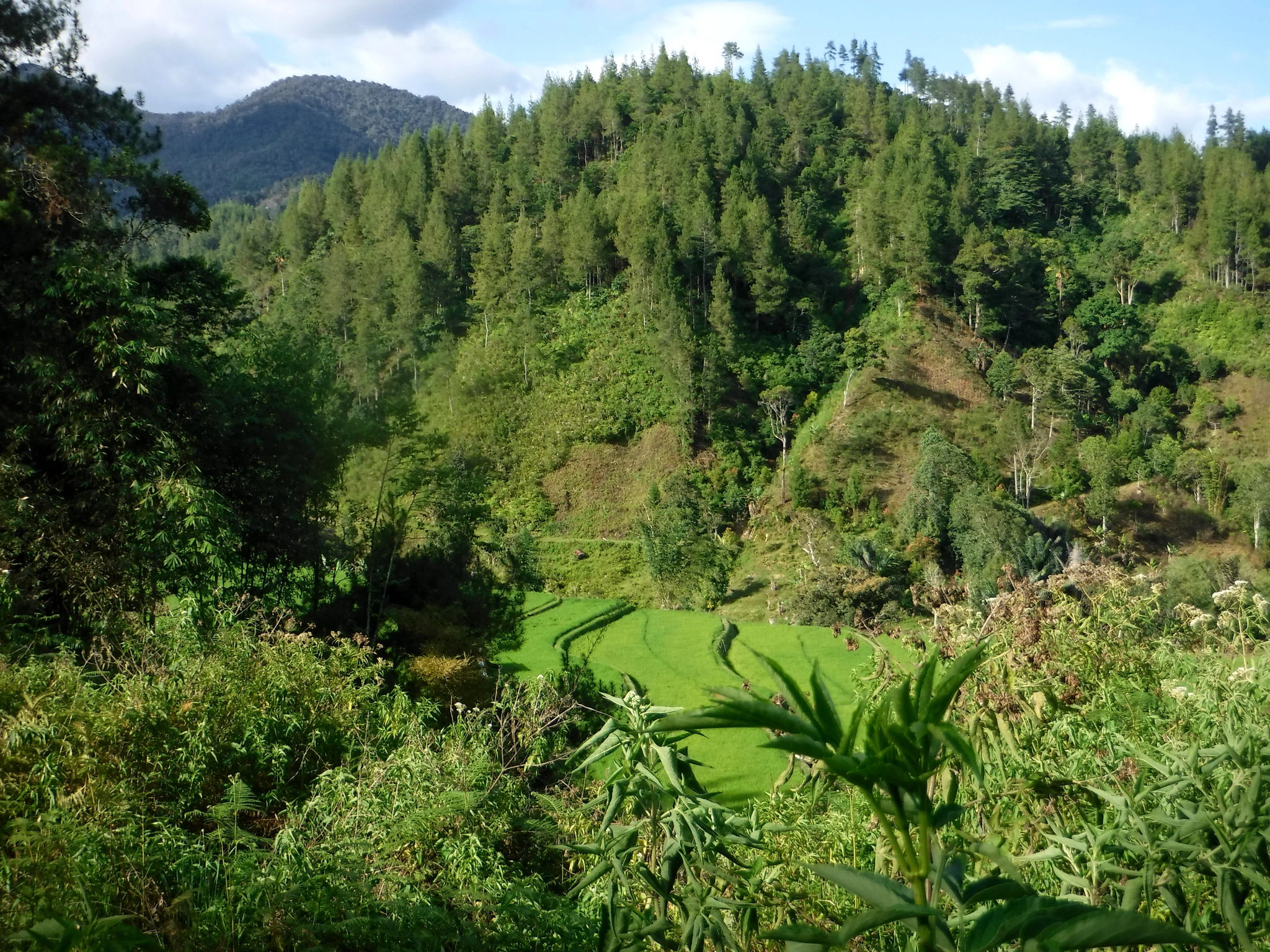
Toraja highlands. 1,400–1,800 metres. The northern and best-known zone, centred around the village of Sapan in Tana Toraja regency. Volcanic soils, cool mountain climate. The classical Toraja cup.
Enrekang highlands. 1,200–1,700 metres. The middle zone, immediately south of Toraja, centred on Kalosi village and the wider Cakke and Baraka areas. Similar terroir to Toraja but with subtle elevation and soil differences that produce a heavier, darker cup.
Mamasa highlands (West Sulawesi). 1,300–1,700 metres. The western zone, geographically continuous with Toraja but in a separate province. Smaller production, less international visibility, often blended into "Toraja" exports.
Beyond South Sulawesi:
Central Sulawesi. Smaller plots in the Palu hinterland and around Lore Lindu. Limited commercial export.
North Sulawesi. Minor production. Some small estates above Tomohon producing for the local Minahasan café market.
The combined production from all these areas is small by Indonesian standards — Sulawesi is the third or fourth largest Indonesian coffee origin, well behind Sumatra and Java. The quality, particularly at the specialty end, is high.
Varieties
Most Sulawesi coffee is Arabica. The principal varieties grown:
- Typica — the oldest, lowest-yielding, and (some argue) best-cupping variety. Concentrated at the higher-elevation Sapan estates.
- S795 — a Catimor variety planted heavily through the 1990s government replanting programs. Higher yield, less distinctive cup. Dominant by volume in Enrekang.
- Bourbon and Caturra — small heritage plantings at specific estates.
- Robusta — limited; Sulawesi is principally an Arabica region.
A specialty Sulawesi coffee from a smaller estate will often specify the variety. Mass-market Sulawesi blends do not.
Processing — the giling basah question
The signature traditional processing of Sulawesi coffee is giling basah (wet-hulled):
- Coffee cherries are pulped and partially fermented.
- The parchment-still-attached beans are dried only partially (to about 30–40% moisture).
- The parchment is removed at this still-wet stage.
- The bean — now exposed and still wet — is dried the rest of the way.
This process produces the characteristic deep dark green colour and earthy-spicy profile that international roasters identify as the Sulawesi cup. It is also slightly risky for the bean (the partially-wet exposed bean is vulnerable to micro-cracks and defects) and produces less clean cups than fully-washed processing.
Over the last decade, specialty-focused Sulawesi producers have increasingly shifted to fully washed or honey processing. The cups are cleaner, brighter, and more "Central American" in profile — but a step away from the regional identity that built the Sulawesi reputation.
Both styles have value. Visitors tasting at cafés should ask which processing the specific lot used; the difference is significant.
The export trade
The Sulawesi specialty export trade is concentrated in a few operators:
- Sulotco (Toraja). Long-running estate-and-cooperative model.
- Toarco (Toraja). Japanese-Indonesian joint venture, exports principally to Japan.
- Indo Cafco and Volcafe — commercial scale, both origins.
- Tanamera Coffee — Jakarta specialty roaster, prominent in domestic specialty.
The smaller specialty buyers — direct-trade operations connecting individual estates to international roasters — have grown significantly. Many of the best contemporary Sulawesi single-origins reach international markets through these smaller channels rather than through the historic export houses.
How to taste through Sulawesi coffee
For visitors with serious coffee interest, the right sequence on a South Sulawesi trip:
- Makassar. Specialty cafés in the Boulevard area carry small-lot Sulawesi single-origins. Coffee Cartel Makassar and Toko Kopi Jaga are reliable. Try a Sapan and a Kalosi side by side.
- Enrekang stop. On the drive north, stop at Baraka Kopi for an Enrekang single-origin cupping. Half a day.
- Rantepao. Kopi Aroma Mamasa, Pong Tiku Coffee, Kopi Toraja Sapan — three cafés in the centre roast their own and serve a Sapan-led menu. Cuppings can be arranged.
- A Sapan estate visit. Through Sulotco or one of the smaller estates. Half a day with the right introduction.
A coherent coffee trip through South Sulawesi takes 3–5 days and produces a real understanding of the regional differences.
What to take home
For visitors wanting to bring Sulawesi coffee home:
- Whole bean, not ground. Grind on use.
- Small specialty roasters over supermarket blends. Look for named estate and processing details on the bag.
- Buy in Rantepao or Makassar, not at the airport. Airport coffee is markedly more expensive than the same beans at the source.
A 250g bag of small-estate Sapan or Kalosi runs €5–€10 at the source, €10–€17 at airport shops. The difference is large enough to matter.
A note on labelling
Be careful of "Toraja Kalosi" labels in international shops. The name technically conjoins Toraja (the northern origin) with Kalosi (the Enrekang origin), but the labelled coffee is often a blend, often dominated by Enrekang Kalosi, and rarely represents either origin distinctly. For travellers who specifically want one or the other, look for single-origin labels with named villages (Sapan, Pulu-Pulu, Baraka, Bittuang).
What is Sulawesi coffee? Sulawesi coffee is Arabica grown principally in the South Sulawesi highlands of Toraja (Sapan area, 1,400–1,800m), Enrekang (Kalosi area, 1,200–1,700m), and Mamasa in West Sulawesi. The traditional giling basah (wet-hulled) processing produces a characteristic deep colour and earthy-spicy cup; specialty producers increasingly use fully washed or honey processing for brighter profiles. The most accessible tasting is at Rantepao or Makassar specialty cafés.