The Bajau of eastern Sulawesi live in settled stilt villages built over shallow reef. Outsiders still call them "sea nomads", but in Sulawesi most Bajau families have lived in fixed villages for generations. The lepa-lepa houseboats that once carried them along the trade routes have almost disappeared.
The Bajau are an Austronesian people. Other names for them include Bajo and Sama. Around one million Bajau live along the coasts of eastern Indonesia, the Philippines and Malaysia. In eastern Sulawesi there are perhaps 100,000, in Wakatobi, the Togean Islands, the Banggai Archipelago and around the Tomini Gulf.
This primer covers who the Bajau are, which villages you can visit, and how to visit with respect.
Five Bajau villages in Sulawesi
| Village | Location | Notes |
|---|---|---|
| Mola Selatan and Mola Utara | West side of Wangi-Wangi, Wakatobi | Two large neighbouring villages. The Bajau communities that visitors see most often in Sulawesi. |
| Sampela | Near Hoga, Wakatobi | Smaller and harder to reach. |
| Pulau Papan | Togean Islands | Known for its long wooden footbridge, built so children can walk to school on the next island. |
| Bone Baru | Banggai Archipelago | A Bajau village in the home waters of the Banggai cardinalfish. |
| Torosiaje | Tomini Gulf, Gorontalo | A stilt village in Gorontalo waters. |
Populations range from a few dozen people to several thousand.
A settled people, not a wandering one
Tourist brochures often show the Bajau as boat dwellers who never touch land. In eastern Sulawesi this picture is mostly wrong, and it has been wrong for at least a hundred years. Some Bajau groups in the Philippines keep a stronger houseboat tradition. In Indonesia, many stilt villages have stood in the same place for more than a century.
The label shapes how visitors behave. People who expect to "see the nomads" tend to treat a village as a spectacle. People who expect a working fishing community with a long settled history have better, more respectful meetings.
How Bajau families live today
Fishing remains the core of the economy. Families also collect sea cucumbers and shells. Small-scale tourism is a growing source of income. Relatives working in regional towns or abroad send money home.
Homes stand on stilts above the reef. Raised wooden walkways join one cluster of houses to the next. Life happens on the house platforms, in the boats tied up underneath, and out on the reef flats when the tide is low.
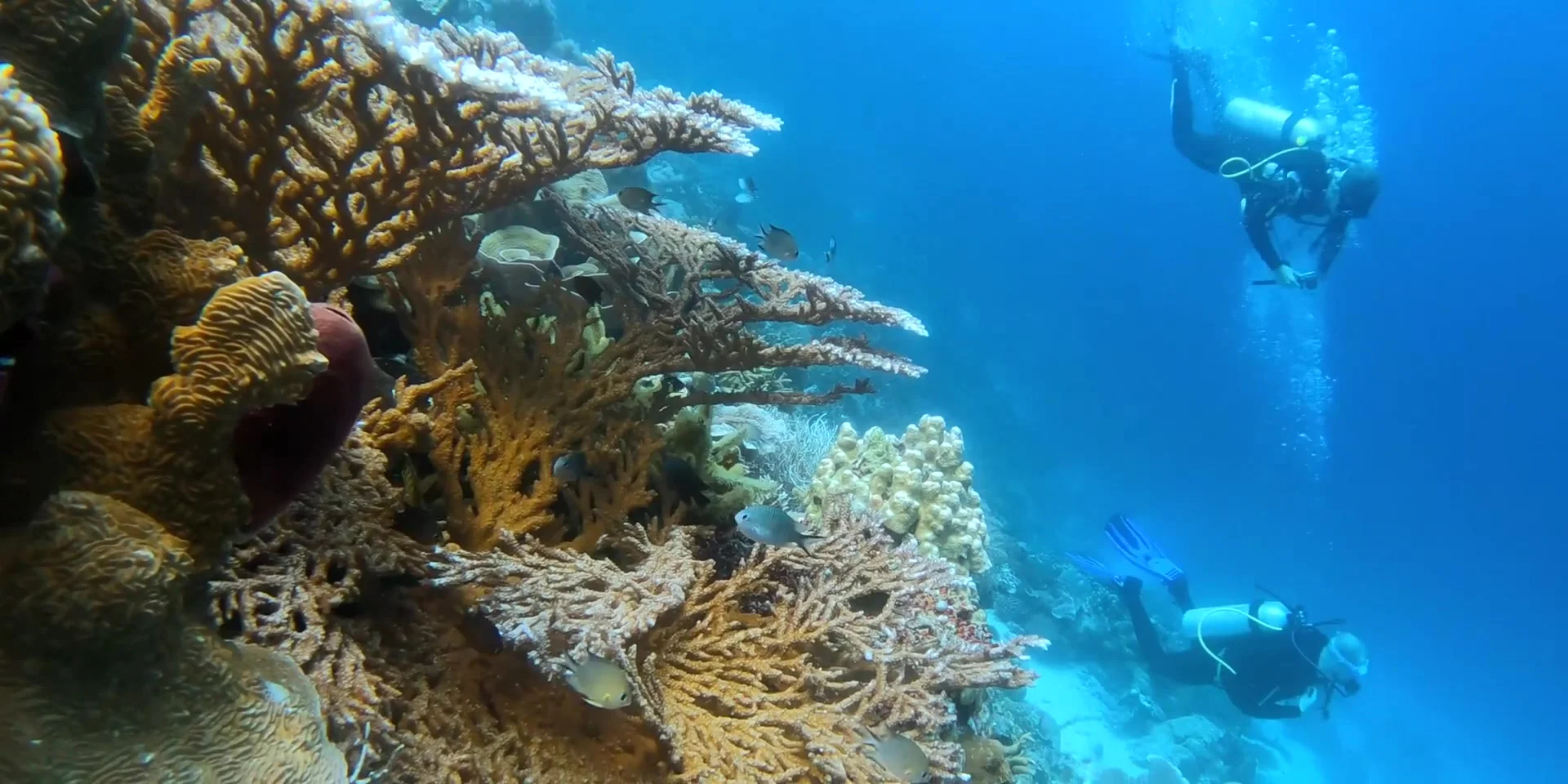
Most Bajau children can swim before they can walk. A few spend their early years hardly ever on land. Scientists have documented a real breath-holding adaptation in Bajau divers, including larger spleens that store more oxygen during a dive. It reflects how central free diving still is to village income.
Language and faith
Bajau people speak languages of the Sama-Bajau group, part of the Austronesian family. Dialects far apart from each other are often not mutually understandable, so coastal trade languages fill the gaps.
Most Indonesian Bajau also speak fluent Bahasa Indonesia and the local language of their area. In Wakatobi that means forms of Cia-Cia and Bugis. In the Togeans it means Bahasa Indonesia and some Tialo.
Most Sulawesi Bajau are Muslim. Islam reached most communities in the seventeenth and eighteenth centuries, through contact with Bugis and Makassar seafarers. A small minority keep older animist beliefs next to Islam, mainly beliefs about the sea and its spirits.
Visiting a Bajau village: three rules
- Go with a local guide. Ask your homestay or resort to arrange one. The guide introduces you to the village elders and explains local custom. Arriving unannounced is impolite.
- Bring a gift for the community. A cash gift to the village head, in the range of €5 to €14 at the time of writing, is normal. Practical gifts also work: school supplies, rice or cooking oil. Let your guide judge the right amount and form.
- Ask parents before you photograph children. Photos of Bajau children leaping off platforms have become a tired and intrusive cliché. Always ask first.
Pressures on the Wakatobi villages
The two Mola villages on Wangi-Wangi face serious problems. Sea levels are rising. Reefs produce less fish. Currents bring plastic waste from across the region. Tourism has grown fast, but on balance the community has not gained in proportion to the attention it gets. If you visit, listen to what residents say about their own situation rather than to the tour script.
Choosing the right words
"Sea nomads" began as an outsider's label about a century ago. Bajau communities have accepted, rejected or partly reclaimed it at different times. Indonesian researchers and officials now prefer Sama-Bajau, or simply Sama. Use these names when you write about the community. When you speak, follow the lead of the people you meet.
The Bajau live in the present, with modern jobs, modern problems and modern goals. Their nomadic period ended generations ago.