A coelacanth lives in the deep water off Manado, North Sulawesi. This 1.5-metre fish looks prehistoric, and scientists once believed the whole group had died out 65 million years ago. The Indonesian coelacanth, Latimeria menadoensis, came to light in 1997. Two years later, in 1999, scientists confirmed it as a separate species from the African coelacanth, Latimeria chalumnae.
The fish lives 150 to 250 metres down, in cool caves of volcanic rock. Only research submersibles and technical divers on rebreathers have seen it alive, and only on rare occasions. This primer tells the story and explains what a visitor to Manado can realistically see.
Key facts
| Species | Latimeria menadoensis |
| Length | About 1.5 metres |
| Depth | 150 to 250 metres |
| Water temperature | 16 to 18°C |
| Habitat | Volcanic caves off Manado Tua, Bunaken and the deep strait towards Lembeh |
| Found | 1997, at a Manado fish market |
| Named | 1999 |
| IUCN status | Vulnerable |
From fossils to a living fish: South Africa, 1938
Before 1938, scientists knew coelacanths only as fossils. The oldest date from the Devonian period, around 400 million years ago. The youngest are about 65 million years old.
In 1938 fishermen working near East London, on the South African coast, netted a living one. Marjorie Courtenay-Latimer, at the East London Museum, recognised that the fish was unusual. The genus Latimeria carries her name. The fish expert J. L. B. Smith confirmed what it was. The find counts among the greatest natural history discoveries of the twentieth century.
For the next sixty years, scientists believed there was only one species. They thought it lived only in the western Indian Ocean: off South Africa, Madagascar and the Comoros.
The Manado find, 1997
In September 1997, the American marine biologist Mark Erdmann was in Manado on honeymoon with his wife, Arnaz. At Pasar Bersehati, the city fish market, Arnaz spotted a large, odd-looking fish on a trader's cart. Mark took photographs and knew at once what it was. A local fisherman had caught it in deep water near Manado Tua.
Another coelacanth came up in 1998, and researchers photographed it alive. More records followed in later years. In 1999 scientists described the Indonesian fish as a new species. Its line split from the African one about ten million years ago.
Life in the volcanic caves
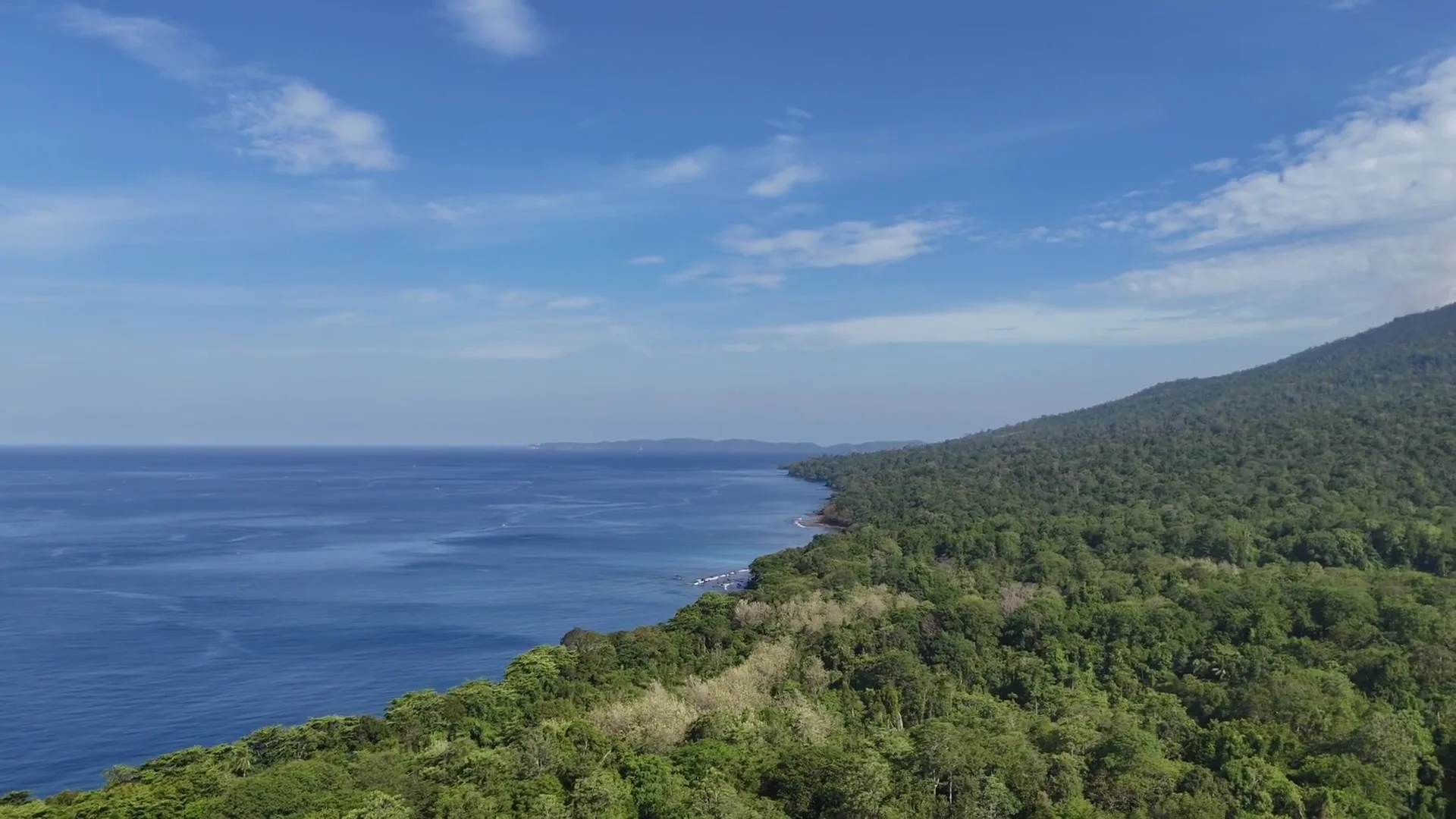
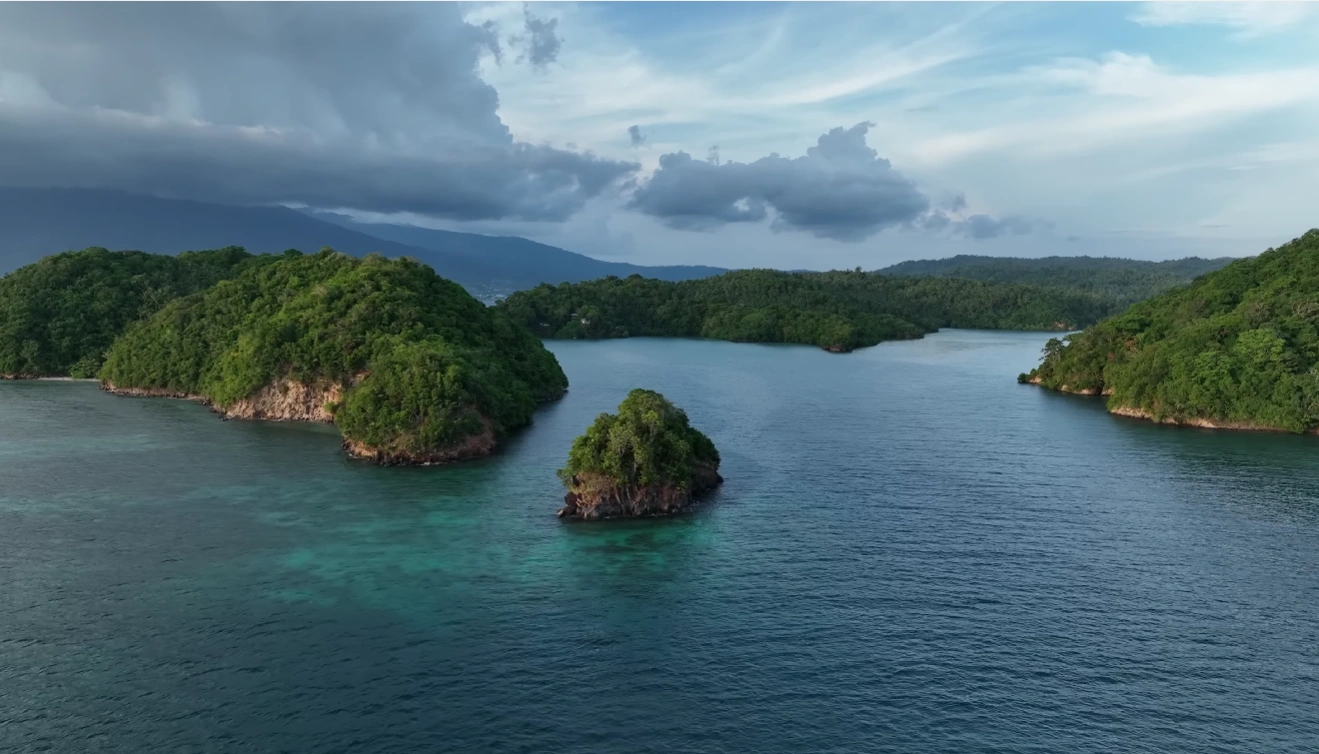
The Indonesian coelacanth lives around Manado Tua and Bunaken, and in the deeper parts of the strait towards Lembeh. It is active at night. By day it rests in caves. After dark it leaves them to hunt slow-moving prey along the deep slope.
It needs three things:
- cool water, around 16 to 18°C
- volcanic rock with many caves
- a steep slope that lets it change depth easily
Manado Tua is a volcano surrounded by deep water, so it offers all three.
Can a diver see one?
Almost certainly not.
Recreational scuba stops at about 40 metres. That is more than 100 metres above the coelacanth. Technical divers on rebreathers can reach 150 metres for short periods. That kind of diving is specialised and expensive, and coelacanth sightings on such dives are still rare.
Realistic options for a traveller:
- A preserved specimen. Several Indonesian museum collections hold preserved coelacanths. In Manado, the visitor centre of Bunaken National Park, on the mainland, displays one. The fish is strange to see in person.
- Film and photographs. Several research teams have filmed and photographed the species. This is how most people will ever see one.
- A research submersible. Documentary crews and some high-end science tourism projects sometimes use one. Commercial trips do not run on a regular basis.
Why biologists care about the coelacanth
Lobed fins
The coelacanth has fleshy, muscular fins that look a little like limbs. They place it among the lobe-finned fishes, the group from which land animals with backbones evolved. Fish gave rise to four-limbed animals. Those led to amphibians, then reptiles, then mammals. The lobed fin is the visible link in that chain.
Live young
Most fish lay eggs in open water. The coelacanth does not. Its eggs hatch inside the female, and she gives birth to fully formed young. Scientists call this ovoviviparous reproduction. A litter holds 5 to 25 pups. In this respect the coelacanth is closer to a shark than to most bony fish.
Together, these features make the coelacanth a living example of a body plan that the fossil record had written off.
Threats and protection
The IUCN Red List classes the African coelacanth as Critically Endangered and the Indonesian coelacanth as Vulnerable. Nobody knows the exact numbers, but both populations are probably small.
The main danger is deep-water gillnets set for other fish, which sometimes catch a coelacanth by accident. Indonesian law protects the species. Fishers must report any coelacanth they catch and release it alive where they can. Not everyone follows the rule.
Learn more
- Bunaken National Park visitor centre, Manado: see a preserved specimen.
- Samantha Weinberg's book A Fish Caught in Time: a popular account of the 1938 find and the later Indonesian chapter.
You will not see a coelacanth on your trip, and nobody expects to. The story is still worth knowing. Even off a well-studied coast like Manado's, some of the strangest animals on Earth still live in the dark water far below the reef.