The Sulawesi coffee trail is a 7-day road trip through the island's main coffee origins: the Mamasa highlands in West Sulawesi, Tana Toraja (Sapan, Pulu-Pulu and Bittuang) and Enrekang (Kalosi, around Baraka). You visit estates, cup coffee with the growers and buy beans at source. The best months are April to July, during the harvest.
All the main growing areas lie inside a north-south strip of about 200 km. One road trip covers them, and it works as a course in coffee at the same time. For a traveller with a serious interest in coffee, few trips in Indonesia teach as much.
The four growing areas
- Enrekang (Kalosi and Baraka). South of Toraja. Known for a dense cup with chocolate notes.
- Tana Toraja (Sapan and nearby estates). The best-known Sulawesi origin outside Indonesia.
- Mamasa highlands. The western edge of the coffee belt. Less famous than Toraja, with its own cup profile.
- Pinrang and Sidenreng. The lower southern edge of the belt.
After a week on this route, you understand what gives Sulawesi coffee its taste, from the farm to the cup.
Day by day
Day 1: Makassar
- Land at Makassar airport (UPG).
- In the afternoon, start at a specialty café such as Coffee Cartel or Toko Kopi Jaga.
- If the café offers it, taste Sapan and Kalosi side by side.
- Sleep in a mid-range hotel in Makassar.
Day 2: Makassar to Baraka, Enrekang
- Drive north for about 5 hours.
- In the afternoon, visit a small Kalosi estate at Baraka and cup with the owner.
- Sleep in Enrekang town or at a guesthouse on an estate.
Day 3: Enrekang to Rantepao
- In the morning, visit a second Kalosi estate at another altitude or with another processing method.
- Drive about 4 hours to Rantepao and check in.
- For dinner, eat pa'piong with Toraja coffee.
Day 4: Sapan
- Spend the full day at a Sapan estate, at 1,500 to 1,700 m. Book it in advance.
- Walk the plots and join the estate's cupping session.
- Return to Rantepao for the night.
Day 5: Pulu-Pulu and Bittuang
- These are smaller Toraja origins that fewer people know.
- Visit two estates in the morning.
- In the afternoon, compare cups at specialty cafés in Rantepao.
Day 6: Rantepao to Mamasa
- Cross the mountain road west to Mamasa, about 3 to 4 hours.
- Visit a Mamasa estate in the afternoon.
- Spend the night in Mamasa.
Day 7: Mamasa back to Makassar
- Drive back through Polewali. It takes about 8 hours, so this is a long day.
- A small commercial flight from Mamasa sometimes runs. Check before you plan on it.
Three cups compared
| Mamasa | Toraja Sapan | Enrekang Kalosi | |
|---|---|---|---|
| Body | Lighter | Medium, syrupy | Denser than Toraja |
| Acidity | Brighter | Low to medium | Lower |
| Flavour | Floral, citrus | Dark fruit: prune, plum, fig | Chocolate, tobacco |
| Finish | Clean | Long, earthy and spicy | Long, chocolatey |
| Typical processing | Often washed or honey at small estates | Wet-hulled (giling basah) | Wet-hulled |
Mamasa and Baraka are less than 200 km apart. The difference in the cup is still clear, and this route lets you taste all three in one week.
Processing: wet-hulled or washed
Ask about processing at every estate. It explains much of what you taste.
- Wet-hulled (giling basah). The traditional Sulawesi method. It gives the deep colour in the cup and the earthy, spicy profile. Most commercial Sulawesi coffee uses it.
- Fully washed and honey. More and more specialty estates use these methods. The cup is brighter and cleaner. This is the newer Sulawesi style.
If an estate processes the same beans in two ways, taste both. For a coffee traveller, this is one of the best parts of the trip.
Estates to know
Toraja
- Sulotco. An established estate. It takes booked visits.
- Toarco. A Japanese-Indonesian joint venture. It also takes booked visits.
- Small Pulu-Pulu estates. Your Rantepao guide can arrange them.
Enrekang
- Small estates around Baraka. Book through a local guide or through the Baraka Kopi café.
Mamasa
- A few estates near Mamasa town. Book through a local guide.
Book estate visits one to two weeks before you go. Most estates welcome visitors who care about coffee. Remember that these are working farms, not tourist sites.
In the field, not only at the table
A good coffee trip looks at the farm as well as the cup:
- Varieties. Learn to spot Typica, S795, Bourbon and Catimor in the plots.
- Altitude. Coffee grown at 1,400 m tastes different from coffee grown at 1,700 m. Visit estates at both heights.
- Picking and pulping. In the harvest, April to July at most Sulawesi estates, you see this work happen.
- Drying. This step has a big effect on quality. Estates dry on raised beds, on patios or partly by machine.
Planning notes
When to go
Go in the harvest, from April to July. May to July is the best window. Outside the harvest you can still tour and cup, but you see less of the farm work.
Budget
Plan for a daily driver, estate visit fees, mid-range rooms and money for beans. Ask your planner for current rates.
What to pack
- A notebook for tasting notes.
- A camera that takes close-up shots of cherries and beans.
- Money for coffee.
- A small gift for each estate owner. A small present is normal in Indonesia, and owners appreciate it.
Buying coffee to take home
- Buy whole beans. Never buy ground coffee.
- Buy at the estate. A 250 g bag of Sapan or Kalosi at the farm costs about 50 to 60% of the supermarket price.
- Buy two processes. Buy two small bags from the same estate: one wet-hulled, one washed. Compare them at home.
- Ship big orders. Beans travel well in luggage. Some estates can ship larger orders abroad, which suits a traveller who wants a regular supply every three months.
Who this trip suits
It suits you if you want:
- To see how coffee works as an industry in Sulawesi.
- A real cupping comparison of three different origins.
- A trip that mixes culture and coffee in the highlands.
It does not suit you if you want:
- The classic Toraja culture trip. This route skips funerals and Kete Kesu.
- A rest on the beach.
- A holiday with no special interest in coffee.
Extending the trip
A coffee and culture trip of 10 to 14 days is easy to build from this week:
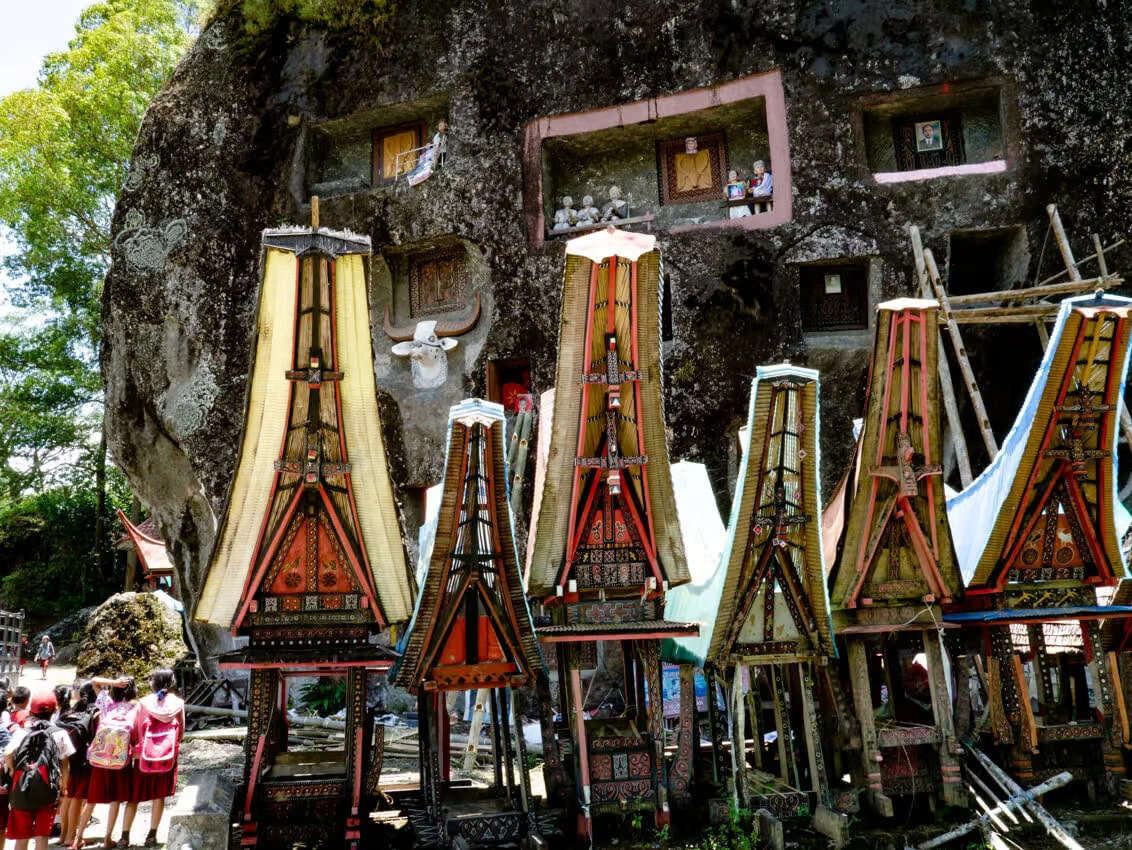
- Tana Toraja, 3 to 4 more days. Attend a funeral and visit Kete Kesu, Lemo and Londa.
- Bira, 2 more days. Rest on the beach after the highlands.
- Bunaken, 5 more days. Fly across the island to dive the reefs.
Our view
For travellers who take coffee seriously, this is the most rewarding coffee trip in Indonesia. The area is compact. The three origins really differ. The growers welcome visitors, and the coffee is worth the drive. Without a strong interest in coffee, the trip is too specialised. Choose it only if it matches what you love.