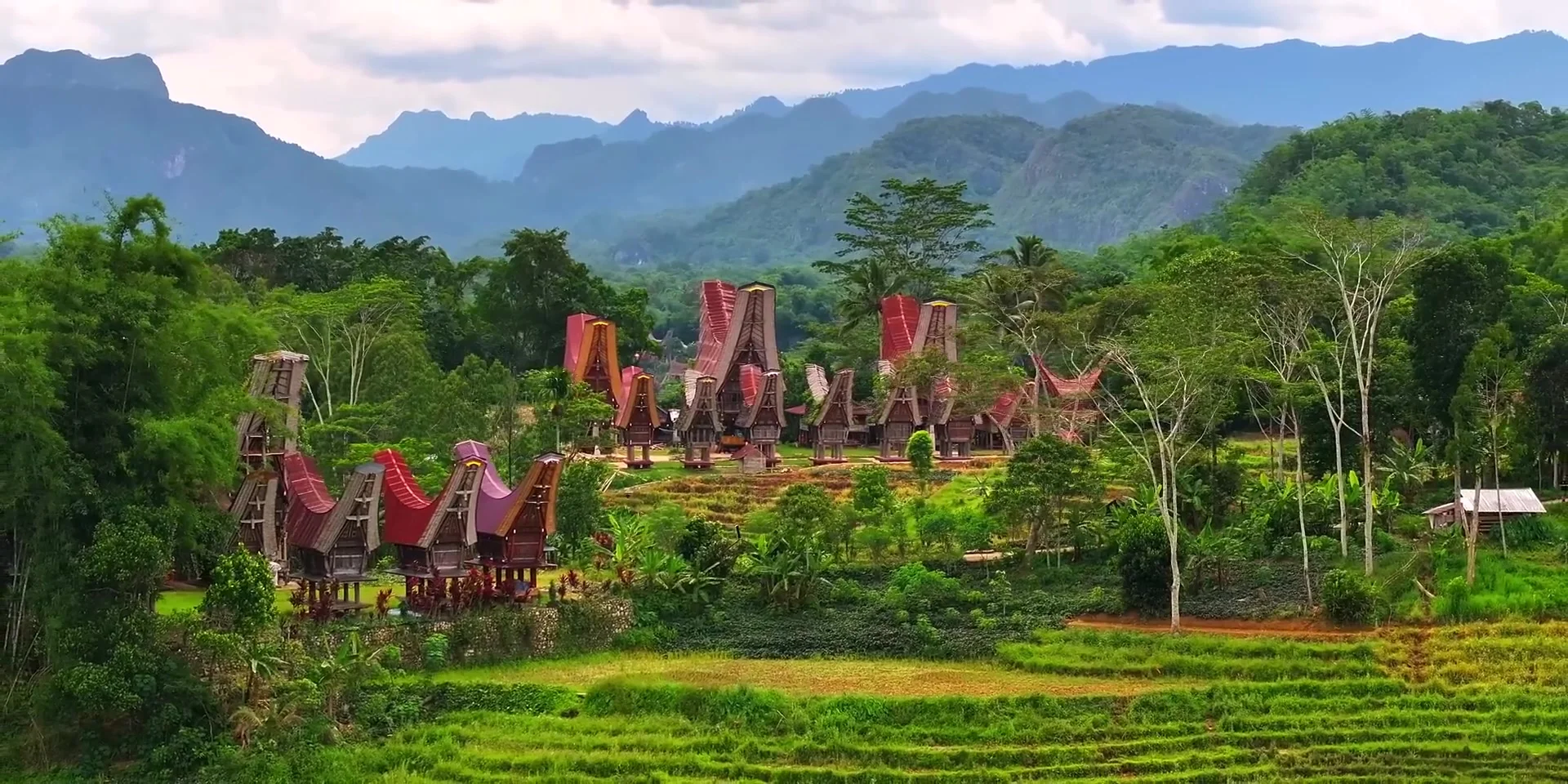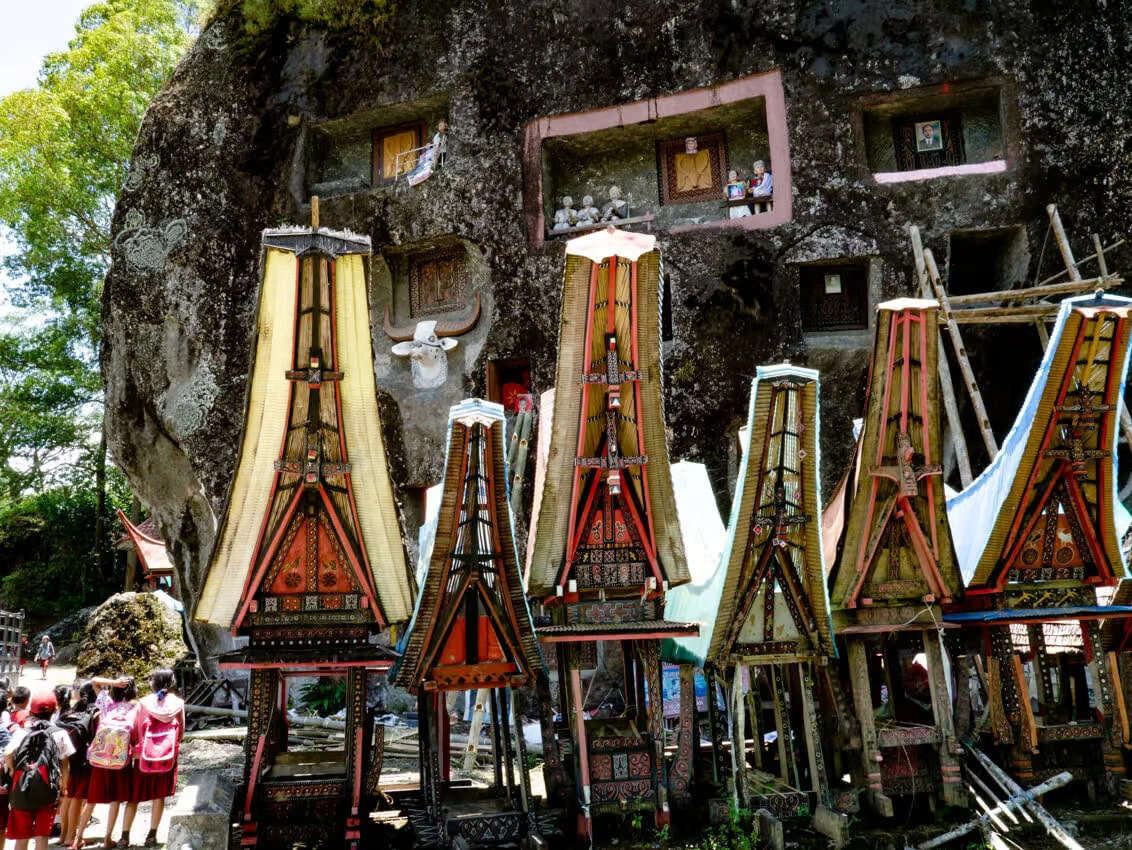
Mamasa is a highland valley in West Sulawesi, next door to Tana Toraja. Its people, the Mamasa Toraja, share the same cultural family: a related language, tongkonan houses and the Aluk To Dolo heritage. Yet Mamasa sees only about 5% of the visitors that Tana Toraja receives. That gap is the reason to go. You get Toraja culture without the August crowds, without pressure to attend funerals as a spectacle, and without the tour buses that now shape much of Rantepao.
Mamasa asks for more effort than Rantepao. This guide shows what you get in return.
Mamasa at a glance
- Province: West Sulawesi. Mamasa town is the seat of Mamasa Regency.
- Altitude: about 1,200 metres, in a high valley ringed by mountains.
- Population: roughly 130,000 across the regency.
- From Rantepao: 3 to 4 hours on a mountain road.
- From Polewali, on the West Sulawesi coast: 5 to 6 hours, climbing the same range from the west.
- Best months: May to October.
The town sits on the valley floor. Dozens of villages spread out along the flat ground and up the lower slopes around it.
Same family, different house: Mamasa and Tana Toraja compared
| Mamasa | Tana Toraja | |
|---|---|---|
| Language | Mamasa Toraja, also called Pitu Ulunna Salu, a name that means "seven stream heads" | Tana Toraja Toraja |
| Tongkonan | Steeper roofs in many villages, other carved motifs, slightly different proportions | The better-known form |
| Religion | Mostly Christian, some Aluk To Dolo | Mostly Christian, some Aluk To Dolo |
| Funerals | Rambu Solo' on a smaller scale, fewer buffalo | Large Rambu Solo' season |
| Visitors | Almost no tourist infrastructure | A developed tourist town |
The two languages are related, but speakers understand each other only in part. Missionaries reached each area at a different time and through different churches. As a result, the blend of Christian and older beliefs looks different in each place. The Mamasa funeral follows the same structure as the Tana Toraja one. In Mamasa you are a guest in a village, not a tourist at a destination.
Three days in Mamasa
This plan suits travellers who add Mamasa to a Tana Toraja trip.
Day 1: over the mountains
Leave Rantepao in the morning. The mountain road takes about 3.5 hours and ranks among the most scenic drives in the region. Reach Mamasa town by mid-afternoon. Stroll around the central market, Pasar Mamasa. Spend the evening at a small guesthouse.
Day 2: villages and trails
Hire a local guide. Visit two or three villages that keep traditional tongkonan compounds. Your guide may be able to arrange lunch in a family home. In the afternoon, walk the trails above the valley. Return to the guesthouse for the night.
Day 3: choose your exit
You have two options:
- Drive back to Rantepao on the same road, about 3.5 hours.
- Head west to Polewali on the coast, 5 to 6 hours, then turn south for Makassar.
The second option turns the trip into a loop: Rantepao, Mamasa, Polewali, Makassar. It covers the highlands and the Mandar coast in one route.
Beds in Mamasa
Choice is small, but it works:
- Mantana Lodge: a small guesthouse built in the style of Mamasa tongkonan.
- Hotel Marante: a plain provincial hotel.
- Village homestays: a few villages in the regency now take paying guests.
For two nights, Mantana Lodge or a homestay gives you more of the place. At the time of writing, rooms cost roughly €10 to €29 a night across these options.
Food in the highlands
Mamasa cooking is close to Toraja highland food, with some West Sulawesi influence. Look for:
- Pa'piong, meat cooked inside bamboo, much like the Tana Toraja dish
- Pork dishes from the highlands
- Freshwater carp and other lake fish
- Mountain greens such as kelor and paku ferns
Restaurants are few, far fewer than in Rantepao. You eat most meals at your guesthouse or in a village home.
Four reasons to make the trip
It is quiet. Few photographers have worked Mamasa. Daily life goes on without tourism shaping it.
You see the wider Toraja family. After Tana Toraja and Mamasa, "Toraja" reads as a cultural family, not one tourist destination.
The road itself. The mountain crossing from Rantepao rewards the hours in the car.
No funeral pressure. Outside the funeral season, you can visit tongkonan villages without the intensity of a Rambu Solo' ceremony.
Weather and timing
Travel in the dry season, May to October. In the wet season the mountain road gets much harder, and landslides happen often enough to matter. Mamasa sits higher than Rantepao, so nights stay cool in every month. Bring a fleece.
Is Mamasa right for you?
Mamasa suits you if you:
- have already been to Tana Toraja
- care a lot about local culture
- are fine with basic facilities
- found Rantepao too touristy
Choose another trip if you:
- are visiting the Toraja region for the first time (go to Tana Toraja first)
- want modern hotels
- have little time to spare
Fitting Mamasa into a longer route
Rantepao and Mamasa, 10 to 14 days. Do a full Tana Toraja stay, add three days in Mamasa, and return the way you came.
Across the highlands, 12 to 14 days. Makassar, Rantepao, Mamasa, Polewali, Mamuju, then back to Makassar. This joins the Toraja highlands with the West Sulawesi coast and its Mandar culture.
Coffee trail. Add visits to Mamasa coffee estates to a wider South Sulawesi coffee route.
Quick answer: is Mamasa worth it?
Yes, if Toraja culture is the reason you came. Mamasa is the Toraja highland regency of West Sulawesi. It shares tongkonan architecture and funeral customs with Tana Toraja but gets about 5% of its visitors. Drive 3.5 hours from Rantepao and stay three days. For a serious interest in Toraja, it is the natural next step after Tana Toraja.