The Kaili are the largest indigenous group in Central Sulawesi. About 1.2 million people speak Kaili languages. They live in the Palu valley, along the Donggala coast and in the hills of Sigi and Parigi Moutong. Most Kaili are Muslim, and some inland areas have large Christian communities. If you travel in Central Sulawesi, most of the local people you meet are Kaili.
This short guide covers where the Kaili live, their languages and faiths, their crafts and houses, and how to visit with respect.
Kaili homeland
Kaili land follows the Palu river and the streams that feed it. It also covers the coast from Donggala south as far as Pasangkayu in West Sulawesi. To the east, it reaches the lowlands of Parigi Moutong. Palu, the capital of the province, stands on Kaili land, and most villages on the edge of the city are Kaili.
Seven sub-groups
The Kaili have seven main sub-groups. Each one has loose links to its own valleys or stretch of coast:
- Ledo, the largest, centred on the Palu valley
- Rai
- Tara
- Unde
- Inde
- Da'a
- Doi
Kaili languages
The Kaili languages belong to the Kaili-Pamona family. That family sits in the Western Malayo-Polynesian branch of the Austronesian languages.
The sub-groups speak related languages, including Ledo, Rai, Tara and Inde. Neighbouring villages usually understand each other. The differences are still large enough to mark regional identity. Ledo (Bahasa Ledo) is the nearest thing to a shared Kaili language. Most young Kaili also speak Indonesian well. They use it in formal settings and with people from other groups.
Phrases in Ledo
| Phrase | Meaning |
|---|---|
| Tabe | A respectful, formal greeting |
| Mbau pae? | Where are you going? An everyday greeting |
| Tarima kasi | Thank you (borrowed from Indonesian) |
| Komi mboto? | How are you? |
Greet people in Kaili first, then change to Indonesian. It is a small gesture, and people notice it.
Religion
About 80% of Kaili are Muslim and about 15% are Christian. A small number, mostly in remote inland villages, follow traditional beliefs from before Islam, often mixed with newer faiths.
Islam spread over several centuries. In the lowlands, the change was mostly complete by the early 1900s. Some inland groups, the Da'a in particular, converted later, or they keep stronger traditional elements.
Sigi regency holds the main Kaili Christian community, centred on the village of Kulawi. Catholic and Protestant churches stand alongside the Muslim majority, and the communities live side by side without serious tension.
Crafts and dress
Ikat weaving in Donggala
Weaving is a strong Kaili tradition. Its centre is Donggala village, which gives its name to the regency. Weavers make Kaili ikat from cotton and silk, with natural dyes. In the past, people wore it for ceremonies, and royal families used it for regalia. Weavers still work by hand in village workshops, and visitors are welcome.
Clothing
Men's traditional dress includes the bayako, a cloth wrapped around the body. For ceremonies, women wear rich sets of jacket and skirt. In daily life, most Kaili dress like other Indonesians.
Houses and megaliths
The traditional Kaili house is the tambi. This wooden house stands on stilts and has a steep roof. In the past, builders covered the roof with palm fibre or wooden shingles. You still see tambi in older inland villages, especially in the Bada Valley and along the upper Palu river. On the coast and in the city, most Kaili now live in houses of concrete and tile.
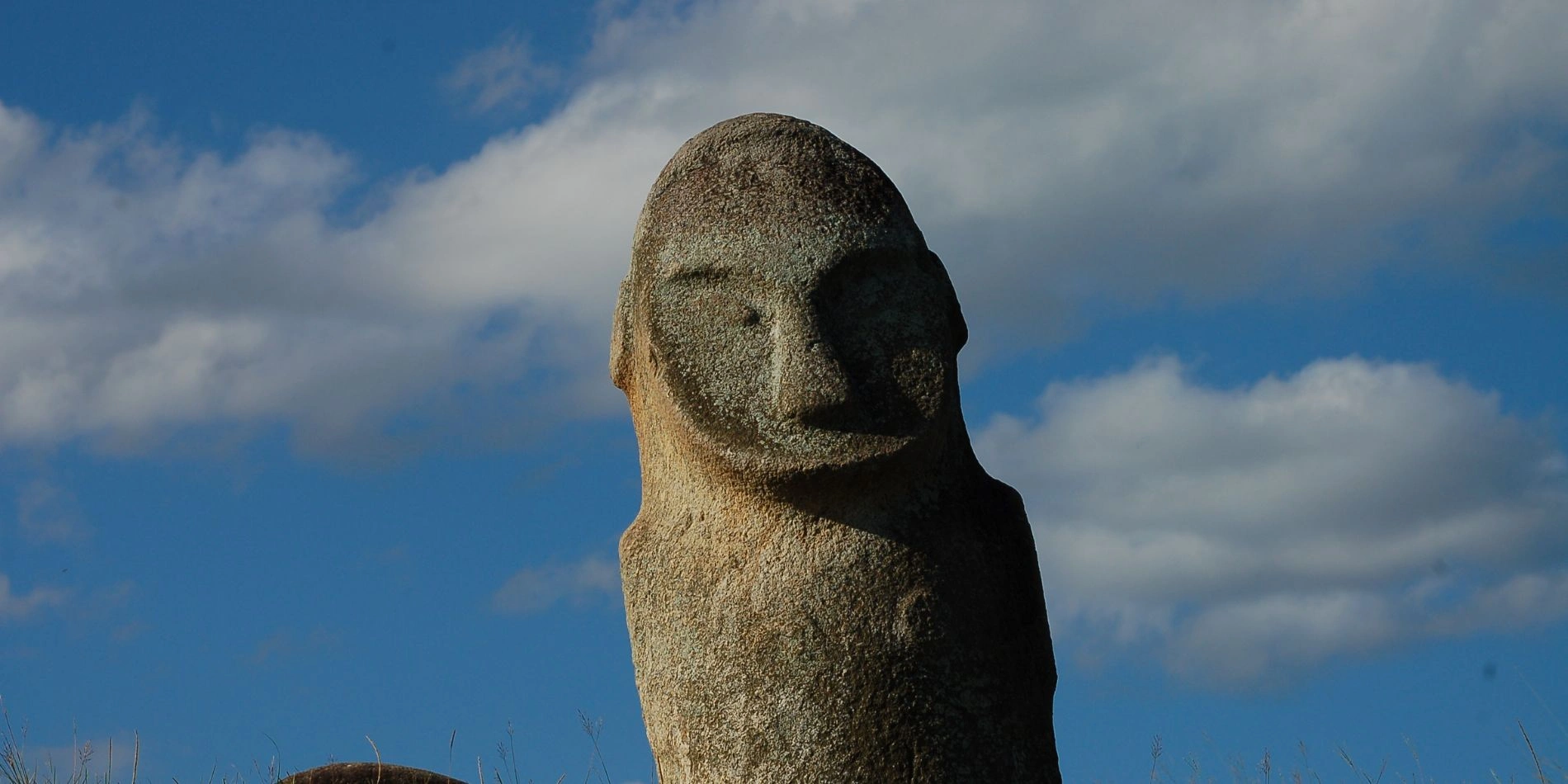
The Bada Valley megaliths are stone figures and large stone vats. Their makers carved them at some point in the two thousand years from 1,000 BCE to 1,000 CE. They stand on land where Kaili live today. Archaeologists still debate how their makers relate to the modern Kaili.
Visiting Kaili communities
Most visitors meet Kaili people in daily life in Palu and Donggala: in markets, restaurants, hotels and on transport. Contact is easy, and the culture feels like mainstream Muslim Indonesia.
To see Kaili village life more closely, go to:
- Kulawi, Sigi regency. Kaili Christians live here. The village has strong textile traditions and is used to visitors. It is 90 minutes from Palu, so a day trip works.
- Donggala village. The home of Kaili ikat.
- Bada Valley, in Lore Lindu National Park. See the megaliths. Kaili and related peoples live in the valley.
Etiquette
Follow normal rules for rural Indonesia:
- Ask before you take a photo of a person.
- Greet older people first.
- Accept food when someone offers it.
- Dress modestly.
A few words of Kaili go a long way.
After the 2018 earthquake
The 2018 earthquake and tsunami in Palu hit Kaili communities hard. Most residents of Petobo and Balaroa, two of the worst-hit neighbourhoods, were Kaili. Recovery continues. Communities still discuss housing, religious practice and land use. Be aware of these debates, but do not offer opinions on them.