About 400,000 Mandar people live on the west coast of Sulawesi. Their homeland covers the western shore of South Sulawesi and much of West Sulawesi province. They count as one of the four main ethnic groups of the south, with the Bugis, the Makassar and the Toraja. Most Mandar are Muslim and most live by the sea. They are known for the sandeq, a slim outrigger sailing boat that can pass 20 knots.
The other three groups appear in most travel writing. The Mandar rarely do. This guide covers their coast, their language, their boats, their food and the places where a visitor can meet them.
The short answer
- Who: a coastal, mainly Muslim people of about 400,000.
- Where: the west coast, from around Polewali north to Mamuju.
- Known for: the sandeq outrigger, once the main small fishing boat of the Makassar Strait.
- Best time to visit: the yearly Sandeq Race (August or September), which sails from Mamuju to Makassar.
The Mandar coast
The core of Mandar country is a strip of shore. It starts near Polewali and runs north through Tinambung and Majene to Mamuju and further. In 2004 this coast became part of a new province, West Sulawesi, split from South Sulawesi. Mandar demands for regional recognition were a large part of the reason for that split.
The Mandar sailed far, and they settled far. There are Mandar communities in eastern Kalimantan and in the southern Philippines. Smaller groups live in other parts of island Southeast Asia.
Bahasa Mandar
The Mandar speak their own Austronesian language. It is a close relative of Bugis, but a Bugis speaker and a Mandar speaker cannot follow each other. Young Mandar also speak Bahasa Indonesia with ease. Many older people know some Bugis too.
One word to learn: iyye means "yes". Bugis speakers use it as well.
How a sandeq is built
The sandeq is the object that defines Mandar culture. Fishermen designed it for the tuna and flying-fish catch in the Makassar Strait. Its main parts:
| Part | Detail |
|---|---|
| Hull | 4 to 10 metres long, about 60 cm across at its widest |
| Construction | Light planks on a narrow keel |
| Outriggers | Two parallel floats (katir) on long cross-beams |
| Rig | One mast and one big triangular sail |
How fast it sails
Speed is the point of the design. A working sandeq with a good crew and a side wind reaches 15 knots without trouble. Race boats have gone faster than 20 knots. Compare that with other traditional Indonesian sailing craft, such as the pinisi, the lambo and the perahu lete. Those boats usually sail at 6 to 10 knots.
Builders and sailors still work in the villages near Polewali and Majene. Most of them are older fishermen. A few young Mandar have chosen to carry the skill forward.
A craft in decline
Motor boats are pushing the sandeq out of the fishing trade. An engine needs less skill than a sail. It also works on a still day, and it brings home a bigger catch. Many young Mandar now fish from motor boats. Others leave the sea and find jobs in the regional cities.
The main defence of the tradition is the Sandeq Race. In the 1990s, groups such as the Yayasan Suaka Sandeq started to record the boats and to support the men who still sailed them. The race keeps the sandeq in public view. It has also brought a new generation of young sailors into the boats. Even so, fewer sandeq go out to fish each year.
The Sandeq Race
The race is the clearest public display of Mandar sailing. It takes place each year in August or September. The fleet sails for about a week along the coast, in stages:
Mamuju, Majene, Polewali, Pare-Pare, Barru, Makassar.
Crowds gather at each stage finish, and traditional ceremonies welcome the boats. The dates change every year, so confirm them locally before you plan around the race.
What the Mandar eat
The food belongs to the wider Bugis kitchen of South Sulawesi, with a few dishes that are Mandar in particular:
- Bau peapi: the best-known Mandar fish dish. Cooks simmer fish in a sour, hot broth of lemon, chilli and turmeric.
- Jepa: a crisp flat cake of sago and grated coconut, served with fish.
- Loka Anjoroi: a common sweet of bananas cooked in coconut milk.
Farmers grow coffee in the West Sulawesi highlands. Look for Mandar coffee at speciality roasters in Makassar, or buy it in Polewali.
Places to meet Mandar culture
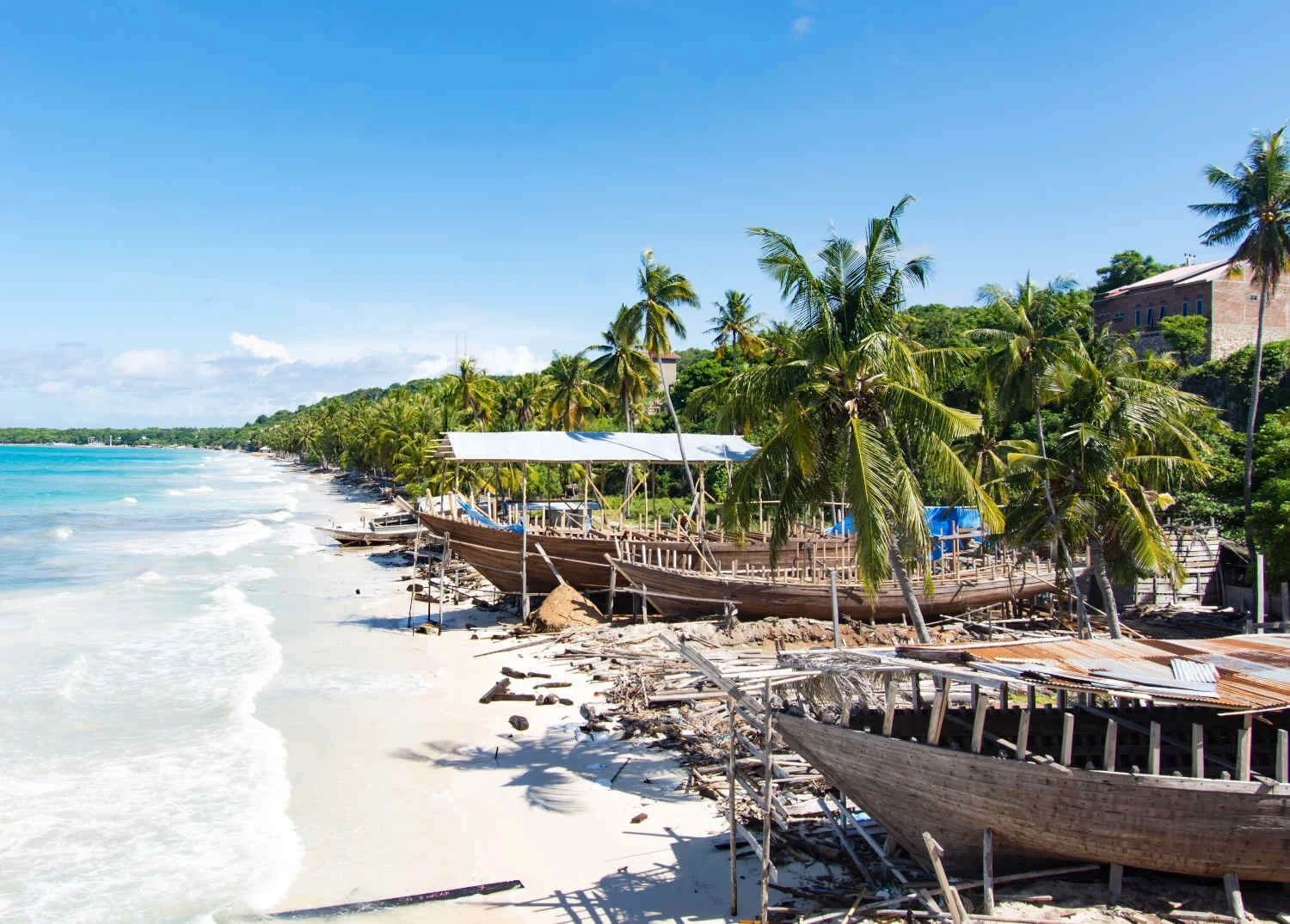
Tinambung, near Polewali. This is the village people link most closely with the sandeq. Working boats usually sit on the beach. In the weeks before the August race, crews fill the village and prepare their boats. Go with a local guide, who can explain what you see.
Majene. The next large Mandar town to the north has a small museum, the Museum Mandar. It shows sandeq material, ikat cloth and royal objects. These come from the small Mandar kingdoms that ruled before Dutch colonial control.
The race. If your dates match, a stage finish is the best single day to see Mandar culture in public.
Fitting the Mandar into a Sulawesi trip
The Mandar coast lies on the western road from Makassar to Mamuju. On a Trans-Sulawesi loop, or on a visit to West Sulawesi, a day in Polewali and Tinambung adds real culture for a short detour. A trip built around Toraja and Bira is different: there, the Mandar coast is a separate journey for travellers with a clear interest in boats or the sea.
Standard South Sulawesi tours leave the Mandar out. For some travellers, that is the best reason to go.