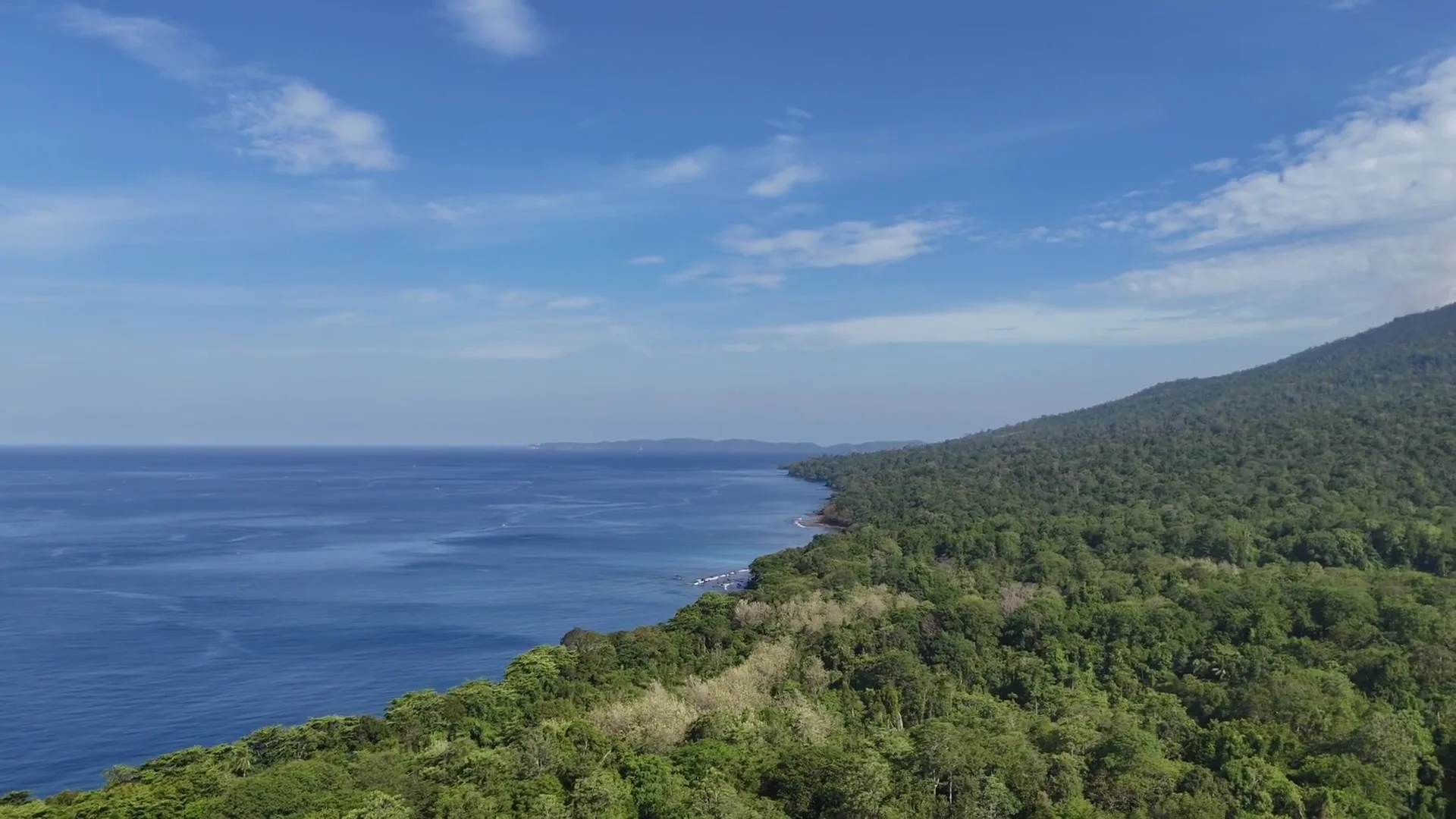
Three volcanoes in North Sulawesi are open to climbers: Mount Klabat (1,995 m), Mount Lokon (1,580 m) and Mount Soputan (1,785 m). Klabat is dormant. Lokon and Soputan are active, and climbs close when their alert level goes up. Mount Mahawu (1,331 m) above Tomohon is the easy option, a short walk to a crater rim. On a clear day you can see all of them from Manado.
Why the Minahasa has so many volcanoes
The Minahasa peninsula lies at the eastern end of the Sangihe arc. Here the Molucca Sea plate sinks below the crust of Sulawesi. The result is a line of cones. Mount Klabat stands at the eastern tip. Lokon and its twin Empung rise above Tomohon, then come Mahawu and, further south, Soputan. No other part of Sulawesi has as much volcanic activity.
The volcanoes at a glance
| Volcano | Height | Status | Trailhead | Time up / down |
|---|---|---|---|---|
| Klabat | 1,995 m | Long dormant, crater lake | Airmadidi | 5 to 6 h / 3 to 4 h |
| Lokon | 1,580 m | Active | Kakaskasen | 3 to 4 h / 2 to 3 h |
| Soputan | 1,785 m | Highly active | Silian | 5 to 6 h / 3 to 4 h |
| Mahawu | 1,331 m | Crater lake | Road end | About 90 min, or 20 min from the top car park |
The dry season, May to September, is the best time for every climb.
Klabat: the highest, with a lake on top
Klabat is a stratovolcano that has not erupted for a long time. It is the tallest cone in the north and the furthest east. Of the three main climbs, only Klabat holds water in its summit crater.
You climb it in one day from Airmadidi. The village is about 90 minutes' drive northeast of Manado. Forest covers most of the trail. Near the top the trees give way to low, stunted plants. The path asks for fair fitness but little technical skill.
Guides from Airmadidi lead groups. At the time of writing they charged about €14 to €24 per group, so check the current rate.
Klabat works as a day trip from Manado. It also fits well before a visit to Tangkoko: climb on day one, then move to Tangkoko the next morning.
Lokon: the twin cone above Tomohon
Lokon rises straight above the town of Tomohon, next to its twin, Mount Empung. Of the three main climbs it has erupted most recently. It had notable eruptions in 2011, 2012 and 2015, and the national volcano agency, PVMBG, still lists it as active.
When the route is open, climbers start from Kakaskasen on the south side. The trail crosses farmland and forest, then volcanic soil, and ends at the crater rim. A walker of normal fitness can do it in a day. Climbers usually add Empung on the same outing.
Whether you can go depends on the volcano. Lokon erupts often for an Indonesian volcano. When the alert level rises above normal, the authorities stop all climbs. A closure can last for weeks or for months. Read the PVMBG bulletin before you plan.
A Lokon climb fits into a stay in Tomohon. Pair it with Pasar Tomohon, Bukit Doa and a meal at the Tinoor restaurants. The hike fills about half a day.
Soputan: the hardest and most active
Soputan lies southeast of Tondano. It erupts more reliably than almost any volcano in Indonesia. Large eruptions come every few years, and small ash clouds are common. Climbs are allowed only at low alert levels, and closures happen often.
The route starts at Silian. It is harder than Klabat or Lokon. Loose volcanic sand and rock cover long sections, so every step needs care.
PVMBG watches Soputan closely. The volcano spends more time on alert, at caution (Level II) or warning (Level III), than at normal (Level I). Check the bulletin before you make plans.
Easier cones for a short visit
Mahawu is the gentlest volcano in the north. From the road end the walk to the rim takes about 90 minutes. Most visitors drive almost to the top instead. From there a paved path leads to the rim in 20 minutes, with a view down to a green crater lake. The trip takes half a day from Manado.
Empung (1,340 m) is climbed together with Lokon.
Tumpa (610 m) and the small cones on the east coast are walks, not mountain climbs.
Planning your climb
- Altitude: every summit is below 2,000 m. Altitude sickness is not a real concern, and normal fitness is enough.
- Weather: cloud often hides the summits by mid-morning. Start early to reach the top first. Pack rain gear in every season.
- Kit: hiking boots, at least 2 litres of water, trail food, a head torch for the dark start and a warm layer for the top. You need no technical gear.
- Insurance: many standard travel policies do not cover accidents caused by volcanic activity. Read your policy before you climb an active cone.
Staying safe on an active volcano
Lokon and Soputan are live volcanoes. They are not a park attraction. Treat the climb as a real mountain day.
- Read the PVMBG bulletin. The agency publishes the alert level of each volcano at regular intervals.
- Follow your guide. Local guides with experience know the signs of coming activity. If a guide cancels, accept the decision.
- Keep away from fresh ash zones. Ground near recent activity can be unstable, even at low alert levels. Gas pockets and cooling magma remain a danger. Stay on the known routes.
Building volcanoes into a North Sulawesi trip
- Mahawu fits as a half day into almost any plan based in Manado.
- Klabat adds an active day before or after Tangkoko.
- Lokon or Soputan adds a serious mountain to a stay in Manado and Tomohon.
- Hikers who come for the mountains can link Mahawu, Klabat and either Lokon or Soputan into a full volcano week.