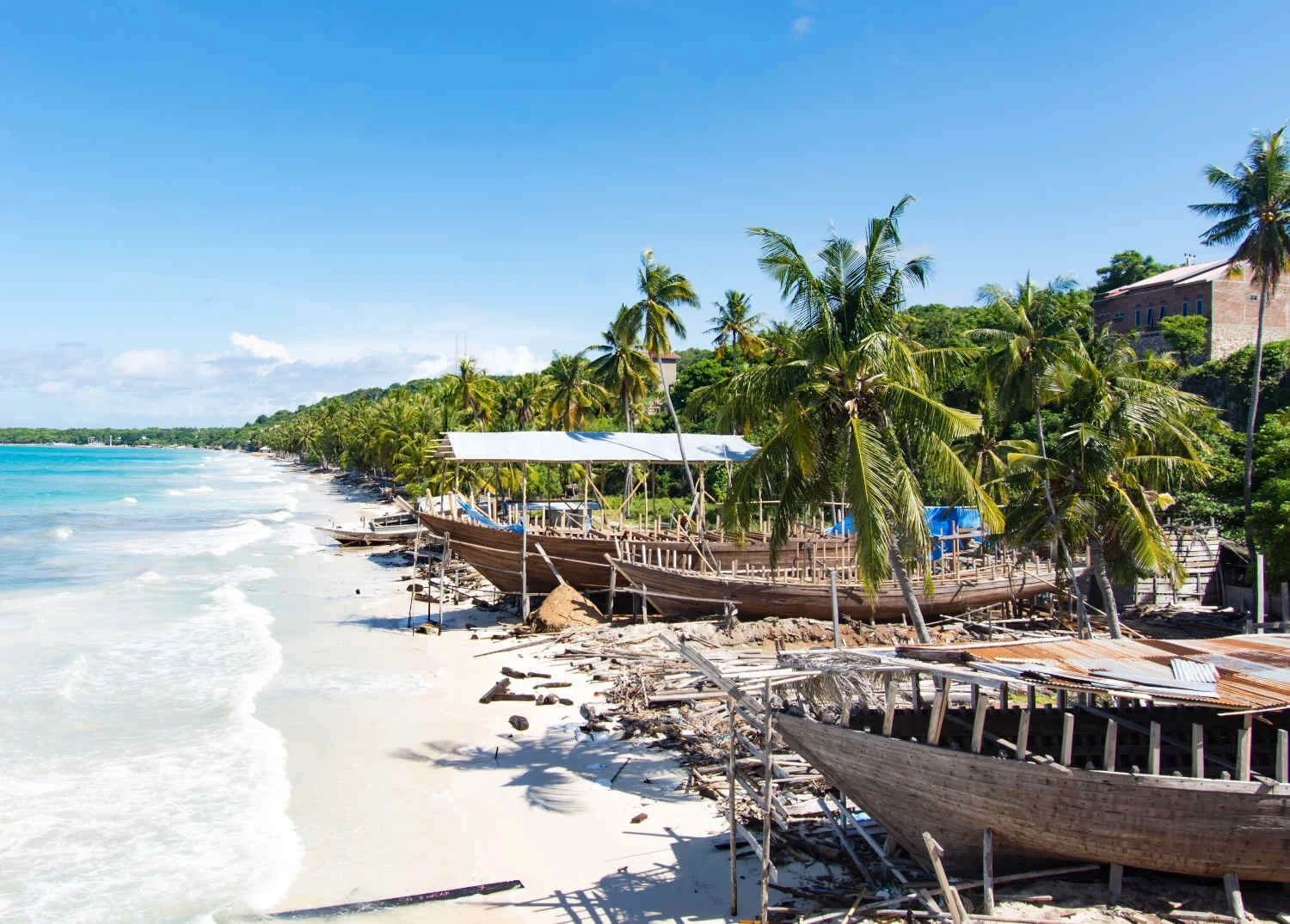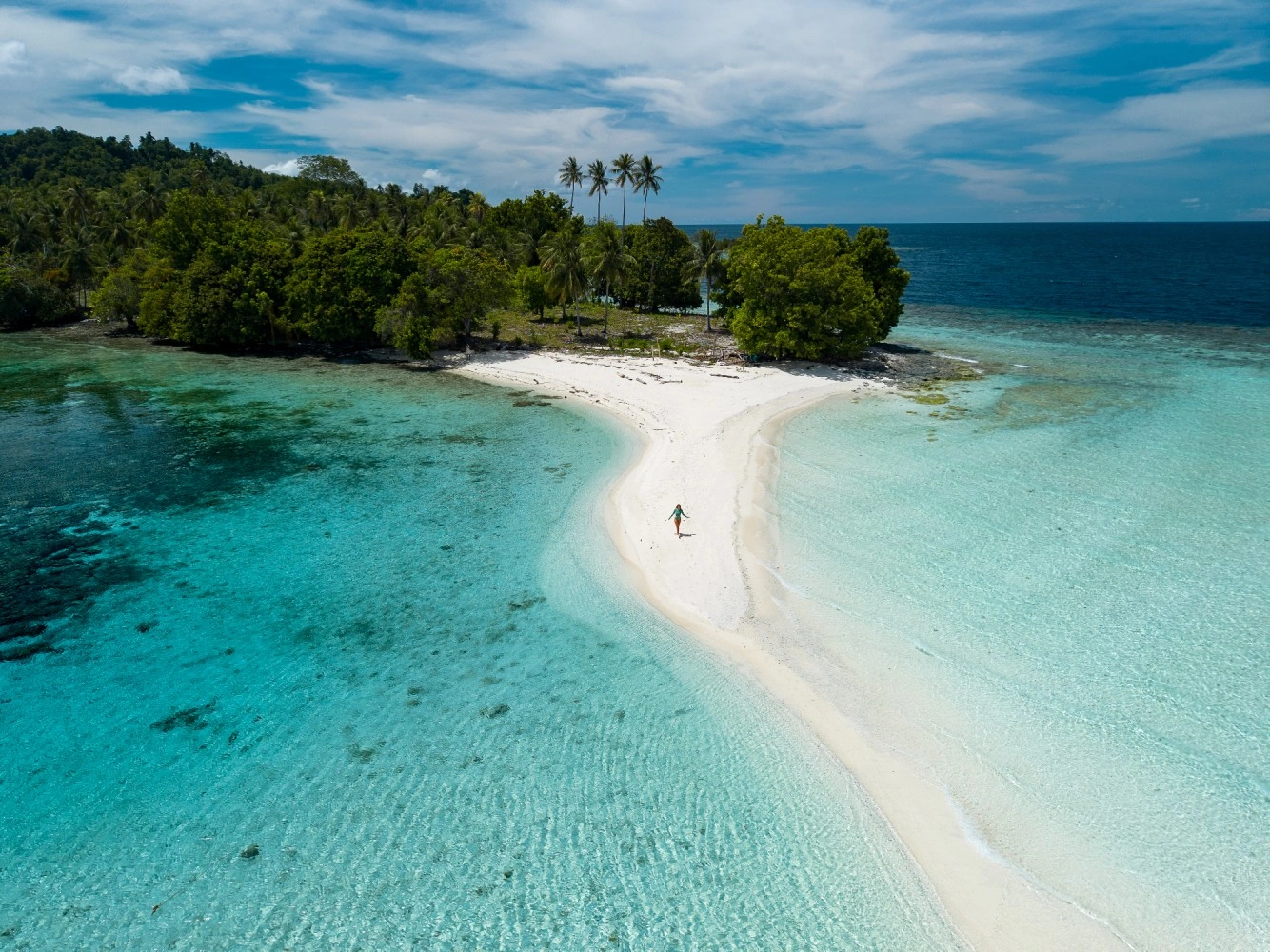
The Togean Islands are 56 limestone islands in the Gulf of Tomini, Central Sulawesi. You reach them through Wakai, the main port. From the nearest airport, at Luwuk, it is a six-hour drive to Ampana on the mainland and then a six-hour ferry to Wakai. There is no faster way in.
That long journey is the reason to go. It keeps visitor numbers low, so the islands stay calmer than they would be if they were easy to reach.
This guide covers the two routes in, the best season, the three island groups with homestays, what to do, life in a homestay, a sample itinerary and who should skip the trip. Ferry times and prices change. All figures below come from when this guide was written, so check them before you travel.
How to reach the Togean Islands
Both routes are slow. Set aside three days for the journey there and back: two travel days, and one spare day in case a ferry does not sail.
Route 1: Luwuk and Ampana (best in the dry season)
- Fly Makassar to Luwuk. Wings Air or Garuda flew the route daily, in about 90 minutes.
- Drive Luwuk to Ampana. Six to seven hours. A seat in a shared car cost €38.
- Sleep in Ampana.
- Take the morning ferry to Wakai. It left at about 10:00, took six hours and cost €5.
Route 2: Gorontalo (best in the wet season)
- Fly to Gorontalo from Manado or Makassar.
- Take the night ferry to Wakai. It sailed only on Tuesdays and Fridays, at about 16:00, and took twelve hours. A deck or cabin ticket cost €7 to €24.
The Gorontalo ferry is a larger ship. It sails in weather that keeps the Ampana boat in port, which makes it the better choice in the rainy months.
From Wakai to your island
A chartered speedboat takes you from Wakai to the homestays on Kadidiri, Bomba or Malenge. The ride lasts 30 to 90 minutes, depending on the island. Most homestays include the boat in your booking. If yours does not, expect €10 to €24 per person.
Best time to visit the Togeans
| Months | Season | Conditions |
|---|---|---|
| April to October | Dry | Calmer sea, more reliable ferries, the clearest water for snorkelling |
| November to March | Northwest monsoon | The Ampana ferry often cancels for a day or two at a time. Storms most afternoons. Poorer visibility underwater. |
Homestays stay open all year, so a wet-season trip is possible. Bad weather, though, often costs visitors a day.
The best months are May and September. They are dry, with light wind and few visitors.
Where to stay: Kadidiri, Bomba or Malenge
Three island groups have places for visitors to stay. They differ in size, mood and how easy they make it to do nothing.
| Area | Homestays | Strengths | Price per night, meals included |
|---|---|---|---|
| Kadidiri | Kadidiri Paradise, Black Marlin, Lestari | Busiest area. Reef right off the beach, easy snorkelling, dive centres at two of the three. | €19 to €33 |
| Bomba, south side of Batudaka | Poya Lisa, Pristine Paradise | Calmer and smaller. Closer to the deeper dive sites near Una Una. | €24 to €38 |
| Malenge, eastern edge | Two homestays | The quietest. Over an hour by boat from Wakai. Near the Bajau village of Sauma and the sea walkway of Pulau Papan. |
Most people stay three or four nights, on either Kadidiri or Bomba, and see nothing else. With more than a week, a second island is worth the extra boat ride.
Things to do in the Togean Islands
Snorkelling and diving
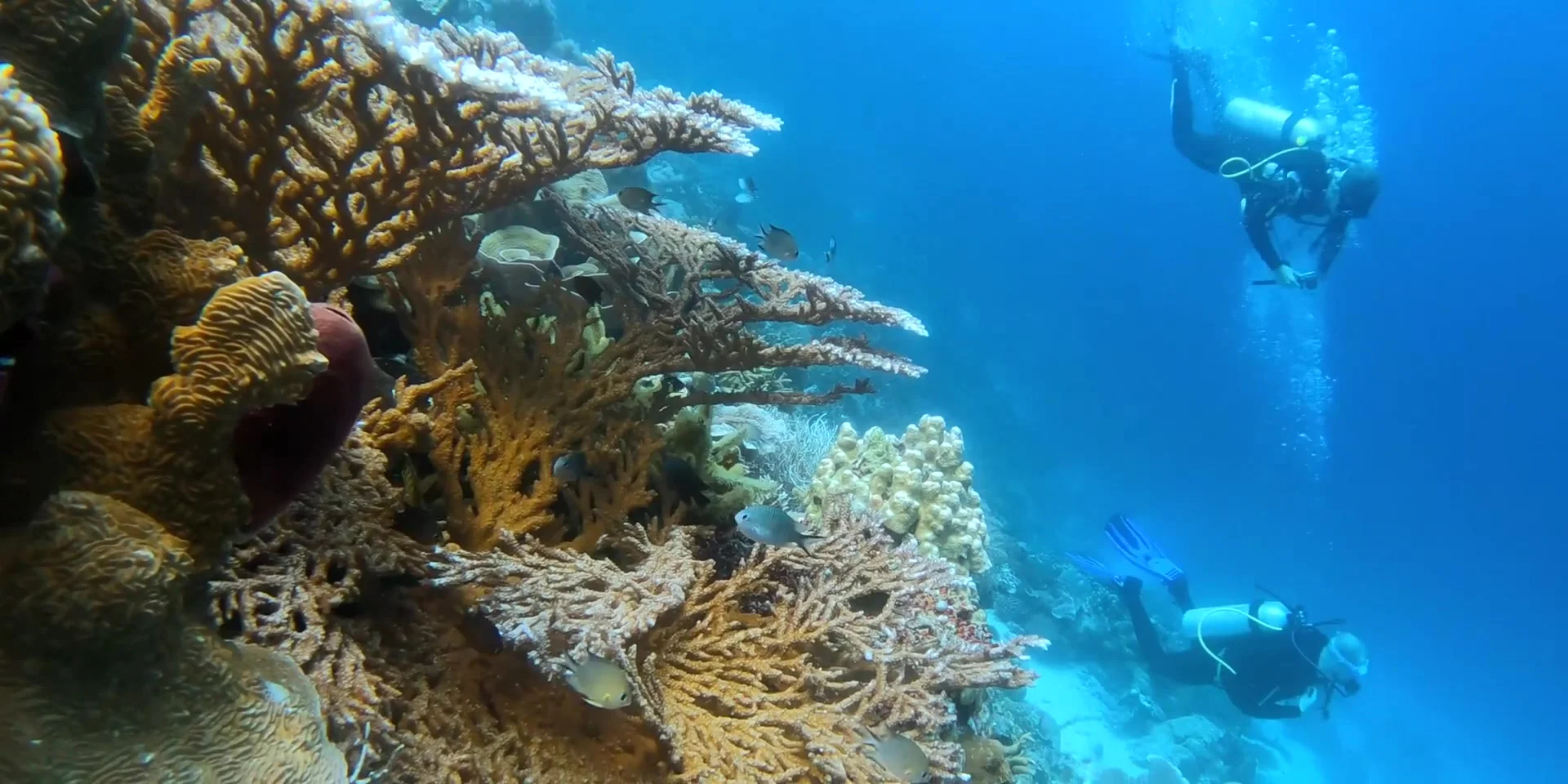
Fringing reef, barrier reef and atoll, the three reef types of Indonesia, all occur in the Togeans, a short boat ride apart.
The diving is steady rather than dramatic. Expect walls, coral gardens, schools of jacks and the odd reef shark.
The best site is Una Una, an active volcano two hours by boat from Bomba. At Apollo Reef, barracuda and jacks gather in schools. A two-dive trip to Una Una cost €71 to €95.
Bajau villages: Sauma and Pulau Papan
The Bajau are a sea-nomad people, and two of their villages sit in the Togeans: Sauma and Pulau Papan. A long wooden walkway joins Pulau Papan to the next island. The village built it so children could walk to school.
A visit to these villages is central to any Togean trip, and it shows that people live on these islands. Go with a local guide from your homestay. A cash gift for the village head, about €5, and polite behaviour make a good impression.
Climbing Mount Colo on Una Una
Mount Colo is the volcano at the centre of Una Una. It last erupted in 1983. You climb it from the small village on the south of the island. The climb takes a long, hot half-day. From the top you can see most of the archipelago.
Life in a Togean homestay
- Plumbing is basic.
- Electricity comes from a generator. At most places it goes off at 22:00.
- Wi-Fi is weak or missing.
- Meals are shared, family style. Every meal is some mix of fish, rice, vegetables and fruit.
- Beer depends on the homestay. Bigger homestays run by Christian families usually stock some. Muslim-run homestays do not.
Money
The Togeans have no ATM. The nearest ones are in Ampana and Gorontalo, so bring all the cash you need.
At the time of writing, about €48 (around Rp 1,000,000) a day for each person covered a room, meals and some diving. Add 30 percent on top as a safety margin.
8-day Togean itinerary
Allow at least seven nights.
| Day | Plan |
|---|---|
| 1 | Fly to Luwuk (or Gorontalo). Continue by road to Ampana for the night. |
| 2 | Morning ferry to Wakai, then the speedboat to Kadidiri. Swim in the afternoon. |
| 3 to 5 | Snorkel, dive and rest. Take a day trip to a Bajau village. |
| 6 | Day trip to Una Una, if the sea allows. |
| 7 | Ferry back to Ampana. Sleep there. |
| 8 | Fly home. |
A shorter stay is possible, but it feels hurried. More time is always better here.
Who should skip the Togeans
The Togeans do not suit everyone. Leave them out if:
- Your trip is short
- Your schedule is tight
- You need a reliable internet connection
Two alternatives:
- Wakatobi, far to the south in the Banda Sea, offers similar snorkelling with much less travel.
- The Banggai Archipelago, east of Luwuk, has scenery on the same level and even fewer visitors. Getting there is even harder.
Choose the Togeans if you want five to seven days truly offline, and can afford a lost day if a ferry is cancelled.